Security-Widefield, CO
Basement Flooding in Security-Widefield
The lower level of your split-level or ranch took on water. A local restoration pro can pump it out, test what can be saved and dry the space.
Have your ZIP code ready. A local restoration pro answers.
Updated November 12, 2026
Most homes in Security-Widefield do not have the deep, fully finished basements found in newer subdivisions farther north. What they often have is a lower level: the bottom floor of a split-level or tri-level, or a partial basement under a ranch, set a few feet into the ground with a family room, a laundry area and maybe a spare bedroom. When water gets in, it lands in the part of the house people use every day.
Three things that flood a lower level here
Sewer backup
This is the call nobody wants. Water rises from a floor drain, a shower or the lowest toilet, and it smells. In neighborhoods built in the 1950s and 1960s, the sewer lateral between the house and the street is decades old, and roots, sags and old joints are common. Stop running water in the house the moment you see it. Then read what to do after a sewage backup and keep people and pets away from the area.
Groundwater and runoff
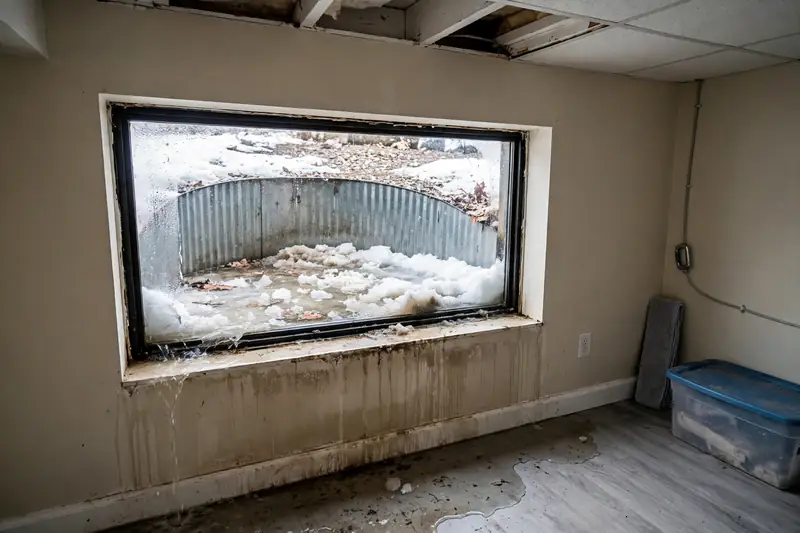
Clay soils hold water against foundation walls after a soaking rain or a fast snowmelt. Lower-level windows are close to grade, and window wells that lack a drain fill like buckets. Gutters that dump at the foundation make it worse. This water tends to come in along the base of the wall or through a crack.
Plumbing inside the house
Laundry rooms and water heaters are often on the lower floor in these designs. A burst washer hose, a failed tank or a corroded supply pipe puts clean water down there fast. The burst pipe cleanup in Security-Widefield page covers those breaks.
Water still spreading? Talk to a local restoration pro now.Have your ZIP code ready. A local restoration pro answers.
Call (719) 555-0142What to do before help arrives
- Do not walk through water that could be touching an outlet or extension cord
- If it is sewage, stop all water use upstairs, including toilets and the dishwasher
- Lift what you can onto shelves or carry it upstairs
- Photograph the water line on walls and furniture
- Open upstairs windows if it is dry outside, but keep the lower level closed if sewage is present so odor does not spread
Not sure how bad it is? A short call usually tells you.Have your ZIP code ready. A local restoration pro answers.
Call (719) 555-0142The cleanup process
The crew identifies the water category first. Clean water from a pipe can often be dried in place with some tear-out. Sewage and groundwater are treated as contaminated, which means carpet, pad and wet drywall are removed, then surfaces are cleaned and treated before drying starts. The water damage categories post explains how that decision is made.
Paneling is common in lower levels from this era, and water gets trapped behind it. Expect the crew to pull a few panels to check the wall behind. Drying equipment usually runs several days, with meter readings each visit.
Keeping the next one out
Once things are dry, spend an afternoon outside. On many older lots the ground has settled toward the foundation over the decades, so add soil to restore a slope away from the house. Extend downspouts several feet out. Clear the gravel and debris from window well drains, or add covers. If the problem was the sewer, ask the plumber whether a backwater valve makes sense on your line. None of this is expensive compared with redoing a lower level twice.
Why the bill varies
The inspecting company gives you the real figure in writing before starting. These items drive it:
| Item | What changes |
|---|---|
| Source | Sewage needs protective gear, disposal and disinfection |
| Square footage | A laundry corner vs the whole lower floor |
| Finishes | Carpet, paneling, drywall, built-in shelves |
| Hours before cleanup | More time means more material lost and odor risk |
| Plumbing repair | Camera work or a lateral repair is separate from cleanup |
| Contents | Furniture and stored items to move, clean or discard |
Need someone to look at it today?Tell them your ZIP and what happened. A local pro picks up.
Call (719) 555-0142Coverage, briefly
A pipe that breaks inside the house is often covered as sudden damage. Groundwater seepage is usually excluded. Sewer backup typically needs its own endorsement. Water that flows in from the yard during a storm usually falls under flood insurance. Our insurance guide for Colorado water damage breaks these down further.
Water still spreading? Talk to a local restoration pro now.Have your ZIP code ready. A local restoration pro answers.
Call (719) 555-0142More about the community is on the Security-Widefield page. The full basement flooding service page explains equipment and timelines. Storm-related water is covered on storm flood damage in Security-Widefield, and leaks on the main floor fall under water damage restoration in Security-Widefield.
Sources and official resources
More in Security-Widefield
Other services in Security-Widefield
Nearby towns
Basement Flooding near Security-Widefield
Service area
Security-Widefield on the service map
Security-Widefield is about 9 miles from downtown Colorado Springs. Crews reach it from the Colorado Springs side, usually by I-25, Powers Boulevard or US-24.
Colorado Springs neighborhoods
FAQ
Common questions
Straight answers to what Colorado Springs homeowners ask most. Still unsure? Call and ask a local pro.
Call (719) 555-0142Why does my lower level smell musty after it dried?
Water may still be trapped under flooring, behind paneling or in the bottom plate of a framed wall. Concrete also releases moisture slowly. A moisture meter check will show whether anything is still wet, and that is the usual source of the smell.
What causes sewer backups in older neighborhoods?
Tree roots in the yard line, a sagging section that holds debris, grease buildup, or a blockage in the main. Older lateral lines are more prone to roots and offset joints. A plumber can run a camera to see what is going on.
Is it safe to clean up sewage myself?
It is not recommended. Sewage carries bacteria and viruses, so anything it soaked is usually removed by a crew wearing protective gear. If someone gets sick after contact, call your doctor, and call 911 in an emergency.
Do split-level lower floors flood more than full basements?
They can, because the floor sits only partly below grade and often has windows and doors close to ground level. Snowmelt and runoff reach them quickly if the soil slopes toward the house. On the other hand, they often dry faster because there is more airflow.
Does insurance cover a sewer backup?
Standard policies often exclude it unless you added a sewer or water backup endorsement. If you have one, there may be a separate limit. Call your agent to check before cleanup costs add up.
Basement Flooding in Security-Widefield? Call a local pro.
Call now and a licensed restoration pro near you can walk you through the next hour and set up a visit.