Colorado Springs, CO
Emergency Water Extraction in Colorado Springs
Standing water does the most damage in the first day. A local restoration pro can bring extractors and pumps, pull the water out and start drying before it soaks deeper.
Have your ZIP code ready. A local restoration pro answers.
Updated November 12, 2026
Emergency water extraction is the part of a water job that happens fastest and matters most. Every hour that water sits on a floor, it wicks further into drywall, swells particleboard and sinks into the concrete. Getting it out quickly is what keeps a drying job from turning into a tear out. Here is what an extraction visit looks like in Colorado Springs, from the phone call to the moment the last pump shuts off.
When you need extraction, not just a towel
Extraction is the right call when water is standing on the floor, carpet squishes underfoot, or water has spread beyond the room where it started. The usual sources around Colorado Springs include:
- A failed water heater. Tanks in garages, basements and closets can dump their full volume and keep refilling until the supply is shut off. Our article on a water heater leak covers the shutoff steps.
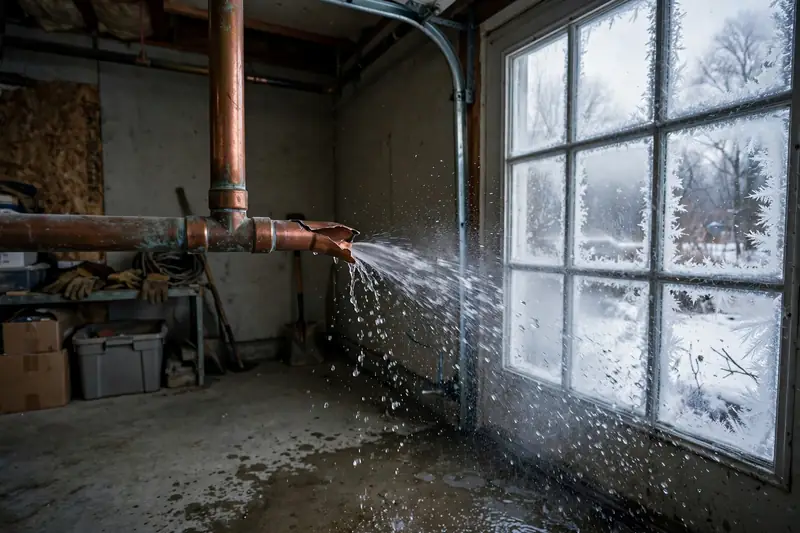
- A split pipe after a freeze. When temperatures crash overnight, a single crack can run for hours before anyone wakes up.
- Washer and dishwasher hoses. A burst supply hose on a second floor laundry can flood two levels. Laundry room floods get their own write-up in washer and dishwasher leak damage.
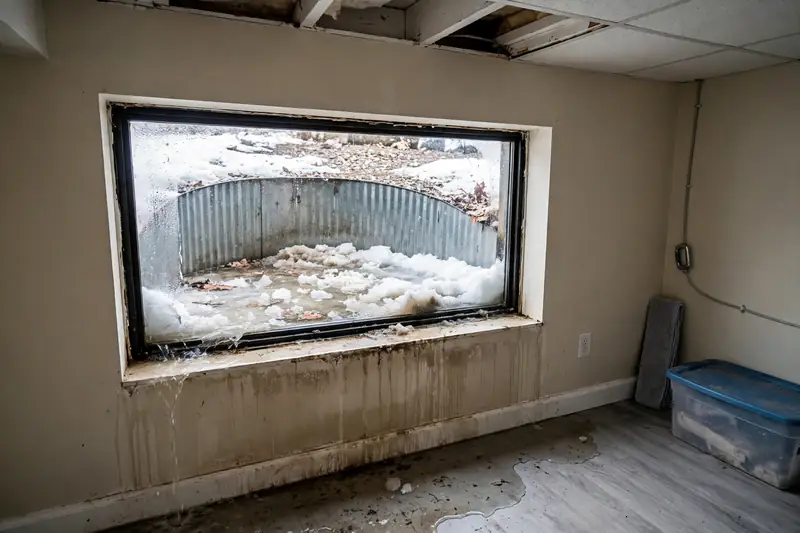
- Basement flooding. Sump pump failures, overflowing window wells and heavy storms leave inches of water on basement slabs. Our page on basement and window well flooding goes into that.
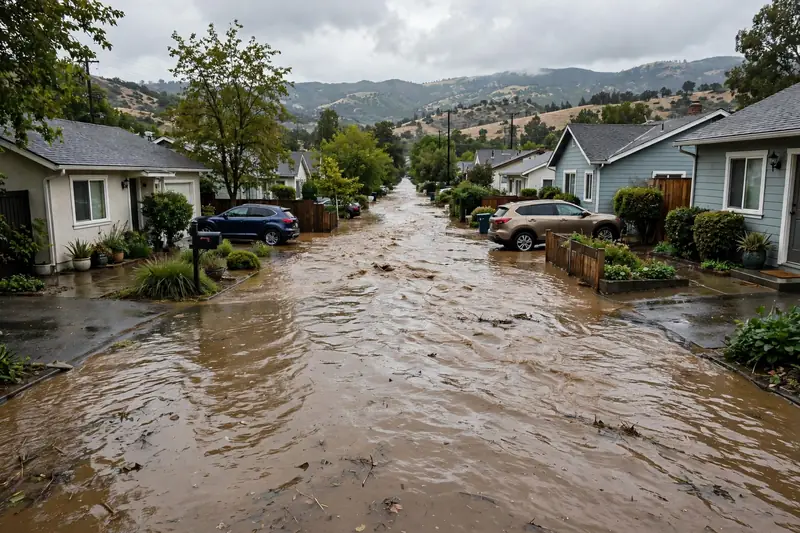
- Storm runoff. Afternoon thunderstorms in July and August push water under doors and through garages faster than most drains can handle.
Safety first, then the shutoff
Before anything else, decide whether the space is safe to enter.
- Electrical. If water is near outlets, power strips, a furnace or the electrical panel, do not wade in. Turn off breakers only from a dry spot. If you cannot get to the panel safely, call Colorado Springs Utilities or your electric provider.
- Gas. If you smell gas, leave the house and call 911 or your gas utility from outside.
- Ceilings. A bulging, water filled ceiling can come down. Keep people and pets out from under it.
- Source. Shut off the main water valve. If the water is coming from outside, sandbags or rolled towels at doorways can slow it.
- Pets and kids. Keep them out of the water, especially if it came from a drain or toilet.
Water still spreading? Talk to a local restoration pro now.Have your ZIP code ready. A local restoration pro answers.
Call (719) 555-0142What happens on the call and at the door
When you call, the dispatcher will ask where the water came from, how many rooms are wet, whether the source is stopped, and whether it is clean or from a drain. That tells the crew what to load. Most crews arrive with:
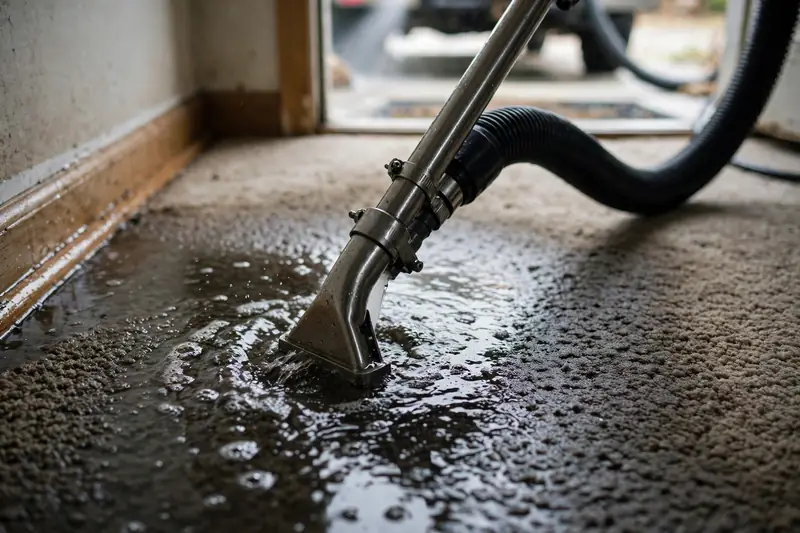
- A truck mounted extraction unit, or portable extractors for upstairs rooms and condos where hoses cannot reach
- Submersible pumps for standing water more than an inch or two deep
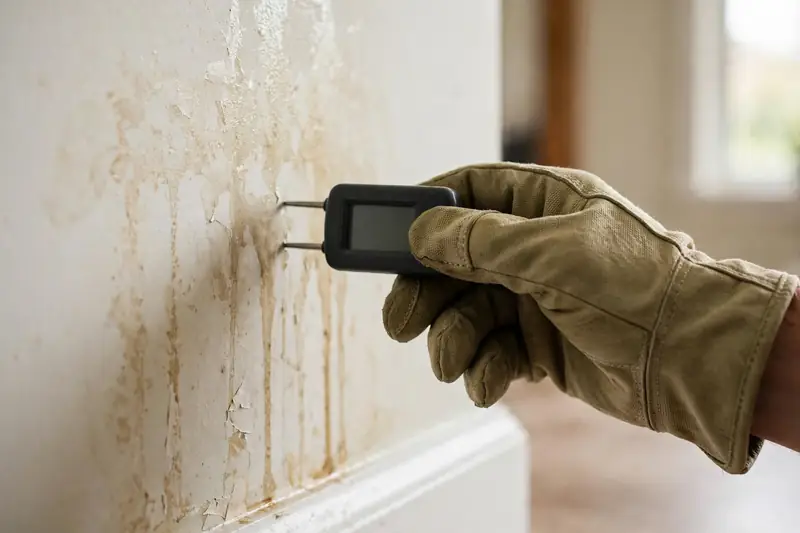
- Moisture meters and a thermal camera
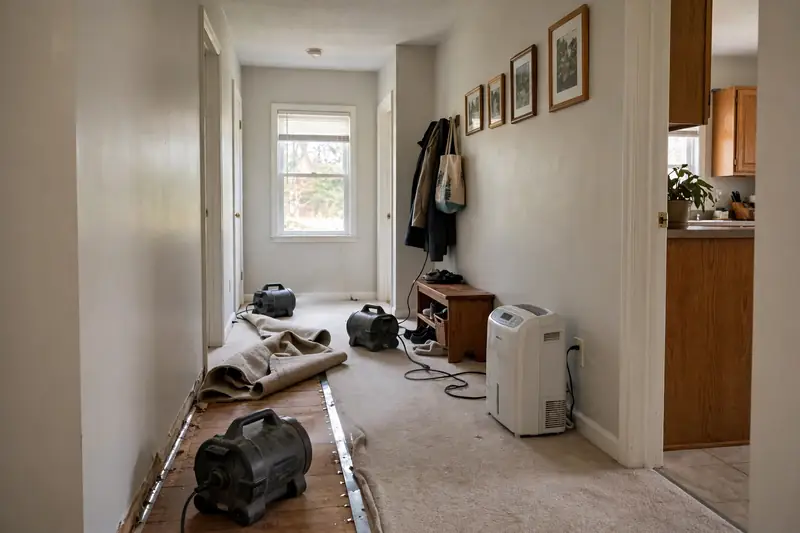
- Air movers and dehumidifiers to set once the bulk water is gone
- Protective gear if the water is gray or black
How extraction is done, step by step
Pump down
If water is standing deep enough, a submersible pump goes in first. This is common in basements after a sump failure or a window well breach. Pumping removes the bulk quickly so the extractors can work on what is left.
Carpet and pad
On carpet, the tech passes a wand or a weighted extraction tool over the surface again and again. Weighted tools press the carpet against the pad and pull water up from below. If the pad is saturated, the carpet is usually rolled back and the pad removed, since dried pad rarely recovers its shape and holds odor.
Hard floors
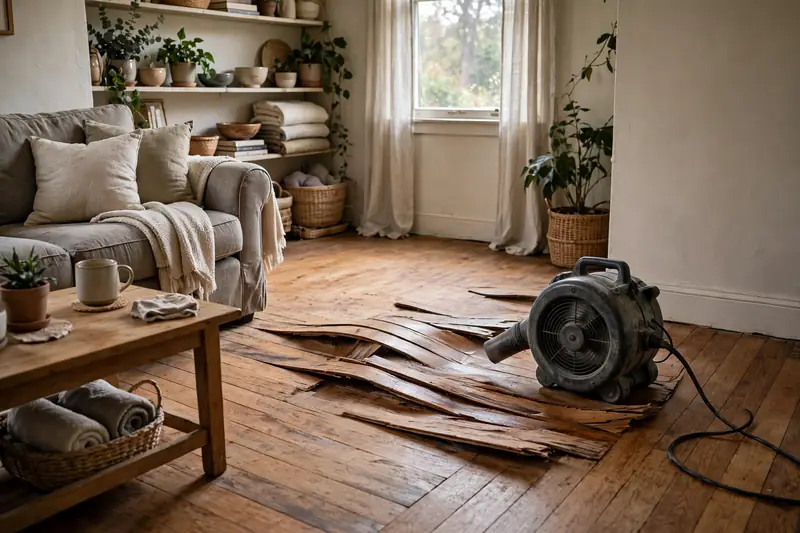
Tile and sealed concrete extract easily, and garage slabs are usually just squeegeed toward the door or drain. Laminate and engineered flooring are tricky because water slips under the planks and through the seams. Solid hardwood can sometimes be saved with specialty drying mats if the crew gets to it early. Our post on hardwood floor water damage explains the decision.
Under cabinets and inside walls
Water runs to the low spots. Techs check under kitchen and bathroom cabinets, behind toe kicks, and at the base of walls. Sometimes a few small holes are drilled at the bottom of a wall so air can reach the cavity.
Setting the drying equipment
Extraction ends when the extractor stops pulling water. At that point the crew sets air movers and dehumidifiers and takes baseline readings. From there, the work becomes a drying job, covered on our main water damage restoration page.
What drives the cost
The company that inspects gives you the scope and price in writing before they start. These are the things that shape it.
| Factor | What changes |
|---|---|
| Volume of water | Inches across a basement need pumps and more labor than a wet hallway |
| Number of rooms and levels | Upstairs and multi level jobs take longer to set up |
| Water source | Clean water extracts and dries; sewage or drain water adds removal, gear and disinfection |
| Flooring type | Carpet and pad, laminate, hardwood and tile each handle differently |
| Time since the leak | Water that sat overnight has spread further and soaked deeper |
| Access | Narrow basement stairs, crawlspaces and high rise units limit equipment |
| Time of day | Overnight, weekend and holiday visits may cost more |
| What follows | Extraction alone vs extraction plus demolition and rebuild |
Need someone to look at it today?Tell them your ZIP and what happened. A local pro picks up.
Call (719) 555-0142How long extraction takes
Most single room extractions take an hour or two once the crew is on site. A fully flooded finished basement can take most of a day, especially if furniture has to be moved and pad removed. Condos and townhomes add a step, because water often reaches the unit below and the HOA or building manager needs to be told. After extraction, drying usually runs 3 to 5 days for clean water. Colorado Springs' low humidity helps once air can reach the wet materials, but slabs and hardwood still take their time.
Insurance basics for extraction
Extraction is usually part of the mitigation portion of a claim. Many homeowners policies cover sudden water from inside the house, such as a burst pipe or failed water heater. Water that came in from outside as surface flooding is a different story and usually requires a flood policy. Your policy almost certainly asks you to take reasonable steps to limit damage, which is exactly what extraction is. Call your insurer, take photos, and keep the extraction invoice and moisture readings. For a closer look at what an adjuster looks at, read what a water damage adjuster looks for.
When to call for extraction
Call when water is standing anywhere in the house, when carpet is soaked past the surface, or when water has crossed into a second room. Call sooner if the water came from a toilet, floor drain or sewer line. If you are unsure, call and describe what you see; the dispatcher can usually say whether a crew should come tonight or whether morning is fine, and what to do until then. Crews handle extraction throughout the area, from Security-Widefield to Cimarron Hills and Gleneagle.
Water still spreading? Talk to a local restoration pro now.Have your ZIP code ready. A local restoration pro answers.
Call (719) 555-0142Sources and official resources
Service area
Water Extraction help across the Colorado Springs area
Choose your town or neighborhood for local details, ZIP codes and permit offices.
Colorado Springs neighborhoods
Homeowner guides
Guides about water extraction
FAQ
Common questions
Straight answers to what Colorado Springs homeowners ask most. Still unsure? Call and ask a local pro.
Call (719) 555-0142How much water is too much for a wet vac?
A shop vac is fine for a puddle on tile or a small corner of carpet. If water covers more than one room, has reached the walls, or is deeper than the vac can keep up with, you will spend hours emptying a tank while the pad and subfloor keep absorbing. Truck mounted units remove many times more water per pass.
Can my carpet be saved after extraction?
Often, if the water was clean and the carpet was pulled out within a day or two. The pad underneath is usually thrown out because it acts like a sponge and is inexpensive to replace. Carpet soaked by sewage or water that sat several days is normally removed for health reasons.
Do crews really come out at 2 a.m.?
Many local companies run on call crews overnight and on holidays, since pipes tend to split during the coldest hours. After-hours visits may be billed differently, and the company should tell you that before they head your way.
What if the power is out or the basement outlets are underwater?
Crews carry gas pumps and can run long cords from a dry circuit, or bring a generator. Do not plug anything into outlets that have been in water. Once the water is down, an electrician may need to check those circuits before they are used again.
Is it safe to walk through standing water in my basement?
Only if you are sure the power to that area is off and the water came from a clean source. Water touching outlets, a furnace or a water heater can be energized. If in doubt, stay on the stairs and wait for the crew or the utility.
Does extraction alone fix the problem?
No. Extraction gets the bulk water out, which is the biggest step, but the framing, drywall and subfloor still hold moisture afterward. Drying equipment and daily readings finish the job.
Need water extraction help now?
Call now and a licensed restoration pro near you can walk you through the next hour and set up a visit.