Colorado Springs, CO
Basement & Window Well Flooding in Colorado Springs
Water through a window well, up through a slab crack or out of a failed sump pit can soak a finished basement in an hour. A local restoration crew can pump it out and dry the walls and floor.
Have your ZIP code ready. A local restoration pro answers.
Updated November 12, 2026
Basement flooding in Colorado Springs is rarely a single big event. More often it is a few inches of water from a window well after a spring snow, a slow seep along the base of a wall after a wet week, or a sump pit that overflowed while the pump was stuck. In newer homes, that basement is usually finished, with carpet, framed walls and a bedroom or two, so a small amount of water reaches a lot of material. This page covers why basements here take on water, what to do first, and what the cleanup involves.
Why local basements take on water
Expansive clay and bentonite
Much of the area sits on clay soils that swell when wet and shrink when dry. That movement cracks basement walls and slabs, and wet clay against a foundation holds water right where you do not want it. Our article on expansive soil and basement water explains how it works.
Foundation underdrains and sump pumps
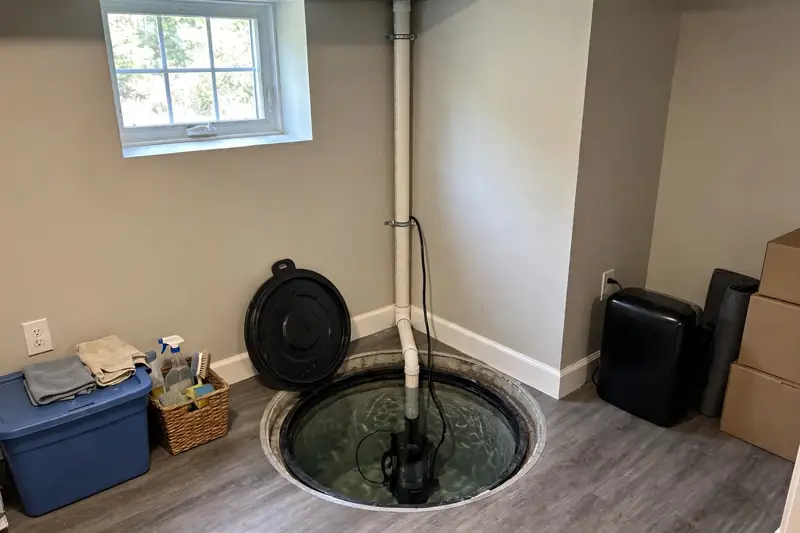
Plenty of newer homes in areas like Briargate, Stetson Hills, Banning Lewis Ranch and Falcon have perimeter drains that collect groundwater around the foundation. Some send it to a sump pit with a pump, and others drain by gravity. A stuck float switch, a dead pump during a power outage or a clogged discharge line can push that water up into the basement. See our post on sump pump and underdrain problems.
Window wells
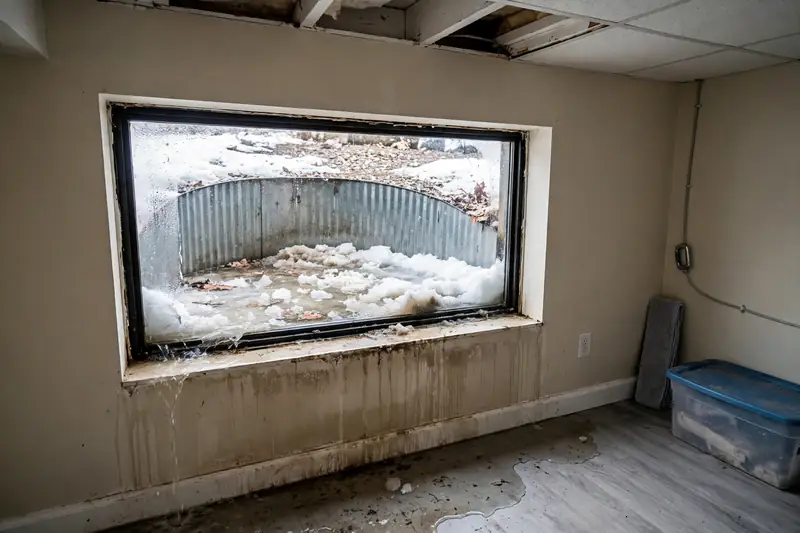
Basement windows sit in wells dug below grade. Snow piles into them, melts on the next sunny day and runs down the glass. If the well drain is clogged with leaves or the gravel has silted up, the well fills like a bucket until the window seal gives. Snowstorms in March, April and May are often heavy and wet, and the melt comes fast. Our post on window well flooding has prevention tips.
Downspouts and sprinklers
A downspout that dumps beside the foundation or a sprinkler head aimed at the house wall can saturate the soil in the same spot every day. That steady water often shows up as a damp strip of carpet along one wall.
Walkout and garden level basements
Homes built into hillsides on the west and north sides often have walkout basements with a door at grade. Storm water running down a slope can pool against that door or the slab edge beside it. A threshold that sits even an inch too low, or a patio that slopes toward the house, can let water in during every hard summer storm. If water only shows up after heavy rain and only near that door, grading is the likely culprit.
Plumbing inside the basement
Water heaters, washing machines, water softeners and floor drains often sit in the basement. When they fail, the water goes straight to the lowest floor.
What to do right now
- Stay out if the water is near outlets, the furnace or the water heater. Shut power off at the panel only if you can do it from a dry spot.
- Find the source. Look at window wells, the sump pit, the water heater and the floor drain. If it is a plumbing line, shut off the main.
- Check the sump pump. If it is not running, see if the breaker tripped or the float is stuck. Do not reach into the pit with the pump plugged in.
- Clear window wells of snow if you can do it safely from outside, and shovel snow away from the foundation.
- Lift what you can. Move boxes, electronics and furniture to a dry floor. Wet cardboard boxes break down quickly.
- Take photos of the water level, the source and the affected rooms.
Water still spreading? Talk to a local restoration pro now.Have your ZIP code ready. A local restoration pro answers.
Call (719) 555-0142What the crew does
Pump and extract
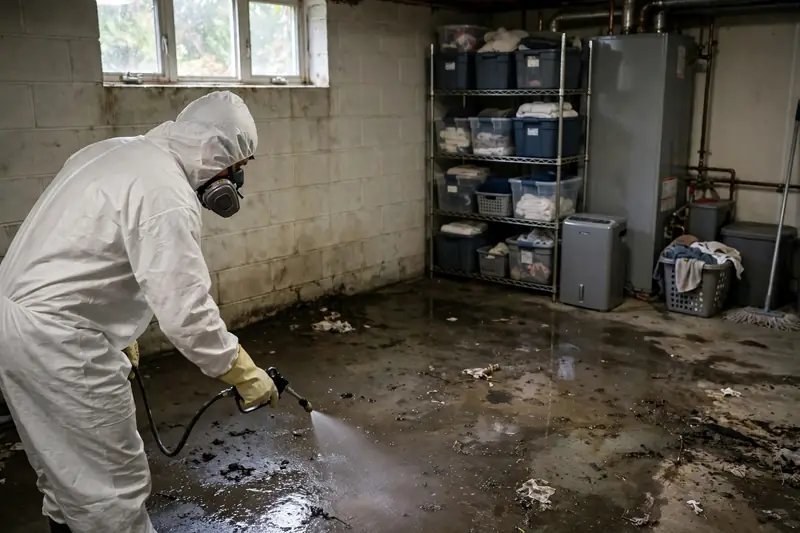
If water is more than an inch or so deep, a submersible pump goes in first. Extractors then pull water from carpet and pad. Basement carpet is often glued or tacked directly over concrete, so the crew checks how much the pad has absorbed.
Check the walls
Finished basement walls usually have drywall over wood studs, with insulation against the foundation. Meters and a thermal camera show how high the water wicked. The crew may remove the bottom section of drywall and wet insulation so the cavity can dry, and they look for mold on the back side of the drywall.
Dry the slab and framing
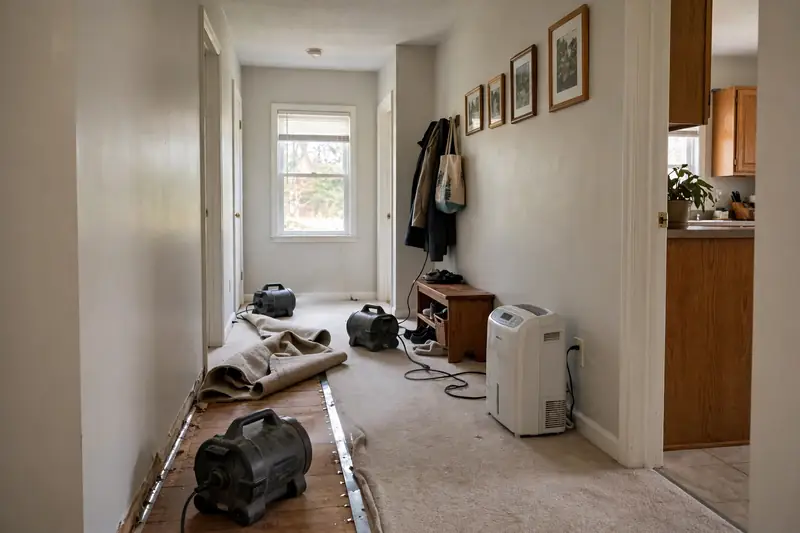
Concrete holds moisture for a long time, and so does the bottom plate of the framed walls. Air movers and dehumidifiers run until both test dry. Some crews use floor drying mats or heat in tough spots.
Identify the cause
The restoration crew is not a foundation contractor, but they can often tell you where the water came from: window well, wall crack, sump failure or plumbing. That helps you decide who to call next, whether a landscaper, a waterproofer or a plumber.
Rebuild
New pad and carpet or flooring, insulation, drywall, paint and baseboard. If the source was a window well or sump issue, fixing that before rebuilding saves you from doing it twice.
What drives the cost
Every basement is different, and the company that inspects writes up the scope and price before work starts. The biggest factors are:
| Factor | Why it matters |
|---|---|
| Finished vs unfinished | Carpet, framed walls and insulation add a lot of material to dry or replace |
| Water source | Clean plumbing water vs groundwater vs drain or sewer backup |
| Depth and spread | An inch in one room vs several inches across the whole basement |
| Flooring | Carpet, LVP, tile or bare concrete |
| Wall construction | Drywall with insulation, paneling, or painted concrete |
| Time water sat | Basements stay damp longer than upper floors |
| Access | Narrow stairs, low ceilings and storage-filled rooms add labor |
| Rebuild scope | Drying only vs new carpet, drywall and paint |
The basement flood cleanup cost article goes deeper into each of these.
How long it takes
Pumping and extraction usually take a few hours to a day. Drying a finished basement typically takes 3 to 5 days for clean water, though a thick slab or a soaked bottom plate can stretch that. If the walls and flooring are being replaced, the rebuild can add one to several weeks. Below grade rooms often lag a day or two behind upstairs rooms because cool concrete keeps the air near the floor damp, so the crew may shift equipment as each area finishes.
Need someone to look at it today?Tell them your ZIP and what happened. A local pro picks up.
Call (719) 555-0142Insurance, in general
Basement water is one of the most confusing claim types. Many policies cover sudden water from an inside plumbing failure. Groundwater that seeps through the foundation is commonly excluded. Water that backs up from a sump or floor drain usually needs a water backup endorsement. Surface water that flows in from outside, like a flash flood, generally requires flood insurance. Read your policy or ask your agent which situation you are in.
When to call
Call when water is on a finished basement floor, when carpet along a wall is wet, when a window well has filled and leaked, or when the sump pit is overflowing. Also call if you notice a musty smell in the basement but cannot find water, since that often means moisture behind the drywall. Crews cover the whole area, including Fountain and Falcon.
Water still spreading? Talk to a local restoration pro now.Have your ZIP code ready. A local restoration pro answers.
Call (719) 555-0142Sources and official resources
Service area
Basement Flooding help across the Colorado Springs area
Choose your town or neighborhood for local details, ZIP codes and permit offices.
Colorado Springs neighborhoods
Homeowner guides
Guides about basement flooding
FAQ
Common questions
Straight answers to what Colorado Springs homeowners ask most. Still unsure? Call and ask a local pro.
Call (719) 555-0142Why does my basement leak when it barely rained?
Often the water came from snowmelt or a sprinkler zone rather than rain. Clay soil around the foundation holds water and swells, pushing it toward the basement walls for days after a storm. A downspout that empties near the foundation makes it worse.
How do I know if my house has a foundation underdrain?
Many homes built in Colorado Springs subdivisions since the 1980s have one, but not all. Look for a sump pit in the basement or utility room, or ask the builder or the metro district. Some underdrains drain by gravity to a community system instead of to a pump.
Can wet carpet in a basement be saved?
If the water was clean, it was caught early and the carpet was extracted and dried within a day or two, sometimes. Basement carpet sits on concrete, which holds moisture, and the pad usually has to come out. Water that came up through a floor drain is treated as contaminated, and that carpet usually goes.
Should I put a cover on my window wells?
Clear window well covers keep out snow, leaves and storm runoff, and they are one of the simplest fixes for repeat window well flooding. Make sure the cover still allows the window to work as an emergency exit if the room is a bedroom. Check the well drain as well, since a covered well with a plugged drain can still fill from groundwater.
Is a sump pump failure covered by insurance?
Many standard policies exclude water that backs up from a sump or drain unless you add a water backup endorsement. Some insurers include it, others sell it as an add-on with its own limit. Check your declarations page before you need it.
Do I need to replace drywall that got wet at the bottom?
Not always. If the drywall got wet from clean water and dries quickly, it may only need monitoring. If it has been wet more than a day or two, if the water was dirty, or if there is insulation behind it, cutting the bottom section out is usually the safer choice.
Need basement flooding help now?
Call now and a licensed restoration pro near you can walk you through the next hour and set up a visit.