
Homeowner guide
Does Homeowners Insurance Cover Water Damage in Colorado?
Coverage usually turns on how the water got in and how fast it happened. Here is how to read your policy before you call the adjuster.
Have your ZIP code ready. A local restoration pro answers.
Updated October 14, 2026 · 5 min read
Most Colorado homeowners policies cover water damage that is sudden and accidental, such as a supply line that bursts or a water heater that splits open. They usually do not cover damage from a slow leak that went on for months, from surface flooding, or from a sewer backup unless you added an endorsement for it. Your own policy wording decides the answer, so read it or ask your agent before assuming either way.
The question your adjuster asks first: how fast did it happen?
Adjusters sort almost every water claim by two things: where the water came from and over what period. A pipe that froze and split during a January cold snap in Briargate is the classic covered loss. A shower pan that has been seeping into the subfloor for a year, leaving dark, soft wood, is the classic denial, because the policy treats long-term seepage as a maintenance problem.
Between those two is a lot of gray. A toilet supply line that dripped for a week before it let go may be argued either way. That is why the first photos matter. Take pictures of the failed part, the water on the floor and any staining before anything is moved. A restoration crew will also record moisture readings on day one, and those numbers help show whether the wet area matches a fresh event or a long one.
| Source of water | How many policies treat it |
|---|---|
| Burst or frozen supply pipe | Usually covered if you kept heat on or drained the system |
| Appliance hose or water heater failure | Usually covered for the resulting damage |
| Slow leak under a sink or shower | Often excluded as wear, tear or neglect |
| Roof leak after hail | Usually a wind/hail claim, often with a separate deductible |
| Creek overflow or surface runoff | Excluded; needs flood insurance |
| Sewer or drain backup | Excluded unless you carry a backup endorsement |
| Groundwater seeping through the foundation | Usually excluded |
Frozen pipes and the heat condition
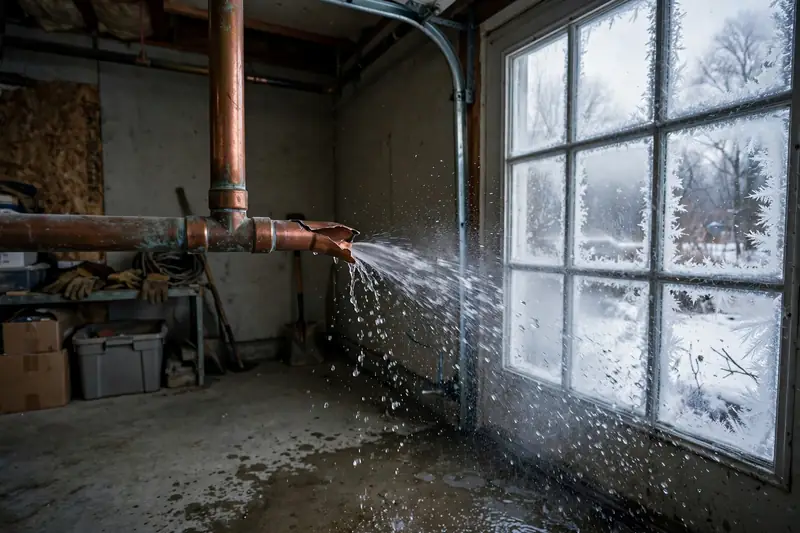
Colorado Springs gets warm afternoons followed by nights well below freezing, so frozen pipes are a common claim here. Standard policy forms usually cover freeze damage only if you used reasonable care to keep the heat on, or shut off the water and drained the lines. If you leave for a week in February and turn the furnace off, expect hard questions. Our post on frozen pipes and temperature swings covers the habits that keep you on the right side of that clause.
Not sure how bad it is? A short call usually tells you.Have your ZIP code ready. A local restoration pro answers.
Call (719) 555-0142Flood is its own policy
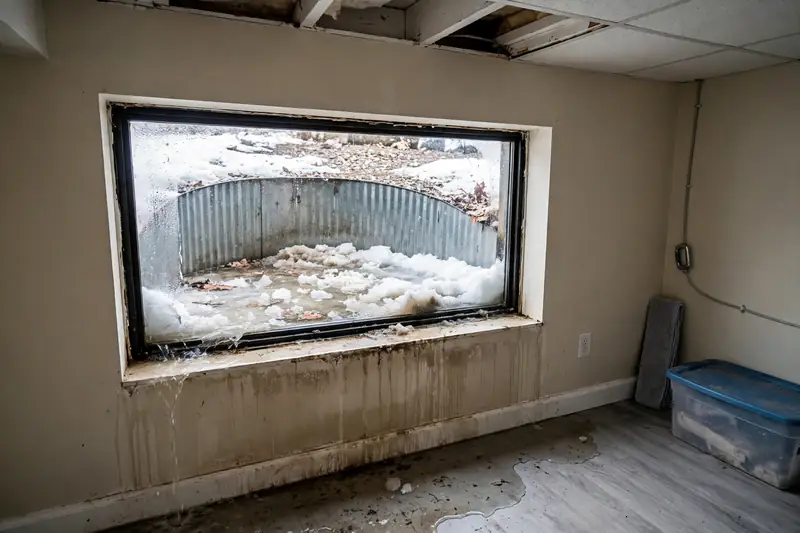
Homeowners policies do not cover flood. In insurance terms, flood means water from outside that rises over land: Fountain Creek leaving its banks, a monsoon cloudburst sending runoff down a slope into a walkout, or mud and water coming off a burn scar. Homes below the Waldo Canyon scar in Manitou Springs and along US-24 learned this after the 2013 flash floods.
Flood coverage comes from the National Flood Insurance Program or from a private flood carrier. NFIP policies generally have a 30-day waiting period before they take effect, so buying one after a storm warning does not help with that storm. If you live near a creek in Fountain or in Manitou Springs, ask about it before monsoon season, not during it. More detail is in our post on burn scar flash flooding.
Sewer backup needs an endorsement
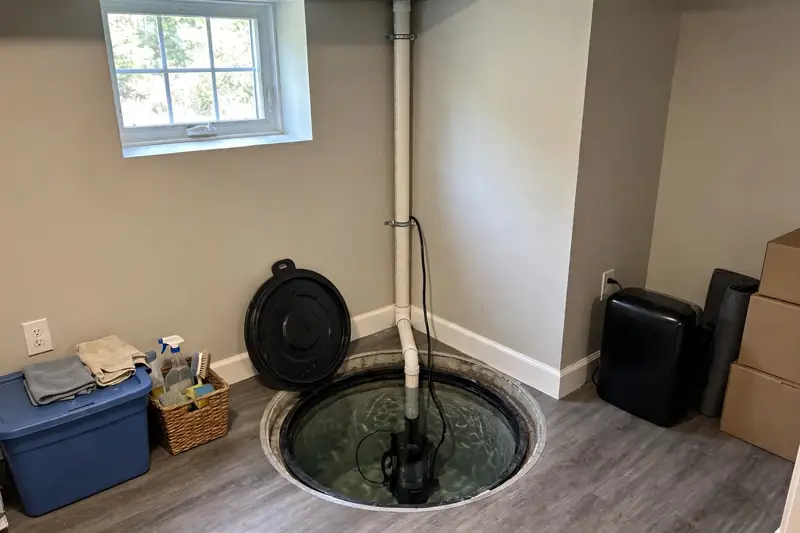
A standard policy excludes water that backs up through drains or a sewer line. Most carriers sell a water backup endorsement that adds this coverage, usually with its own limit that is lower than your dwelling limit. Some endorsements also cover sump pump failure, which matters in newer north and east side homes that rely on a sump and foundation underdrain. Read the limit carefully. A finished basement with carpet, drywall and furniture can use up a small backup limit quickly.
Inside Colorado Springs, the sewer line from your house to the city main is the owner's responsibility, so a root-clogged lateral is your repair and usually your claim. Our post on sewage backup in Colorado Springs walks through that.
Water still spreading? Talk to a local restoration pro now.Have your ZIP code ready. A local restoration pro answers.
Call (719) 555-0142Hail, roofs and the separate deductible
When a hailstorm cracks shingles and water drips through a ceiling weeks later, the claim usually falls under wind and hail. Many Colorado policies carry a separate wind/hail deductible, often set as a percentage of the dwelling coverage, that is higher than the deductible for other losses. Check your declarations page so the number is not a surprise. Our roof leak water damage page explains what the crew dries out while the roofer handles the roof.
Need someone to look at it today?Tell them your ZIP and what happened. A local pro picks up.
Call (719) 555-0142What drives what you end up paying
We do not quote figures on this site, because no two losses are alike. What moves the final bill, and the part your claim may or may not cover, includes:
- The water category (clean supply water is simpler than sewage)
- How much square footage got wet and whether it was finished space
- How long the water sat before drying started
- Whether drywall, flooring or cabinets have to come out
- Access, like a crawlspace or a second-floor bathroom over a finished ceiling
- Night or weekend response
- Your deductible and any special limits on your policy
The company that inspects the damage gives you the real figure in writing before work starts.
Colorado Division of Insurance resources
The Colorado Division of Insurance, part of the Department of Regulatory Agencies, regulates homeowners carriers in the state. A few things it offers are worth knowing:
- A consumer services team that answers insurance questions and takes complaints, reachable through doi.colorado.gov, where there is a "File a Complaint" option.
- A Homeowners' Insurance Summary of Coverage form, a plain-language overview of what a policy includes. It does not replace your actual policy language.
- A Post-Disaster Claims Guide, written for wide-scale events but useful for any large claim.
- Consumer advisories after big storms and freezes, including tips for burst pipe claims.
The Division also notes that if the estimate for repairs comes in below your deductible, the carrier will not issue a payment. Knowing that early helps you decide whether to file.
Steps that help any claim
- Stop the water. Close the main shutoff or the fixture valve.
- Photograph everything before you move it.
- Call your carrier or agent and get a claim number.
- Start drying. Policies expect you to protect the home from further damage, and waiting can turn a covered loss into a mold problem the carrier argues about.
- Keep damaged items or photos of them until the adjuster says you can toss them.
- Hold off on permanent repairs until the adjuster has seen the damage or approved the scope.
A local restoration pro can handle the water damage restoration and document it in a way adjusters are used to reading. For tips on that visit, see what a water damage adjuster looks for.
Water still spreading? Talk to a local restoration pro now.Have your ZIP code ready. A local restoration pro answers.
Call (719) 555-0142A few honest limits
Nobody outside your insurance company can promise you coverage, and that includes a restoration crew. What they can do is stop the damage from spreading, measure it accurately and give your adjuster clean records. The decision on your claim still comes from your policy wording and your carrier.
Sources and official resources
- Contractor license lookup (Pikes Peak Regional Building Department)
- Homeowners insurance help (Colorado Division of Insurance)
- IICRC: restoration industry standards body
- A Brief Guide to Mold, Moisture and Your Home (EPA)
- Colorado Springs weather warnings (National Weather Service, Pueblo)
- Septic systems and private wells (El Paso County Public Health)
- Bloodborne pathogens (OSHA)
- Flood insurance basics (FEMA FloodSmart)
Related
Services and areas for this guide
Homeowner guides
Keep reading
FAQ
Common questions
Straight answers to what Colorado Springs homeowners ask most. Still unsure? Call and ask a local pro.
Call (719) 555-0142Will my insurer pay for the drying crew before the claim is approved?
Many carriers expect you to start drying right away and treat that work as part of protecting the home. Call the claim in, ask the adjuster whether they want to approve the restoration company first, and keep every invoice and moisture reading. Payment still depends on the final coverage decision.
Does my policy cover the broken pipe itself?
Often it pays for the water damage the pipe caused but not for the pipe repair. Some policies do pay to open and close the wall to reach the leak. Read the section on tear-out, or ask your agent how your form handles it.
Is sewer backup the same as flood on my policy?
No. Flood means surface water from outside, like a creek overflowing or runoff pouring into a walkout basement. Sewer backup is water pushed up through your own drains. They are excluded under different clauses and fixed with different add-ons.
How do I get a full copy of my homeowners policy in Colorado?
Ask your carrier in writing. Colorado law requires a homeowners insurer to provide a copy of the policy, including the declarations page and endorsements, within three business days of your request.
Can the restoration company talk to my adjuster for me?
Most crews will share photos, moisture maps and drying logs directly with the adjuster if you give permission. You still own the claim and make the decisions on it.
Water where it shouldn't be?
Call now and a licensed restoration pro near you can walk you through the next hour and set up a visit.