Homeowner guide
Water Damage Categories and Classes Explained
Category tells you how dirty the water is. Class tells you how hard it will be to dry. Both shape what the crew removes and how long the job runs.
Have your ZIP code ready. A local restoration pro answers.
Updated October 28, 2026 · 4 min read
The restoration industry uses two separate scales from the IICRC S500 standard for water damage. Category, numbered 1 to 3, describes how contaminated the water is: Category 1 is clean, Category 2 is gray, and Category 3 is grossly contaminated, like sewage or floodwater. Class, numbered 1 to 4, describes how much water got absorbed and how hard it will be to dry. Every job gets one of each, and together they decide what has to be removed, what protective steps the crew takes, and how the drying is set up.
Where the scales come from
The IICRC (the Institute of Inspection, Cleaning and Restoration Certification) publishes the ANSI/IICRC S500, the standard most restoration companies and insurance adjusters reference for water damage work. It has been revised several times. Technicians use its categories and classes as shared language, so when your estimate says "Cat 2, Class 3," the adjuster knows roughly what kind of job it was.
The three categories
Category 1: clean water
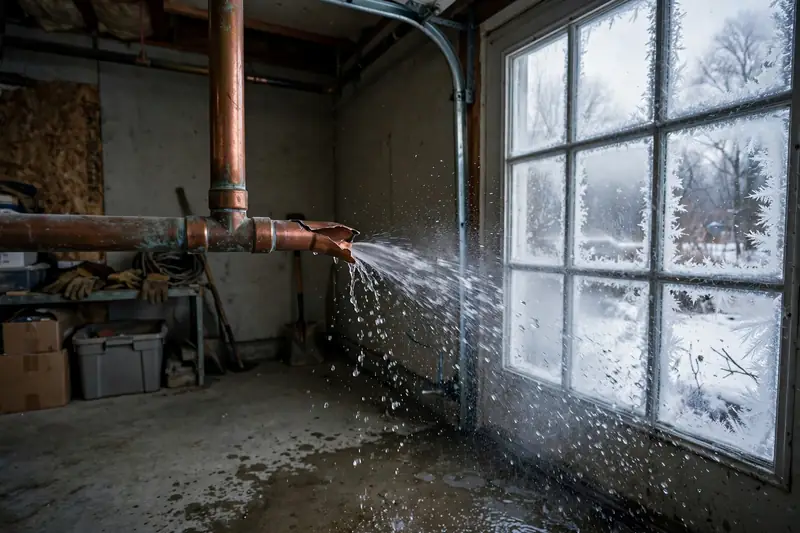
Water from a sanitary source that poses no real hazard when it first escapes. Examples include a burst supply line, a broken water heater fill line, a refrigerator ice maker line, and rain falling straight from the sky. Most frozen pipe bursts in Colorado Springs start as Category 1. That is the best case: carpet and pad can sometimes be dried in place, and materials can often be saved if drying starts quickly.
Category 2: gray water
Water with significant contamination that could cause discomfort or illness if someone contacts or swallows it. Examples include washing machine discharge, dishwasher overflow, a toilet overflow with urine but no feces, aquarium water, and water that has passed through a lot of building material. Carpet pad soaked with Category 2 water is usually removed. The crew also applies an antimicrobial before drying.
Category 3: black water
Grossly contaminated water that can carry bacteria, viruses, chemicals or other harmful agents. This includes sewage, toilet backflow from beyond the trap, and floodwater rising from rivers, creeks and surface runoff. In the Pikes Peak region, that covers a sewer backup into a basement, a septic failure, and the muddy water that came off burn scars into Manitou Springs streets in 2013. Porous materials that Category 3 water touches (carpet, pad, drywall, insulation, upholstered furniture) are generally removed and discarded. Crews work with containment and protective gear, and children, pets and anyone with health concerns should stay away.
Our sewage cleanup and storm and flood damage pages explain how those jobs differ from a clean leak.
Not sure how bad it is? A short call usually tells you.Have your ZIP code ready. A local restoration pro answers.
Call (719) 555-0142Categories get worse with time
A category is not fixed. Clean water does not stay clean once it sits. It dissolves what it touches, soaks into dusty carpet backing and drywall paper, and gives bacteria time to multiply. Warm temperatures speed that up. That is why a slow, unnoticed leak in a vacant rental or a basement nobody visits can be treated as Category 2 or 3 by the time a crew arrives, even if it started as a supply line.
Water still spreading? Talk to a local restoration pro now.Have your ZIP code ready. A local restoration pro answers.
Call (719) 555-0142The four classes
Class is about the evaporation load: how much water has to come out of the structure and how easily the wet materials give it up.
| Class | What it looks like | Typical drying approach |
|---|---|---|
| Class 1 | A small area, or materials that hold little water, like a leak caught early on tile or sealed concrete | Least equipment, shortest dry |
| Class 2 | A whole room with wet carpet and pad, and water wicking up the bottom of the walls | More dehumidifiers and air movers |
| Class 3 | Water came from above or saturated most surfaces, including ceilings, walls, insulation and floors | Heavy equipment load, close monitoring |
| Class 4 | Low-porosity materials holding bound water: hardwood, plaster, brick, stone, concrete, deep subfloor | Specialty drying, often longer |
Class 4 shows up a lot in older Colorado Springs homes. Houses in Old Colorado City, the Old North End and Manitou Springs often have plaster walls, stone foundations and old-growth hardwood floors. Those materials take on water slowly and give it up slowly. A crew may use mats on hardwood, injection systems for wall cavities, or heat to push moisture out. Our post on saving or replacing hardwood floors covers that decision.
How category and class work together
The two scales answer different questions.
- Category answers "what do we remove and how do we protect people?" Higher categories mean more removal and more protection.
- Class answers "how much drying power do we need and for how long?" Higher classes mean more equipment and more days.
A clean supply line leak that soaks a whole finished basement might be Category 1, Class 2. A sewer backup that barely reached a concrete laundry floor might be Category 3, Class 1. The first job is a big drying project with little removal. The second is a small but careful disinfection job.
Need someone to look at it today?Tell them your ZIP and what happened. A local pro picks up.
Call (719) 555-0142What it means for drying time
A clean-water job with typical materials usually dries in about three to five days, and the dry air at 6,000 feet often helps it toward the shorter end. Category 3 jobs take longer because of removal and cleaning before drying even starts. Class 4 materials can add days. See how long it takes to dry a house in Colorado Springs for more on timelines.
What drives the cost
Category and class both push the cost of a job, along with the size of the wet area, finished versus unfinished space, how long the water sat, access, and after-hours response. We do not list prices. The company that inspects gives you a written figure once it has measured the job.
Water still spreading? Talk to a local restoration pro now.Have your ZIP code ready. A local restoration pro answers.
Call (719) 555-0142Questions to ask the crew
- What category and class did you assign, and why?
- Which materials are coming out, and which are you trying to dry in place?
- What moisture readings are you aiming for, and how will you show me?
- Is anything here a mold concern already? If so, read our mold remediation page.
A good tech will explain it in plain words and put it in the water damage restoration paperwork your adjuster sees.
Sources and official resources
- Contractor license lookup (Pikes Peak Regional Building Department)
- Homeowners insurance help (Colorado Division of Insurance)
- IICRC: restoration industry standards body
- A Brief Guide to Mold, Moisture and Your Home (EPA)
- Septic systems and private wells (El Paso County Public Health)
- Bloodborne pathogens (OSHA)
- Flood insurance basics (FEMA FloodSmart)
- Colorado Springs weather warnings (National Weather Service, Pueblo)
Related
Services and areas for this guide
Homeowner guides
Keep reading
FAQ
Common questions
Straight answers to what Colorado Springs homeowners ask most. Still unsure? Call and ask a local pro.
Call (719) 555-0142Who decides which category my water is?
The restoration technician makes the call on site, based on the source and what the water has touched. The adjuster reviews that call. If there is doubt, crews usually treat the water as the more contaminated category.
Can a clean-water leak become Category 3?
Yes. Clean water picks up contaminants from the materials it soaks into and from the floor it sits on, and bacteria grow over time. A supply line leak that sat unnoticed in a warm basement for days can be handled as gray or black water.
Is rainwater coming through the roof Category 1?
Rain falling straight from the sky is generally treated as clean at the source. Once it runs through roofing, insulation, attic debris and ceiling materials, the technician may treat it as Category 2, depending on what it picked up.
Why does the class matter to me?
Class drives how much drying equipment goes in and how long it stays. A Class 1 job in one corner might need a dehumidifier and a couple of air movers for a few days. A Class 4 job with soaked hardwood or plaster can need specialty drying and more time.
Do categories change what my insurance covers?
Category does not decide coverage by itself. What matters is the cause, like a burst pipe versus a sewer backup or flood. Category mostly changes how the job is done and documented.
Water where it shouldn't be?
Call now and a licensed restoration pro near you can walk you through the next hour and set up a visit.