Colorado Springs, CO
Hail & Roof Leak Water Damage in Colorado Springs
A brown ring on the ceiling weeks after a hailstorm usually means water has been getting into the attic for a while. A local restoration pro can find how far it spread and dry it out.
Have your ZIP code ready. A local restoration pro answers.
Updated November 12, 2026
Colorado Springs sits along the Front Range, one of the most active hail regions in the country. Hail season usually runs from late spring through summer, and a single storm can damage thousands of roofs in an afternoon. The August 2018 storm that struck the southwest side, including Cheyenne Mountain Zoo, led to thousands of property claims on top of a much larger wave of auto claims. The roof is only part of the story. What follows is the water that gets in afterward, often slowly and out of sight. This page covers hail and roof leak water damage, from the attic down.
How roof water gets in
Hail damage
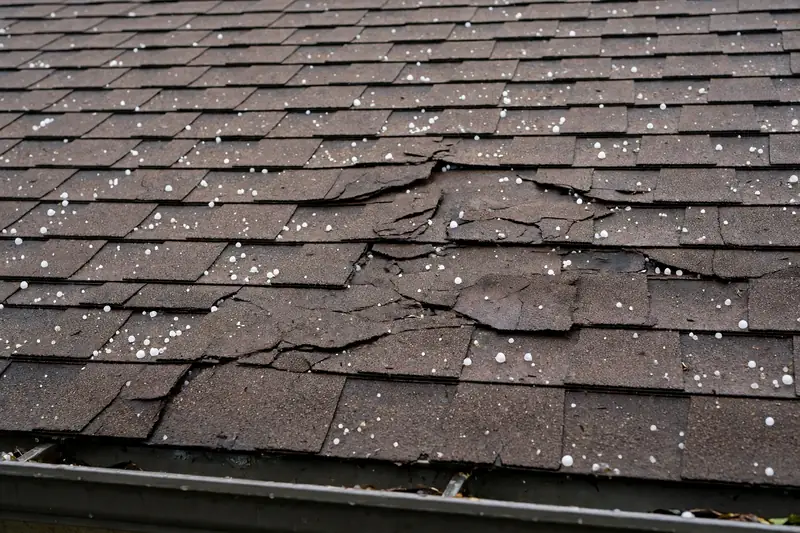
Hail cracks and bruises asphalt shingles, punches holes in vents and flashing, dents gutters and cracks plastic skylight domes. The damage often does not leak right away. The next few rainstorms slowly soak the roof deck, then the insulation, then the ceiling drywall. Our post on hail damage and ceiling stains shows what that progression looks like.
Ice dams
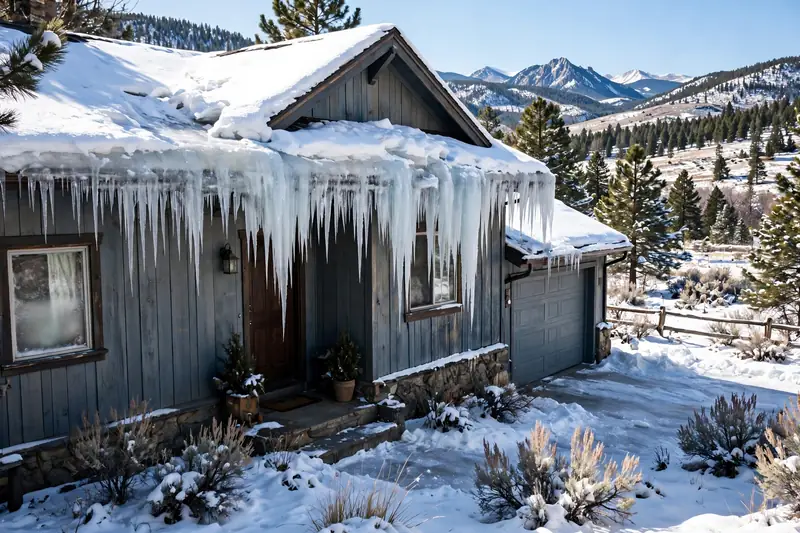
Snow on the roof melts from heat escaping through the attic, runs down to the cold eaves and refreezes. The ridge of ice holds back more melt, which backs up under shingles and drips into exterior walls and ceilings. In this climate, snow often melts within a few days, so dams can form and thaw repeatedly through a winter. Read more in ice dams on Colorado Springs roofs.
Evaporative coolers
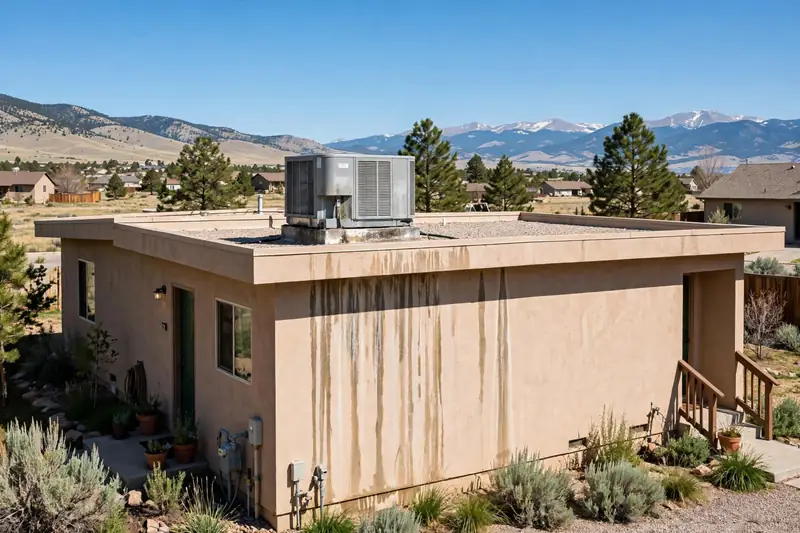
Many older homes in central Colorado Springs, Ivywild and the west side still use swamp coolers on the roof or in the attic. Stuck floats, rusted pans and split supply lines leak into the ceiling below. Coolers that were not drained before winter can split their lines in the first freeze. Our article on swamp cooler leaks covers what to check.
Wind and blown snow
Strong downslope winds come off the mountains, especially in winter. They lift and crease shingles, tear off ridge caps and drive snow into attic vents. Fine, powdery snow blown through ridge or gable vents can drift onto the insulation and melt when the sun comes out, leaving wet spots that look like a roof leak even though the shingles are intact.
Flashing, vents and skylights
Chimneys, plumbing vents, bathroom fans and skylights all cut holes in the roof. Their flashing and seals age, crack in the strong sun at this elevation and loosen in high winds.

What to do right now
- Get a bucket under the drip and protect the floor and furniture below with plastic.
- If the ceiling is bulging, keep everyone out from under it. A small hole at the lowest point, made with a screwdriver over a bucket, can release the water in a controlled way. Only do this if you can reach safely and the area is not near a light fixture.
- Turn off power to any light or fan where water is dripping.
- Get the roof covered. Call a roofer for a tarp or temporary patch. Do not climb on a wet or icy roof yourself.
- If it is a swamp cooler, shut off its water supply line and unplug the unit.
- Photograph the ceiling, the attic if you can see in, and any visible roof damage for your claim.
Water still spreading? Talk to a local restoration pro now.Have your ZIP code ready. A local restoration pro answers.
Call (719) 555-0142What the crew does
Trace the water
Roof water travels. It runs down rafters, along the top of a wall and across the back of drywall before it shows up as a stain, often several feet from where it entered. The tech checks the attic, the ceiling and the walls below with moisture meters and a thermal camera to map the full wet area.
Attic work
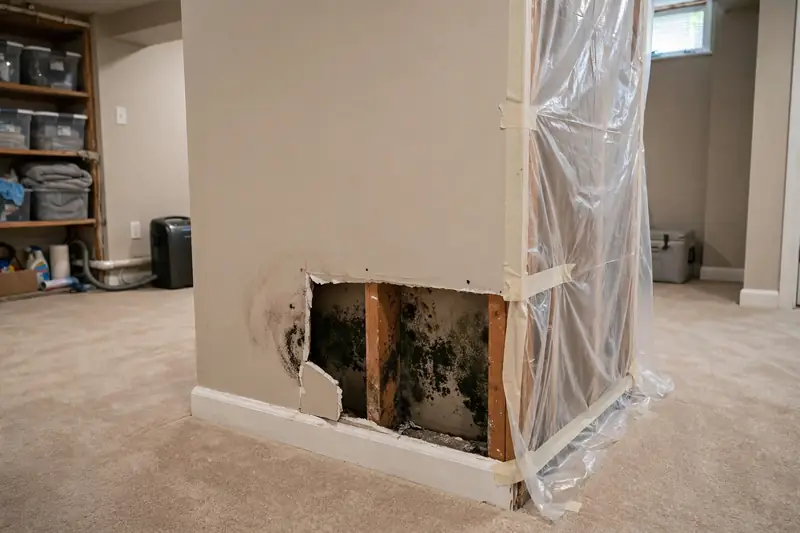
Wet blown in insulation is often removed with a vacuum system. The roof deck and rafters are checked for moisture and staining. If mold is already present on the deck, the crew may recommend mold remediation for that area.
Ceiling and wall drying
Stained drywall that stayed firm can sometimes be dried in place and sealed. Sagging or soft drywall is removed. Air movers and dehumidifiers dry the ceiling cavity and walls, with readings taken daily.
Records for the claim
Hail claims often involve an adjuster, a roofer and a restoration company at once, so good records matter. The crew photographs the wet attic and ceiling, logs moisture readings and notes what was removed. That record helps when the adjuster asks how the water got in and how far it traveled.
Repair and paint
Once everything reads dry, the crew replaces drywall, matches texture, primes with a stain blocking primer and paints. Insulation is replaced to the right depth.
What drives the cost
The company that inspects gives you the scope and price in writing before work begins. Here is what moves it.
| Factor | Why it matters |
|---|---|
| How long it leaked | A fresh leak vs months of slow seepage through the roof deck |
| Attic insulation | Blown in vs batts, and how much area got wet |
| Ceiling material | Drywall, textured ceilings, or plaster in older homes |
| Number of rooms | One stain vs water across several rooms |
| Mold present | Adds containment and remediation steps |
| Access | Low pitch attics and tight crawl space attics take more labor |
| Roof work | The roof repair is usually a separate contractor and estimate |
| Insurance terms | Wind and hail deductibles change your out of pocket share |
How long it takes
Drying a ceiling and attic area typically takes 3 to 5 days, and the dry air often helps here. Removing and replacing insulation and drywall adds a few days. The roof itself may take longer, depending on roofer schedules after a big hail event, which is why a temporary cover matters.
Need someone to look at it today?Tell them your ZIP and what happened. A local pro picks up.
Call (719) 555-0142Insurance for hail and roof leaks
Hail damage to a roof is usually handled as a wind and hail claim. Many Colorado policies carry a separate, higher wind and hail deductible, often a percentage of your home's insured value. If hail broke the roof and water came in as a result, the interior water damage is often part of the same claim. Leaks from an old, worn roof, from poor maintenance or from a slow drip that went on for months are commonly denied. Ice dam damage and swamp cooler leaks are treated differently from policy to policy. Read your declarations page, and if a dispute comes up, the Colorado Division of Insurance has consumer resources. Our article on what a water damage adjuster looks for can help you prepare.
When to call
Call when you see a new ceiling stain, especially after a hailstorm or heavy snow, when drywall is sagging, when water drips from a light fixture, or when attic insulation looks wet or flattened. If half the street is getting new roofs after a storm, have your attic checked too, even without a visible stain. A stain the size of a dinner plate can sit above a much larger patch of soaked insulation, so a small mark is still worth a look. Crews cover homes from Rockrimmon to Banning Lewis Ranch and beyond. If the leak reached carpet or rooms below, the crew can handle the wider drying job as well.
Water still spreading? Talk to a local restoration pro now.Have your ZIP code ready. A local restoration pro answers.
Call (719) 555-0142Sources and official resources
Service area
Roof Leaks help across the Colorado Springs area
Choose your town or neighborhood for local details, ZIP codes and permit offices.
Colorado Springs neighborhoods
Homeowner guides
Guides about roof leaks
FAQ
Common questions
Straight answers to what Colorado Springs homeowners ask most. Still unsure? Call and ask a local pro.
Call (719) 555-0142Why did my ceiling stain show up a month after the hailstorm?
Hail often bruises or cracks shingles without knocking them loose, so the roof looks fine from the ground. The next few rains seep through slowly, soaking the roof deck and attic insulation first. By the time a stain reaches the ceiling, the attic has usually been wet for a while.
Should the roofer or the restoration crew come first?
Get the roof tarped or temporarily sealed first so no more water gets in. The restoration crew can then dry the attic and ceilings while the roof claim moves forward. In many cases both happen within the same week.
What is a wind and hail deductible?
Many Colorado homeowners policies have a separate deductible for wind and hail damage, often set as a percentage of the home's insured value instead of a flat amount. That can make it much higher than your regular deductible. Look at your declarations page so you know the number before you file.
Can a swamp cooler really cause this much damage?
Yes. A rooftop or attic evaporative cooler holds water in a pan and is fed by a constant supply line. If the float sticks or the pan rusts through, water can run into the ceiling for hours. Older coolers that were not drained for winter can also split their lines when they freeze.
Do I need to replace wet attic insulation?
Blown in insulation that got soaked usually mats down and does not recover, so it is often removed in the wet area. Batt insulation that got slightly damp may dry in place. The tech will check it with a meter and by hand.
My skylight leaks only when it rains hard from the west. Why?
Wind driven rain can push water past flashing and seals that hold up fine in a calm rain. Hail can also crack the dome or the frame in ways that are hard to see. A roofer can inspect the flashing, and a restoration tech can check the drywall around the opening for hidden moisture.
Need roof leaks help now?
Call now and a licensed restoration pro near you can walk you through the next hour and set up a visit.