Homeowner guide
Sewage Backup in Colorado Springs: What to Do First
Keep people and pets away, stop running water, and figure out whether the problem is your line or the main. Here is the order that works.
Have your ZIP code ready. A local restoration pro answers.
Updated October 17, 2026 · 5 min read
When sewage backs up into your home, get everyone out of the affected area, stop using every sink, toilet, shower and appliance that drains, and turn off power to the area if water is near outlets or cords. Then call a plumber to clear the line and a restoration crew to clean and dry what got wet. In Colorado Springs, if you are on city sewer, call Colorado Springs Utilities too: they check whether the blockage is in their main or in your service line, and the service line is yours to fix.
Safety comes before anything else
Raw sewage carries bacteria and viruses that make people sick. Treat any backup as contaminated, even if it looks like mostly water.
- Keep children, pets and anyone with a weak immune system or open cuts out of the area.
- Do not walk through it barefoot or in house shoes. Rubber boots, waterproof gloves and eye protection are the minimum.
- Do not use a household vacuum or shop vac that you plan to keep using for other jobs.
- If water reaches outlets, a furnace or a water heater, do not wade in. Shut the breaker from a dry spot or wait for help.
- Wash hands well and change clothes after any contact.
If someone gets sick after exposure, call your doctor. For anything serious, call 911.
Stop the flow
A backup only keeps coming if water keeps going down the drains. The basement floor drain or a lower-level toilet is the lowest opening, so everything flushed upstairs comes out there. Tell the household to stop flushing, showering and running the dishwasher or washer until the line is clear.
If you know where your sewer cleanout is (often a capped pipe in the basement, the yard or near the foundation), a plumber will use it to run a cable or camera down the line.
Water still spreading? Talk to a local restoration pro now.Have your ZIP code ready. A local restoration pro answers.
Call (719) 555-0142City sewer: who owns what under Colorado Springs Utilities rules
Inside the city, Colorado Springs Utilities provides wastewater service. Its policy is clear about ownership: the service line that runs from your house to the CSU main belongs to the property owner, and so does responsibility for damage caused by blockages in that line. When you report a backup, CSU will come out to determine whether the problem is in its main or your service line. If it is in your line, arranging and paying for the repair falls on you.
CSU only accepts liability for backup damage when its own negligence caused it, as defined under Colorado law. Events beyond reasonable maintenance of its system, including severe storms and flooding, are not its responsibility under that policy. If you think the main was at fault, CSU has a claims process and asks for a list of damaged items, the cause of the backup and proof of your loss, so keep photos and receipts.
CSU also suggests checking with your homeowners insurer about whether it offers coverage for service line repairs. Some carriers sell a separate service line endorsement on top of the backup endorsement.
Why older neighborhoods see more lateral trouble
In the Old North End, Old Colorado City and Patty Jewett, many homes date to the early 1900s, and the laterals under their yards are often clay tile or Orangeburg pipe. Clay joints let tree roots in. Orangeburg, a tar paper pipe used in the middle of the last century, can sag and collapse. Mature trees along those streets make root intrusion a frequent cause of repeat backups. A camera inspection shows if the problem is a root ball a plumber can cut out or a broken section that has to be dug up and replaced.
Septic homes: Black Forest, Falcon and the eastern county
Much of Black Forest and the rural eastern county runs on private septic systems instead of city sewer. In Falcon, some subdivisions are on district sewer and some lots are on septic, so check which you have. A septic backup has different causes: a full tank, a clogged outlet baffle, a failed drain field, or a frozen line in a cold snap.
El Paso County Public Health regulates onsite wastewater systems. Its guidance for a septic system that is damaged or backing up is to stop using it and contact the Environmental Health Division for direction on repair. If you have a private well near the system and suspect contamination, it also suggests having the water tested.
| City sewer | Septic system | |
|---|---|---|
| Who to call for the line | A plumber, plus CSU to check the main | A septic pumper or septic contractor |
| Common causes | Roots, grease, wipes, collapsed lateral | Full tank, clogged baffle, failed field, frozen line |
| Who owns the problem | Owner owns the service line to the main | Owner owns the whole system |
| Regulator | Colorado Springs Utilities policy | El Paso County Public Health |
Need someone to look at it today?Tell them your ZIP and what happened. A local pro picks up.
Call (719) 555-0142What the cleanup crew does
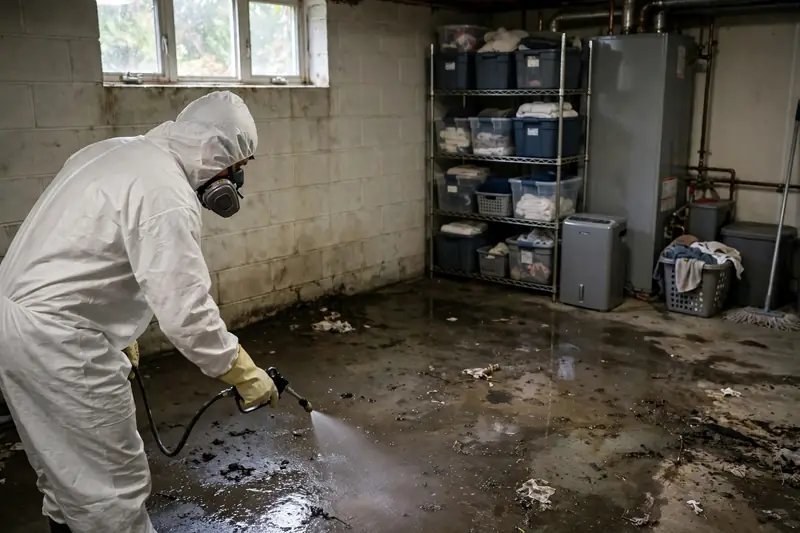
Sewage is Category 3 water under the restoration industry's standard, the most contaminated class. That changes the work compared with a clean pipe burst. A crew doing sewage cleanup will usually:
- Set up containment so the contaminated area does not spread through the house.
- Extract standing water and solids.
- Remove porous materials that touched the sewage: carpet and pad, the bottom of the drywall, insulation, and often baseboards and cabinet toe kicks.
- Clean and disinfect the structure that stays.
- Dry the framing and slab with dehumidifiers and air movers, and check moisture until it reaches normal levels.
The water damage categories explained post covers why sewage gets handled so differently from a supply line leak.
What affects the cost
There is no flat number for sewage cleanup. The final figure depends on how far the water spread, whether the basement was finished, how much material comes out, how long it sat, whether the plumbing repair causes more demolition, and whether the job happens after hours. Coverage depends on your backup endorsement and deductible. The company that inspects gives you a written figure before work starts.
Water still spreading? Talk to a local restoration pro now.Have your ZIP code ready. A local restoration pro answers.
Call (719) 555-0142Preventing the next one
- Keep wipes, grease and paper towels out of drains, even "flushable" wipes.
- If you have big trees over the lateral, ask a plumber about routine cleaning and a camera check.
- Ask whether a backwater valve makes sense for your basement.
- Pump your septic tank on the schedule your system needs.
If the backup soaked a finished basement, read our basement flooding page for what drying a lower level involves.
Sources and official resources
- Contractor license lookup (Pikes Peak Regional Building Department)
- Homeowners insurance help (Colorado Division of Insurance)
- IICRC: restoration industry standards body
- Septic systems and private wells (El Paso County Public Health)
- Bloodborne pathogens (OSHA)
- Flood insurance basics (FEMA FloodSmart)
- A Brief Guide to Mold, Moisture and Your Home (EPA)
Related
Services and areas for this guide
Homeowner guides
Keep reading
FAQ
Common questions
Straight answers to what Colorado Springs homeowners ask most. Still unsure? Call and ask a local pro.
Call (719) 555-0142Can I clean up a small sewage backup myself?
A few cups on a tile floor near a floor drain can be handled with gloves, eye protection and a disinfectant if nobody in the house is at higher risk. Once it reaches carpet, drywall or more than a small patch, porous materials usually have to come out, and that is work for a crew with containment and protective gear.
How do I know if the clog is in my line or the city main?
If only your house backs up and the neighbors are fine, the lateral is the usual suspect. If several homes on the street have problems at once, the main is more likely. Colorado Springs Utilities will send someone to check which side the blockage is on.
Should I keep using the toilet upstairs if the backup is in the basement?
No. Every flush upstairs sends more water down the same line toward the clog, and it comes out at the lowest drain. Stop all water use until a plumber clears the line.
Will my homeowners policy pay for sewage cleanup?
Only if you carry a water or sewer backup endorsement, in most cases. Standard policies exclude it. Check the endorsement limit too, because it is often lower than your main coverage.
What should I do if my septic system backs up in Black Forest?
Stop using water in the house and call a septic pumper to check the tank and the line to it. El Paso County Public Health regulates septic systems and advises owners to stop using a system that is backing up and contact its Environmental Health Division for guidance on repairs.
Water where it shouldn't be?
Call now and a licensed restoration pro near you can walk you through the next hour and set up a visit.