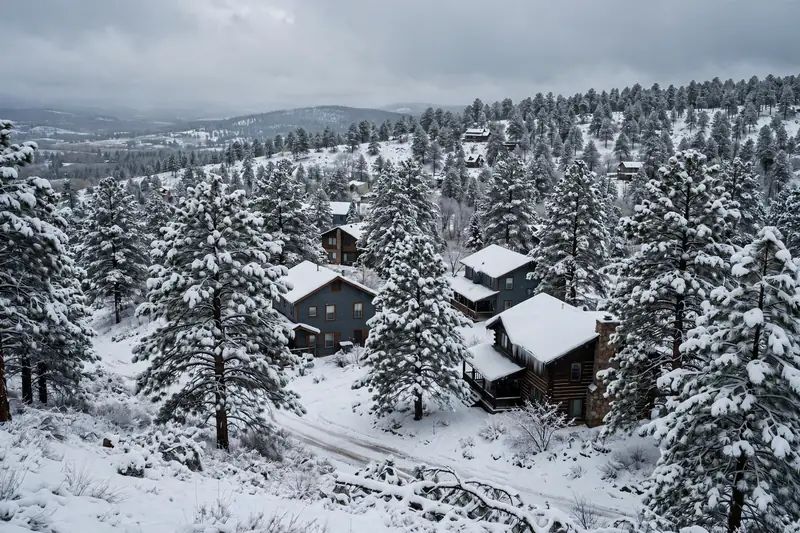
El Paso County, Colorado
Water Damage Restoration in Palmer Lake
Palmer Lake gets more snow than the city to the south, and that snow has to go somewhere when it melts. If it ends up inside, a local restoration pro can help you get it dried out.
Have your ZIP code ready. A local restoration pro answers.
- ZIP codes
- 80133
- County
- El Paso County
- From downtown Colorado Springs
- about 21 miles
- Building permits
- Town of Palmer Lake, then Pikes Peak Regional Building Department
- Contractor check
- PPRBD contractor license lookup
- Estimates
- Written estimate after an on-site inspection
Updated November 12, 2026
During the March 2021 blizzard, the National Weather Service logged about two feet of snow in Palmer Lake. Storms like that are part of living on the Palmer Divide, the high ridge between Denver and Colorado Springs where snow tends to pile up deeper than it does a few miles south. Most water damage calls from this town trace back to that snow in one way or another.
Why the Divide changes the problem
Palmer Lake sits at a little over 7,000 feet, roughly 20 miles north of downtown Colorado Springs, tucked against the foothills off Highway 105. Moist air pushed up the ridge drops a lot of snow here. Then the sun comes out, afternoons warm up, and the melt starts. Nights refreeze it.
That cycle sets up three common failures:
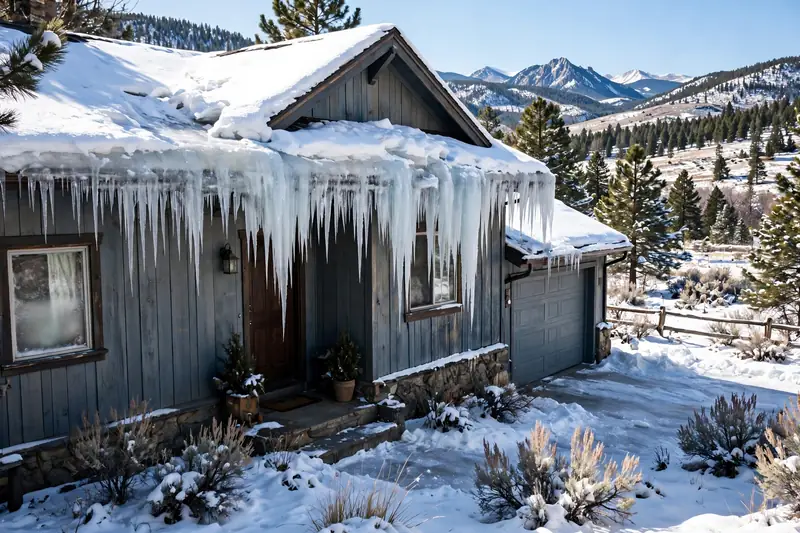
- Ice dams on the roof. Melt runs down to a cold eave, freezes, and backs water up under the shingles. It shows up as a wet ceiling along an exterior wall or water running down inside a window frame. See ice dams on Colorado Springs roofs.
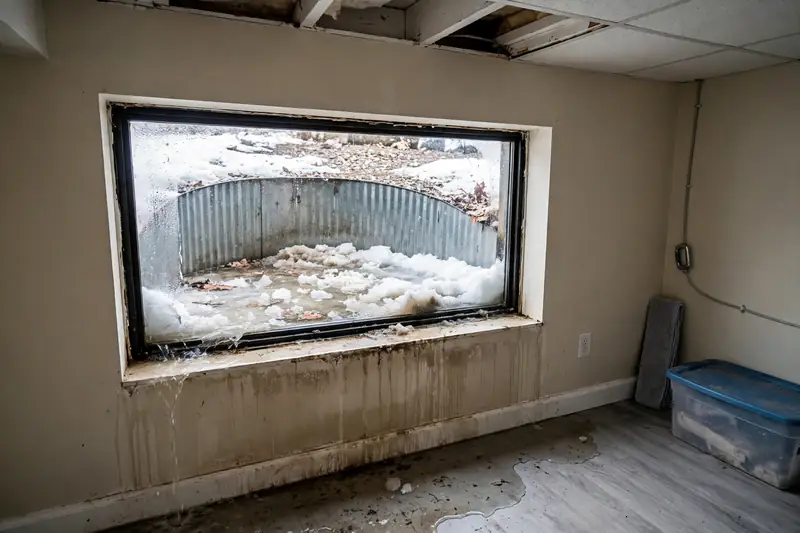
- Snow piled against siding and foundations. When a drift sits against a wall for a week and then melts, water can work in at the sill plate or through a basement window. Shoveling a gap along the foundation helps.
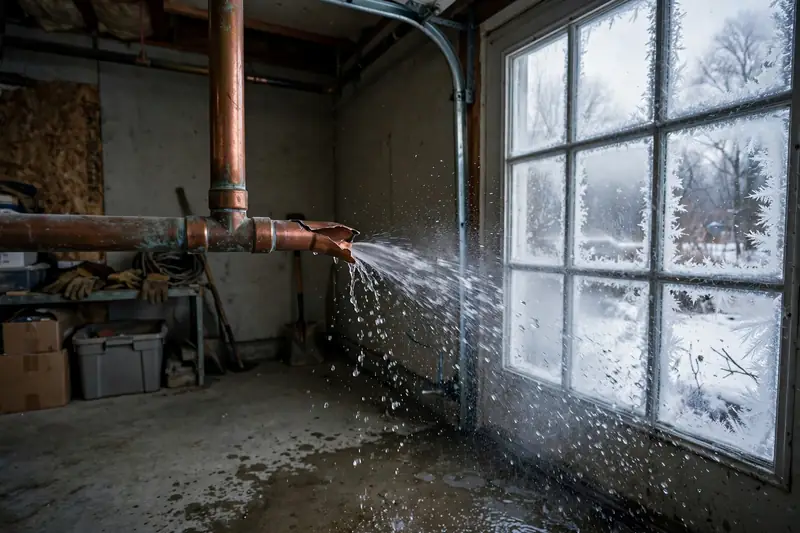
- Frozen supply lines. Cabins and older homes with pipes in exterior walls or a vented crawlspace are the most exposed during a cold snap.
Old cabins next to new construction
The town dates to the 1870s and was a summer destination for decades, so there are still historic cabins and cottages around the older streets, mixed with custom homes built from the 1990s onward. Each type has a different weak spot.
| House type | Where water usually gets in | What to watch |
|---|---|---|
| Older cabin or cottage | Crawlspace pipes, roof valleys, old additions | Musty smell, soft floors, stains on knotty pine |
| 1990s or newer custom home | Finished basement, window wells, skylights | Damp carpet edge, water on a sill after melt |
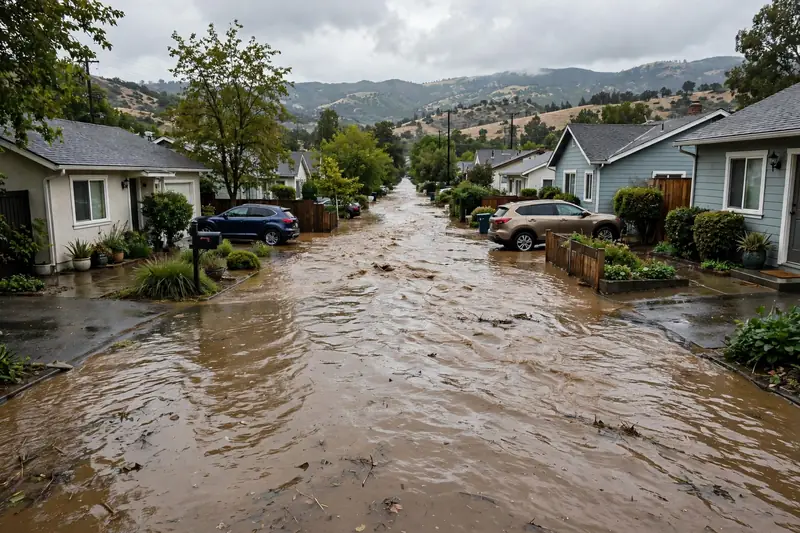
| Home on a slope | Uphill foundation wall, retaining walls | Seepage after a fast melt or a summer downpour |
Older cabins often had plumbing added or rerouted over the years, sometimes through spaces that never got insulated. Newer homes have more to lose in a finished lower level. Neither is immune.
Water still spreading? Talk to a local restoration pro now.Have your ZIP code ready. A local restoration pro answers.
Call (719) 555-0142Town water, a separate sewer district
The Town of Palmer Lake runs its own water system: wells, upper and lower reservoirs in the hills behind town, a treatment facility and the distribution lines. Sanitary sewer is handled by the Palmer Lake Sanitation District, which is a different entity. If a line breaks in the street, start with the town for water or the sanitation district for sewer. Anything on your side of the meter or cleanout is the homeowner's to fix.
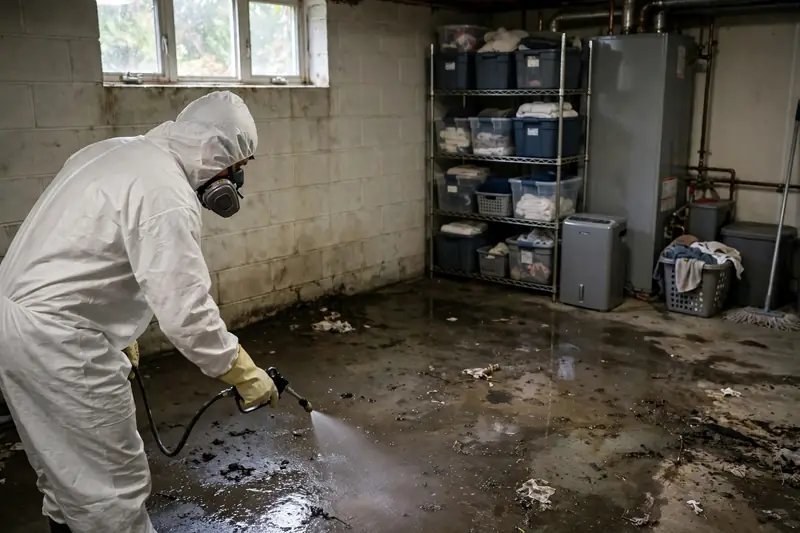
If your basement floor drain starts pushing up dirty water, treat it as contaminated. Keep kids and pets out, do not run the washer or shower, and read what to do after a sewage backup.
Before winter: a short checklist
- Disconnect hoses and shut off exterior faucets from the inside valve.
- Close crawlspace vents once nights drop below freezing, if your house has them.
- Clear gutters and downspouts so melt has a path off the roof.
- Set the thermostat no lower than the mid-50s if you leave for a trip.
- Know where your main shutoff is and make sure it turns.
- If you have a sprinkler system, have it blown out. A split sprinkler backflow preventer is one of the most common spring surprises.
Summer storms on the foothills
Snow is not the only threat. July and August thunderstorms can build quickly over the hills behind town and send a lot of water downhill in a short time. Homes on the slopes can get runoff against the uphill wall, and gutters overflow. Keep drainage paths clear around the house, and check window wells after each heavy rain.
Need someone to look at it today?Tell them your ZIP and what happened. A local pro picks up.
Call (719) 555-0142Two offices for one permit
Palmer Lake uses the Pikes Peak Regional Building Department for building inspection, but the town wants its own application submitted first. Drying out a room usually does not trigger any of that. Rebuilding a wall, replacing a water heater or rerouting a pipe often does. A good contractor will tell you which parts of the job need paperwork and pull it. You can check a contractor's license on the PPRBD site.
What sets the cost
The inspector prices the job from what they find, and you get it in writing before work begins. The main factors:
- Clean water from a pipe versus snowmelt with soil in it versus sewage
- Square footage and how many rooms are affected
- Crawlspace access, which is slower work
- Whether wood paneling, hardwood or plaster can be dried in place
- How long the water sat
- Rebuild work after drying
A clean-water loss caught early commonly dries in about three to five days. A crawlspace with soaked insulation, or water that went unnoticed in a closed-up cabin, will take longer.
Insurance, briefly
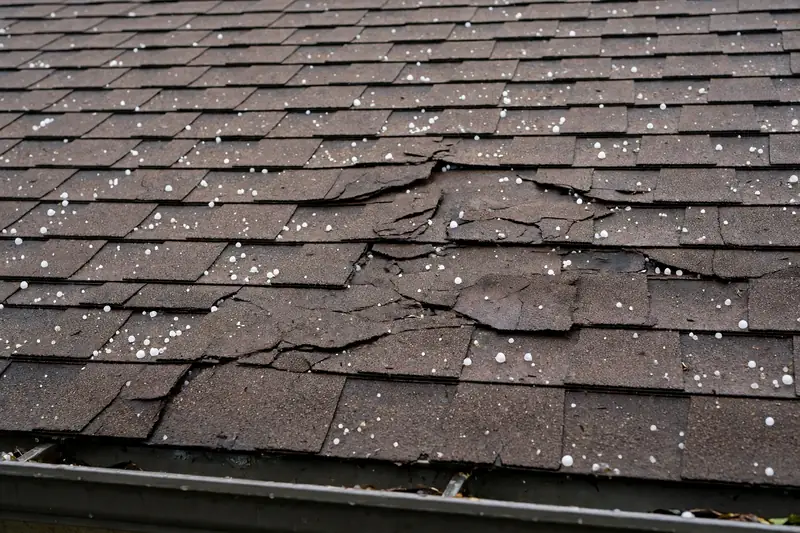
Sudden losses like a burst pipe are commonly covered by homeowners policies. Gradual leaks and groundwater usually are not. Damage from surface water flowing in from outside generally needs separate flood coverage. Hail on the roof is a wind and hail claim with its own deductible on many Colorado policies.
Nearby
Palmer Lake shares a lot of weather with Monument next door and Black Forest to the southeast. For most indoor losses, the starting point is water damage restoration.
Water still spreading? Talk to a local restoration pro now.Have your ZIP code ready. A local restoration pro answers.
Call (719) 555-0142Sources and official resources
Services in Palmer Lake
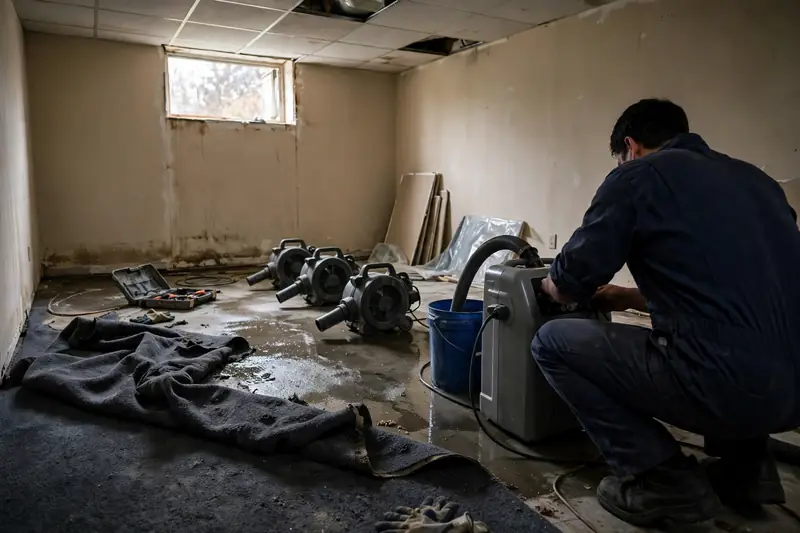
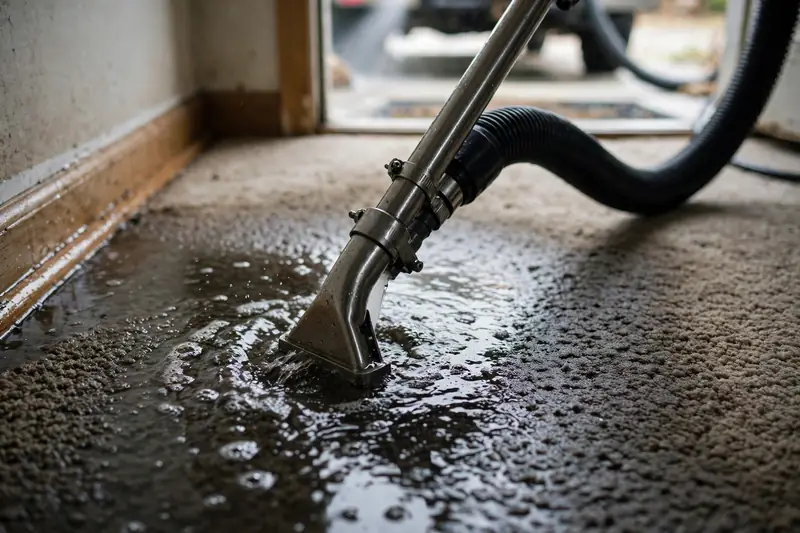
What Palmer Lake homeowners call about
Tap a service for causes, cost factors and next steps.
Nearby
Areas near Palmer Lake
Homeowner guides
Guides for Palmer Lake homeowners
FAQ
Common questions
Straight answers to what Colorado Springs homeowners ask most. Still unsure? Call and ask a local pro.
Call (719) 555-0142Who handles water and sewer in Palmer Lake?
The Town of Palmer Lake runs the water system, including wells, two reservoirs above town and a treatment plant. Sewer is a separate entity, the Palmer Lake Sanitation District. Call the one that matches the problem if the trouble is on the public side.
Do I need a town permit before repairs?
For many projects, yes. The town asks for its own application first, and then the Pikes Peak Regional Building Department reviews and inspects. Drying and cleanup on their own usually need no permit, but rebuilding walls or replacing plumbing often does.
Can a crew get to Palmer Lake during a big storm?
Usually once the plows have Highway 105 and I-25 open. During a true blizzard, travel may be shut down for everyone. In that case, stop the water, move what you can, and the crew comes as soon as roads allow.
My old cabin has a crawlspace. Is that harder to dry?
It can be. Crawlspaces are tight, often have bare soil and may have old insulation that holds water. Crews usually lay out a vapor barrier, set air movers and a dehumidifier, and check readings daily until the wood framing is back to normal.
Does insurance cover water from melting snow?
The answer turns on the path the water took. Water from an ice dam or a roof failure is often treated differently from water that seeps in from the ground. Ask your agent how your policy reads, and document the source with photos.
Water damage in Palmer Lake?
Call now and a licensed restoration pro near you can walk you through the next hour and set up a visit.