Homeowner guide
Ice Dams on Colorado Springs Roofs: Why They Form and What to Do
Sunny days do not protect your eaves. Here is how attic heat, cold overhangs and quick melt cycles build ice, and how to deal with the water it pushes indoors.
Have your ZIP code ready. A local restoration pro answers.
Updated September 21, 2026 · 6 min read
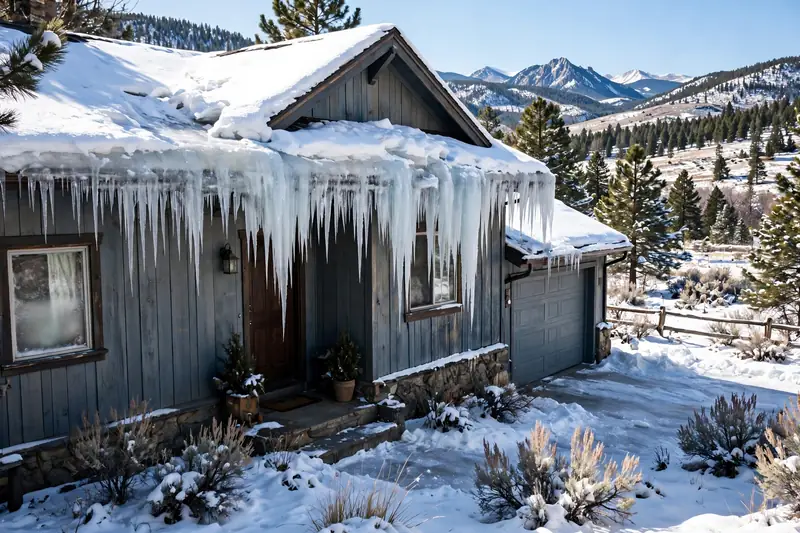
Ice dams form in Colorado Springs because warm air leaking into the attic melts the bottom of the snow on your roof, even when the outside air is below freezing. That melt water runs down to the overhang, which sits outside the heated part of the house and stays cold, and it freezes again into a ridge of ice. Once the ridge is tall enough, the next round of melt water backs up under the shingles and drips into your attic, ceiling or exterior walls.
Why sunshine does not prevent ice dams here
People who move here from the Midwest are often surprised to see ice dams at all. The city gets a lot of sun, and snow on south-facing yards can be gone in a day or two. The trouble is that the roof is not the yard.
Three things work together on a typical Front Range winter roof:
- Attic heat from below. Recessed lights, bath fans that vent into the attic, gaps around the attic hatch and thin insulation all let heat into the roof deck. That warms the underside of the snow layer.
- Cold eaves. The overhang hangs out past the wall, so it has no heat under it. Water that was liquid two feet up the roof hits cold decking and freezes.
- Big daily swings. A bright afternoon can melt snow fast, and a clear night can drop well below freezing a few hours later. Each cycle adds another layer of ice at the edge.
Strong sun actually makes the problem worse on some roofs. A dark shingle surface warms up in midday light, melt water runs, and then the sun drops behind the mountains and everything locks up again. On north-facing slopes the snow lingers for days, which gives the dam more time to build.
Why Monument, Palmer Lake and Woodland Park see more of them
Elevation changes the math. Monument sits close to 7,000 feet, and Woodland Park is about 8,500. Higher towns get more snow, keep it on the roof longer and see colder nights, so the freeze side of the cycle is stronger.
Homes along the Palmer Divide, including Monument, Palmer Lake and Black Forest, also tend to sit among tall pines. Shade from trees keeps parts of a roof cold while other parts melt, which is a classic setup for ice at the edge and in valleys. Mountain homes near Woodland Park often have complex rooflines, dormers and log or timber construction where attic air sealing is hard to get right.
Inside city limits, ice dams show up most often on older homes with little attic insulation, 1970s and 1980s tri-levels where one roof section sits over a heated room with almost no attic space, and additions where a new roof ties into an old one.
Not sure how bad it is? A short call usually tells you.Have your ZIP code ready. A local restoration pro answers.
Call (719) 555-0142Signs an ice dam is already leaking
Water from an ice dam rarely announces itself where you expect. Watch for:
- A brown ring or bubbling paint on the ceiling near an outside wall, usually within a few feet of the eave.
- Damp or stained drywall at the top of a wall, or water running down the inside of a window frame.
- Peeling paint or swollen trim on the exterior soffit.
- Wet or matted insulation when you look into the attic with a flashlight.
- Icicles that keep growing in the same spot every storm, especially with a thick shelf of ice behind them.
Because the leak follows framing, a stain in a bedroom ceiling can come from a dam several feet away. If the stain shows up days after the storm, during a warm spell, that timing points strongly at an ice dam rather than a damaged shingle.
What to do when the water comes in
You cannot fix the ice from inside the house, but you can limit the damage:
- Catch the water. Put a bucket or tote under the drip and lay towels around it. If the ceiling is sagging or bulging, keep people out from underneath it. A small hole poked at the low point lets trapped water drain into the bucket instead of bringing down a larger piece.
- Protect what is below. Move furniture, electronics and rugs out of the area. Water that soaks into carpet pad spreads farther than it looks.
- Check the attic. If you can get there safely, pull back wet insulation from the leak point so it is not holding water against the drywall.
- Turn off lights and fans on any circuit where water is near a fixture.
- Take photos of the ceiling, the roof edge from the ground and anything that got wet. Your insurer will want them.
- Call for roof-side help. Steam removal is the method most roofers prefer because it cuts the ice without beating on the shingles.
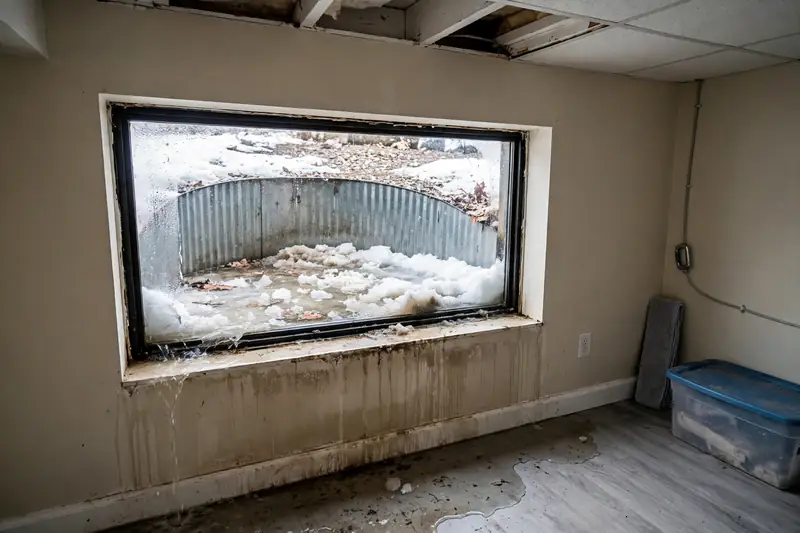
Then deal with the inside. A roof leak that has run for a few days soaks insulation, top plates and the drywall behind the visible stain. Our local pros handle roof leak water damage by mapping the wet area with moisture meters, opening the ceiling only where they need to and setting up drying equipment.
Water still spreading? Talk to a local restoration pro now.Have your ZIP code ready. A local restoration pro answers.
Call (719) 555-0142What drives the cost of an ice dam cleanup
There is no flat rate for this kind of job. The company that inspects gives a written figure before work starts, based on factors like these:
| Factor | Why it matters |
|---|---|
| How many rooms got wet | More ceiling and wall area means more equipment and more days of monitoring |
| Insulation type | Blown cellulose that gets wet usually has to come out; some batts can be dried |
| How long it leaked | Repeat leaks over several storms raise the chance of hidden rot or mold |
| Finished ceilings vs open attic | Textured or vaulted ceilings take more work to open and patch |
| Access | Low-slope attics and cathedral ceilings are slower to reach |
| Rebuild scope | Drying only is a smaller job than replacing drywall, texture and paint |
Need someone to look at it today?Tell them your ZIP and what happened. A local pro picks up.
Call (719) 555-0142How to keep ice dams from coming back
Long-term, the fix is to keep the roof deck cold from end to end so snow melts evenly or not at all from below.
- Seal attic air leaks first. Gaps around the attic hatch, plumbing stacks, wiring holes and recessed can lights move a surprising amount of warm air. Sealing them usually does more than adding insulation alone.
- Add insulation to bring the attic up to current levels for our climate, and keep it from blocking soffit vents.
- Vent bath fans and dryers outside, not into the attic.
- Balance roof ventilation so cold outside air can wash under the deck from the soffits and leave at the ridge.
- Ask about ice and water shield the next time the roof is replaced. A self-sealing membrane along the eaves and in valleys keeps backed-up water from reaching the deck.
- Rake the first few feet of snow off the roof edge from the ground with a roof rake after a heavy storm. Skip it if it means standing on a ladder on ice.
Gutters are not the cause, but packed gutters give ice a head start. Clean out pine needles in the fall, which matters a lot under the trees in Black Forest and Woodland Park.
When to bring in a pro
Call a restoration crew if water has come through the ceiling, if insulation in the attic is wet over a large area, or if you see the stain return after more than one storm. Repeated wetting is how a small ice dam leak turns into a mold problem, and in a dry climate people often assume it will just dry out on its own. Our post on why mold still grows in a dry climate explains why that assumption fails inside walls.
If the same winter also brought hail damage from the summer before, the two can stack up: a cracked shingle lets ice dam water in faster. Read about hail damage and ceiling stains if your roof took a hit last season.
Water still spreading? Talk to a local restoration pro now.Have your ZIP code ready. A local restoration pro answers.
Call (719) 555-0142Sources and official resources
Related
Services and areas for this guide
Homeowner guides
Keep reading

FAQ
Common questions
Straight answers to what Colorado Springs homeowners ask most. Still unsure? Call and ask a local pro.
Call (719) 555-0142Should I chip the ice off my gutters with a hammer?
No. Hacking at ice tends to crack shingles, tear gutters loose and put you on a slick ladder in freezing weather. If water is already coming inside, catch it, protect your belongings and have a roofer or ice dam steaming service handle the roof side.
Does homeowners insurance pay for ice dam leaks?
Many policies treat interior damage from a sudden ice dam leak as covered, while the ice removal itself or a worn-out roof may not be. Wording varies a lot between carriers, so read the water and roof sections of your policy and ask your agent before you assume either way.
Can an ice dam leak cause mold inside the walls?
It can. Melt water often runs down the inside of an exterior wall before it shows on drywall, and insulation holds it there. If a stain keeps coming back after each storm, ask for moisture readings in the wall cavity, not just the ceiling.
Are heat cables worth it on a Colorado Springs house?
They can keep a drainage path open on a trouble spot like a north-facing valley or a low-slope porch tie-in. They do not fix the attic heat loss behind the dam, and they need to be installed to the manufacturer's spec so they do not damage shingles or become a fire risk.
Why does my neighbor have icicles but no leak?
Icicles alone just mean melt water is refreezing at the edge. A leak happens when the ice ridge gets tall enough to pond water behind it and that water finds a gap under the shingles. Roof pitch, underlayment and how well the attic is sealed decide which house leaks.
Water where it shouldn't be?
Call now and a licensed restoration pro near you can walk you through the next hour and set up a visit.