Homeowner guide
Why Mold Still Grows After Water Damage in Colorado Springs' Dry Climate
Low humidity outside does not reach the inside of a wet wall. Here is where mold takes hold after a leak and what to do before it spreads.
Have your ZIP code ready. A local restoration pro answers.
Updated October 5, 2026 · 4 min read
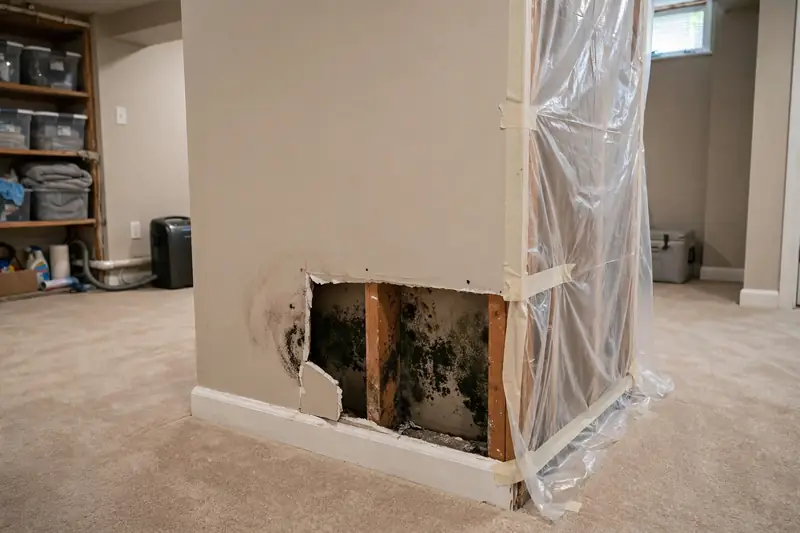
Mold still grows in Colorado Springs homes because it does not need humid outdoor air. It needs a wet material and time. After a leak, the inside of a wall cavity, the underside of carpet pad or the bottom of a cabinet can stay damp for days, sealed off from the dry air in the room. EPA guidance says to dry wet building materials within 24 to 48 hours to help prevent mold, and that window applies here just as it does anywhere else.
Why the dry climate fools people
The air here is dry most of the year, and spilled water on a countertop vanishes fast. That experience trains people to think any water inside the house will take care of itself. That belief is behind a lot of mold jobs that started as a simple leak.
What actually happens inside the house:
- Drywall wicks water up from the floor and holds it inside the gypsum and paper.
- Fiberglass and cellulose insulation trap moisture against the back of the drywall.
- Paint, vinyl wallpaper and vinyl flooring act like a lid, keeping water in.
- Cabinets, built-ins and furniture pushed against a wall block airflow.
The room air can be at desert-level humidity while the inside of that wall reads soaked. Mold spores are present in nearly every house, and once they land on a damp, organic surface like drywall paper or wood, they can start growing.
Where mold hides after water damage
When a local restoration pro inspects for mold after a leak, these are the spots they check first:
| Hiding spot | Why mold likes it |
|---|---|
| Back side of drywall | Dark, still air, paper facing is food |
| Under carpet pad and on tack strip | Pad holds water against the subfloor |
| Inside base cabinets and toe kicks | Water pools under the cabinet floor |
| Behind baseboards | Gap at the bottom of the drywall stays wet |
| Attic sheathing near a roof leak | Heat and trapped moisture |
| Under laminate and vinyl plank | Plastic layers seal water in |
| Inside exterior walls near windows | Slow leaks from failed flashing |
| Around the base of the toilet and tub | Repeated small leaks over months |
| Crawlspaces in older homes | Soil moisture and little air movement |
Older homes have their own spots
In older neighborhoods like the Old North End and in Manitou Springs, plaster and lath walls, stone foundations and crawlspaces change where mold shows up. Plaster resists mold on its face better than drywall paper does, but the wood lath behind it does not. Stone and rubble foundations can wick moisture from the soil into the floor framing above. Old swamp cooler lines and roof penetrations add more spots to check.
Newer homes have theirs
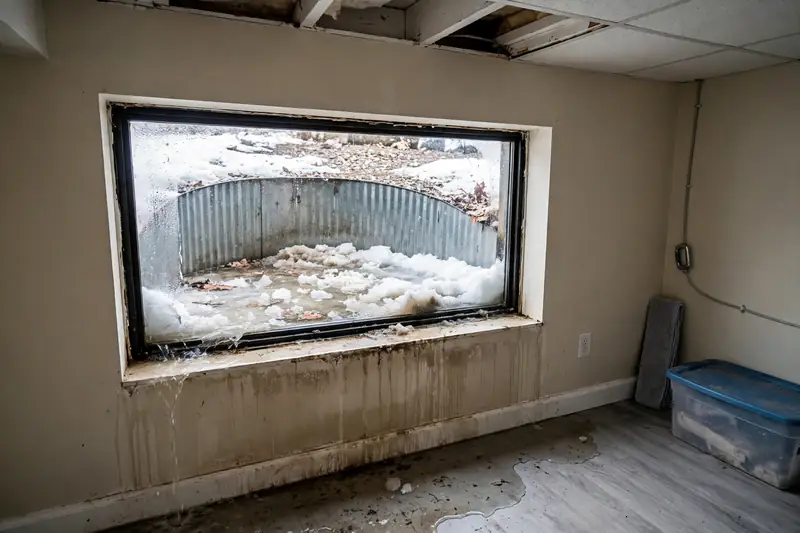
Newer homes with finished basements, tight construction and lots of drywall can hide a leak longer because there is less airflow inside the walls. A slow drip from a PEX fitting behind a finished basement wall may not show for weeks.
Not sure how bad it is? A short call usually tells you.Have your ZIP code ready. A local restoration pro answers.
Call (719) 555-0142Signs mold is already growing
- A musty or earthy smell that is stronger in one room or near one wall
- Spotting or discoloration on drywall, trim or the back of cabinets
- Paint that bubbles or peels near the floor
- Baseboards that feel soft or have dark lines along the bottom edge
- A stain that keeps spreading after you thought the leak was fixed
- Allergy-like symptoms that ease when you leave the house
A smell with no visible growth usually means it is inside a cavity. That is not a reason to start cutting holes yourself. Opening a moldy wall without containment can spread spores into the rest of the house.
Water still spreading? Talk to a local restoration pro now.Have your ZIP code ready. A local restoration pro answers.
Call (719) 555-0142What to do right after a leak to prevent mold
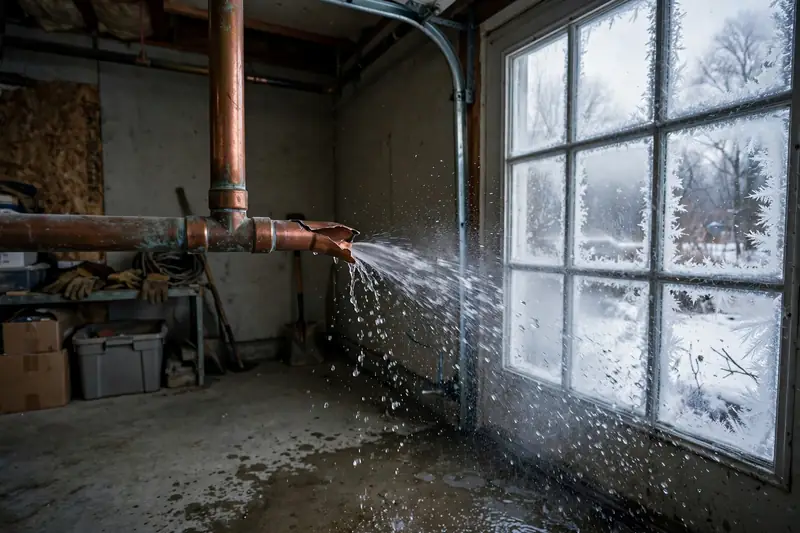
- Stop the water. Shut the fixture valve or the main.
- Get standing water out fast. Towels, a wet vac, or a call for emergency water extraction if there is a lot of it.
- Pull wet carpet pad. It rarely dries in place.
- Get air moving and remove moisture. Fans alone push damp air around; they need a dehumidifier to capture it.
- Measure, do not guess. A moisture meter tells you whether the wall is dry, and a pro can check behind it.
Our post on how long it takes to dry a house in Colorado Springs walks through what slows drying down and when equipment can safely come out.
How mold remediation works
Professional mold remediation is not just spraying the visible spots. A typical job includes:
- Finding and fixing the moisture source. Remediation without this step fails.
- Containment. Plastic sheeting and negative air pressure keep spores from spreading to clean rooms.
- HEPA air filtration running during the work.
- Removing damaged porous materials like drywall, insulation and pad.
- Cleaning and treating framing and other materials that can be saved.
- Drying the remaining structure to normal moisture levels.
- Checking the result before anything gets closed back up.
Safety matters during this work. Crews wear respirators and protective gear. If you are doing a small cleanup yourself, wear an N95 respirator, gloves and goggles, and keep kids, pets and anyone with asthma away from the area.
Need someone to look at it today?Tell them your ZIP and what happened. A local pro picks up.
Call (719) 555-0142What drives the cost of mold work
The crew that inspects will give you a written figure before starting. The main factors are:
- How much area has growth and how much material must come out
- Where it is: open basement vs inside finished walls, attic or HVAC
- Whether the water source was clean water, a roof leak or sewage
- How long it has been growing
- Containment and air filtration needs
- Rebuild after removal, including drywall, paint and flooring
- Your insurance policy's mold terms and deductible
When to call a pro
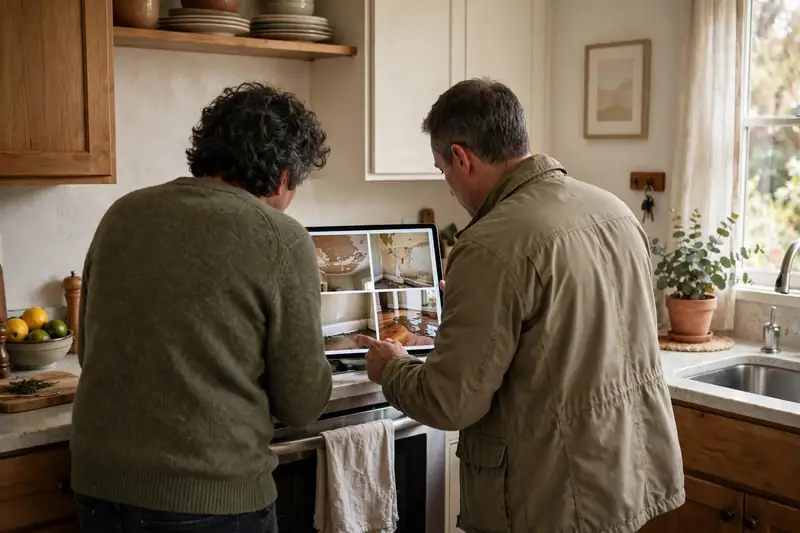
Call for help if the affected area is larger than a small patch, if the leak involved sewage, if mold keeps returning after cleanup, or if someone in the house has asthma or a weakened immune system. A water damage restoration crew can dry the structure and handle mold in the same visit, which saves you from coordinating two separate companies.
Water still spreading? Talk to a local restoration pro now.Have your ZIP code ready. A local restoration pro answers.
Call (719) 555-0142Sources and official resources
Related
Services and areas for this guide
Homeowner guides
Keep reading
FAQ
Common questions
Straight answers to what Colorado Springs homeowners ask most. Still unsure? Call and ask a local pro.
Call (719) 555-0142Is bleach enough to clean mold off drywall?
Usually not. Drywall paper is porous, so mold roots into it and bleach mostly lightens the surface stain. Moldy drywall is normally cut out and replaced, while hard surfaces like tile or metal can be cleaned with detergent and water.
Do I need a mold test before remediation?
If you can see mold or smell it near a known leak, testing often does not change the plan, because the fix is to remove the growth and dry the area. Testing is more useful when you suspect hidden mold but cannot find it, or when you need documentation for a landlord, buyer or insurer.
Is mold from a water leak dangerous to my family?
Mold can trigger allergy and asthma symptoms in some people, and people with weakened immune systems or lung conditions are more at risk. If someone in the house has symptoms that worry you, call your doctor. Keep sensitive family members out of the affected area until it is cleaned up.
Will homeowners insurance pay for mold removal?
Many policies cover mold only when it results from a covered sudden water loss, and some cap mold coverage at a lower limit. Mold from a long-term leak or humidity is often excluded. Read your policy's mold or fungi section and ask your agent.
How big an area can I clean up myself?
EPA guidance suggests a homeowner can usually handle a small patch of mold, roughly under 10 square feet, if the water problem is fixed and nobody in the house has a health issue that mold could aggravate. Anything larger, anything inside HVAC ducts, or anything tied to sewage is a job for a trained crew.
Water where it shouldn't be?
Call now and a licensed restoration pro near you can walk you through the next hour and set up a visit.