Homeowner guide
Expansive Soil and Basement Water in Colorado Springs
The clay under many local homes swells when it gets wet and shrinks when it dries. That movement, plus poor drainage, is behind a lot of wet basements.
Have your ZIP code ready. A local restoration pro answers.
Updated October 7, 2026 · 5 min read
Much of the Colorado Springs area sits on clay soils and shale with bentonite in them. Those soils swell when they get wet and shrink when they dry. The movement cracks foundations and slabs, and the cracks give water a path into the basement. The most useful steps for a homeowner are simple: keep the ground sloping away from the house, send downspout water well away from the walls, and keep sprinklers off the foundation.
What expansive soil is
Swelling soils contain clay minerals that take up water and expand. The most notorious is montmorillonite, the main mineral in what builders call bentonite. The Colorado Geological Survey has long noted that the Front Range is underlain, at least in part, by swelling soils and swelling shales, and research along the Front Range has tied damage to houses and streets to bentonite beds in the Pierre Shale and nearby formations.
Our semi-arid climate makes the problem worse. Soil here spends long stretches dry, then gets soaked by spring snowmelt, a monsoon storm, or a lawn sprinkler. Each swing from dry to wet and back makes the ground heave and settle. A house sitting on top of that feels it.
How it lets water in
Foundation cracks
Swelling soil pushes against basement walls and lifts slabs. Over years, that pressure opens cracks in poured concrete walls and gaps where the slab meets the wall. Water that collects in the soil outside follows those cracks inside.
Slab heave
Basement floors that are not structurally tied to the walls can rise when the soil under them swells. In many Front Range homes built on swelling soil, the basement slab floats on purpose so it can move without lifting the house. That movement can crack the slab and shift interior walls built on top of it.
Water held against the wall
Clay drains slowly. Once it is saturated, water sits against the foundation instead of soaking away. Backfill next to the house, which is often looser than the native soil, can act like a moat and hold water right where you do not want it.
Window wells
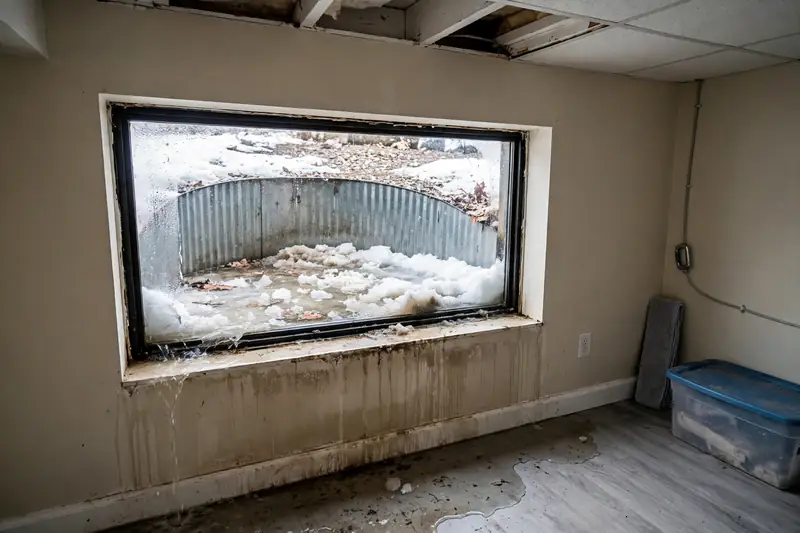
A window well is a hole dug through that backfill. It catches snowmelt and storm runoff and can fill like a bucket if the drain at the bottom is clogged or missing. Our post on window well flooding covers covers, drains and what to do when one overflows.
Water still spreading? Talk to a local restoration pro now.Have your ZIP code ready. A local restoration pro answers.
Call (719) 555-0142Cracks worth watching
| What you see | What it may mean |
|---|---|
| Thin, dry vertical crack in a poured wall | Common shrinkage. Monitor it. |
| Crack that leaks after rain or snowmelt | Water is reaching the wall. Fix drainage outside and consider sealing. |
| Horizontal crack or a wall bowing inward | Soil pressure on the wall. Have a structural engineer look. |
| Stair step cracks in block walls | Movement along mortar joints. Worth an engineer's review. |
| Doors and windows that start sticking upstairs | The house may be moving. Note when it started. |
| Slab crack with one side higher | Heave or settlement under the floor. |
Mark the ends of cracks with a pencil and the date. If they grow, that is useful information for an engineer and for any restoration crew drying the basement.
Grading: the first fix
The ground right next to the house should fall away from it. The International Residential Code, which local building departments use as a base, calls for at least 6 inches of fall within the first 10 feet from the foundation where the lot allows. Over time, backfill settles and the slope can reverse, so water runs toward the wall instead.
- Look at the ground after a rain. If water puddles near the house, the grade needs work.
- Rebuild low spots with compacted soil, not mulch or gravel alone.
- Keep the top of the soil several inches below siding and window well tops.
- Do not plant thirsty shrubs or flower beds right against the foundation.
The Colorado Geological Survey publishes homeowner guides on landscaping and maintenance for homes on swelling soil, and they are worth reading if your lot has a history of movement.
Downspouts and sprinklers
One roof can shed a large volume of water in a single storm, and all of it comes out of a few downspouts. If those downspouts empty right at the foundation, you are pouring water onto the exact spot that swells.
- Add extensions so water discharges several feet away from the house, onto ground that slopes away.
- Keep gutters clear. Overflowing gutters dump water straight down along the wall. Hail can also crush gutters, which our post on hail damage and roof leaks covers.
- Aim sprinkler heads away from the walls and window wells. A sprinkler soaking the foundation every morning keeps the clay wet all summer.
- Check for leaking irrigation lines near the house, especially after the system starts up in spring.
Need someone to look at it today?Tell them your ZIP and what happened. A local pro picks up.
Call (719) 555-0142Neighborhoods where this comes up
Swelling soil is not limited to one part of town, so the right question is what your own lot sits on. A soils report from when the house was built, if you can get it from the builder or seller, often says. On the east side, in places like Banning Lewis Ranch and Falcon, and in parts of Security-Widefield, many homes have finished basements, which turns a small seep into a bigger cleanup. Many newer subdivisions were built with foundation drains and underdrain systems to manage groundwater. Our post on sump pump and underdrain problems explains how those work.
When water gets in
If you find water on the basement floor:
- Figure out whether it came from outside or from plumbing. Water along an exterior wall after rain or melt points outside.
- Photograph it, and note the weather in the days before.
- Pull up area rugs and move boxes off the floor.
- Get extraction and drying started. Even a small amount under carpet and behind finished walls can lead to mold in a cool basement. See basement flooding for what the crew usually does.
Most homeowners policies exclude groundwater seepage and earth movement. That makes prevention outside the house more valuable than any claim. A restoration crew can dry the space and tell you where they think the water came from, and a structural engineer or drainage contractor can handle the fix.
Water still spreading? Talk to a local restoration pro now.Have your ZIP code ready. A local restoration pro answers.
Call (719) 555-0142Sources and official resources
- Contractor license lookup (Pikes Peak Regional Building Department)
- Homeowners insurance help (Colorado Division of Insurance)
- IICRC: restoration industry standards body
- Flood insurance basics (FEMA FloodSmart)
- A Brief Guide to Mold, Moisture and Your Home (EPA)
- Colorado Springs weather warnings (National Weather Service, Pueblo)
Related
Services and areas for this guide
Homeowner guides
Keep reading

FAQ
Common questions
Straight answers to what Colorado Springs homeowners ask most. Still unsure? Call and ask a local pro.
Call (719) 555-0142Is a crack in my basement floor a sign of foundation failure?
Not by itself. Thin, dry shrinkage cracks are common in concrete and usually harmless. Cracks that widen over time, have one side higher than the other, or let water in are worth showing to a structural engineer. Mark the ends with a pencil and a date so you can see if they grow.
Should I water my foundation during a drought?
Steady moisture is the goal, not soaking. Swelling soils move most when they swing between very wet and very dry. Keep sprinkler heads and soaker hoses aimed away from the walls, and avoid letting water pond against the foundation. A geotechnical engineer can advise on a specific lot.
Can a restoration crew fix the cause of seepage?
The crew dries the basement and removes damaged materials. Fixing grading, drainage or cracks is usually work for a landscaper, a waterproofing contractor or a structural engineer. A good restoration crew will tell you what they think is letting water in.
Does homeowners insurance cover seepage from expansive soil?
Usually not. Most policies exclude groundwater, seepage and damage from earth movement, including soil that swells or shrinks. Water from a sudden plumbing failure is a different situation. Ask your agent which parts of your policy apply.
Why is my basement damp every April but dry by July?
Spring brings heavy wet snow and repeated melting along the foundation, often on ground that is still frozen just below the surface. Water collects against the walls and in window wells with nowhere to drain. Once the soil dries out in summer the dampness often disappears until the next thaw.
Water where it shouldn't be?
Call now and a licensed restoration pro near you can walk you through the next hour and set up a visit.