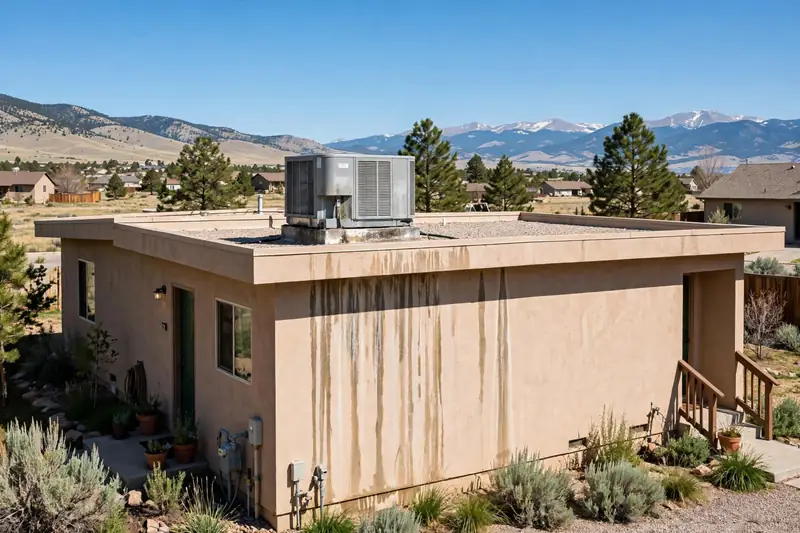
Homeowner guide
Swamp Cooler Leaks and Ceiling Water Damage
A stuck float valve or a cracked pan can send water through the roof curb and into the ceiling below. Here is how to stop it and how to put the cooler to bed for winter.
Have your ZIP code ready. A local restoration pro answers.
Updated November 4, 2026 · 5 min read
A swamp cooler leak usually starts with a float valve that sticks open, a rusted or cracked water pan, a loose overflow pipe, or a supply line that froze and split, and the water ends up running down the roof curb or through the duct into the ceiling below. Turn the cooler off, close the valve on its water supply line, and look at the pan and float. If the ceiling is stained, sagging or soft, get the wet area checked and dried before mold sets in, and winterize the cooler before nights drop below freezing so the same leak does not come back in the spring.
Why swamp coolers are common here
Evaporative coolers work best in dry air, and Colorado Springs sits at around 6,000 feet with low humidity most of the summer. They push outside air through wet pads, and the water that evaporates cools the air. Many older homes in neighborhoods like Old Colorado City, Patty Jewett and Ivywild have a cooler on the roof feeding a single ceiling vent, or one mounted in a window or through a wall. Some sit in attics.
Every one of them holds water in a pan and has a water line feeding it. That is the source of most cooler leaks.
Common leak points
| Part | What goes wrong | What you see |
|---|---|---|
| Float valve | Sticks open, set too high, worn seat | Water runs constantly, pan overflows |
| Overflow pipe and drain | Loose, cracked or clogged | Water on the roof around the cooler |
| Water pan | Rust holes in steel pans, cracks in old plastic | Steady drip from the bottom of the cooler |
| Supply line | Splits after freezing, loose fitting | Water at the roof penetration or in the attic |
| Roof curb and jack | Failed flashing, cracked sealant | Stain on the ceiling around the cooler vent |
| Duct connection | Water carried into the duct by the blower | Drips from the ceiling register |
The float valve is the most common culprit. It works like the float in a toilet tank: the float rises as the pan fills and closes the valve. Mineral scale from hard water can keep it from seating. If the water keeps running even when the float is raised, the valve needs to be replaced. Adjusting the float arm only helps if the valve itself still seals.
Not sure how bad it is? A short call usually tells you.Have your ZIP code ready. A local restoration pro answers.
Call (719) 555-0142What to do when you see a ceiling stain
- Turn off the cooler at the thermostat or switch.
- Close the water supply. There is usually a small valve or saddle valve where the cooler line taps into a pipe in the basement, utility room or attic.
- Protect what is below. Move furniture, lay down plastic and put a bucket under any drip.
- Check the ceiling. If the drywall or plaster is sagging, keep people out from under it. A bulging ceiling can hold a surprising amount of water. Do not poke it unless you are ready for the water to come down and have a bucket and tarp in place.
- Look at the cooler from a safe ladder position or have someone who works on roofs do it. Note whether the pan is overflowing, rusted or empty.
- Photograph everything before any repair.
Then get the attic and ceiling dried. A wet ceiling with insulation above it does not dry just because the leak stopped. Insulation holds water against the drywall, and an attic in late summer is warm, which gives mold a head start. Our post on mold after water damage in a dry climate explains why that happens even in Colorado.
Water still spreading? Talk to a local restoration pro now.Have your ZIP code ready. A local restoration pro answers.
Call (719) 555-0142What the crew does
A restoration crew checks the ceiling, framing and insulation with a moisture meter and a thermal camera to see how far the water spread. Wet blown-in or batt insulation usually comes out. Drywall that has sagged or lost strength usually gets cut out. Plaster ceilings in older homes need more care, since they can hold water for a long time and the lath above can stay wet. Drying equipment goes in, sometimes in the attic as well as the room below.
The roof leak water damage page covers ceiling drying in more detail, since the steps are the same whether the water came from hail damage or a cooler. For the bigger picture, see water damage restoration.
Cost factors
There is no single price for a cooler leak. The cost of the water damage side depends on how long the cooler leaked, how much ceiling and insulation got wet, whether the ceiling is drywall or plaster, whether water reached walls or flooring below, and access to the attic. The company that inspects gives you the figure in writing before it starts. The cooler repair itself is a separate job for an HVAC or cooler tech.
Need someone to look at it today?Tell them your ZIP and what happened. A local pro picks up.
Call (719) 555-0142Winterizing a swamp cooler
Plenty of spring cooler leaks start with a rushed or skipped fall shutdown. The National Weather Service puts the average first fall freeze in Colorado Springs around the start of October, and some years it comes earlier. Shut the cooler down before then.
- Turn off the water at the supply valve.
- Disconnect and drain the supply line so it cannot freeze and split. Blow it out if it runs through an unheated attic.
- Drain the pan fully and clean out scale and debris.
- Remove or replace the pads, depending on their condition.
- Unplug the cooler or cut its power.
- Cover the cooler with a fitted cover to keep snow out.
- Close the ceiling vent or seal it with a cover from inside so warm air does not escape all winter.
In spring, inspect the pan for rust, check the float valve, and look at the roof flashing before you turn the water back on. If hail hit the roof that summer, check around the cooler curb too. Our post on hail damage and roof leaks explains how hail leaks show up.
Should you keep the cooler?
Some homeowners replace a rooftop cooler with a down-draft unit, a side-draft unit, or refrigerated air. That decision is up to you and an HVAC contractor. From a water damage point of view, the main things are a sound pan, a working float valve, a clear overflow drain, and good flashing at the roof. Fix those and a cooler can run for years without staining a ceiling.
Water still spreading? Talk to a local restoration pro now.Have your ZIP code ready. A local restoration pro answers.
Call (719) 555-0142Sources and official resources
Related
Services and areas for this guide
Homeowner guides
Keep reading

FAQ
Common questions
Straight answers to what Colorado Springs homeowners ask most. Still unsure? Call and ask a local pro.
Call (719) 555-0142Why is my swamp cooler overflowing?
The usual cause is a float valve that is stuck open, set too high, or worn out, so water keeps coming in after the pan is full. A clogged or loose overflow pipe can make it worse by sending that extra water onto the roof instead of down the drain line.
Can I run the cooler while there is a stain on the ceiling?
Shut it off and close its water supply first. Running it keeps feeding water into the ceiling. Find and fix the leak, then have the wet area checked before you turn it back on.
When should I winterize my evaporative cooler in Colorado Springs?
Before the first freeze, which here often comes around the start of October. Once nights drop below freezing, a full pan and a charged supply line can split. Shutting yours down in September leaves a margin for an early cold night.
Is water from a swamp cooler clean?
It starts as tap water, but it sits in a pan with pads, minerals and dust, and it can grow bacteria and algae. By the time it soaks through an attic and a ceiling, a restoration tech will often treat it as Category 2.
Does insurance cover a swamp cooler leak?
A sudden failure, like a supply line that splits, may be covered for the resulting damage. A cooler that dripped for a whole summer because of an old pan is more likely to be denied as wear or maintenance. Read your policy and photograph the cooler before repairs.
Water where it shouldn't be?
Call now and a licensed restoration pro near you can walk you through the next hour and set up a visit.