Black Forest, CO
Storm and Flood Damage in Black Forest, CO
Summer storms over Black Forest bring hail, wind and fast runoff, and ground that burned in 2013 still sheds water quickly. Heavy snow brings pine limbs down on roofs.
Have your ZIP code ready. A local restoration pro answers.
Updated November 12, 2026
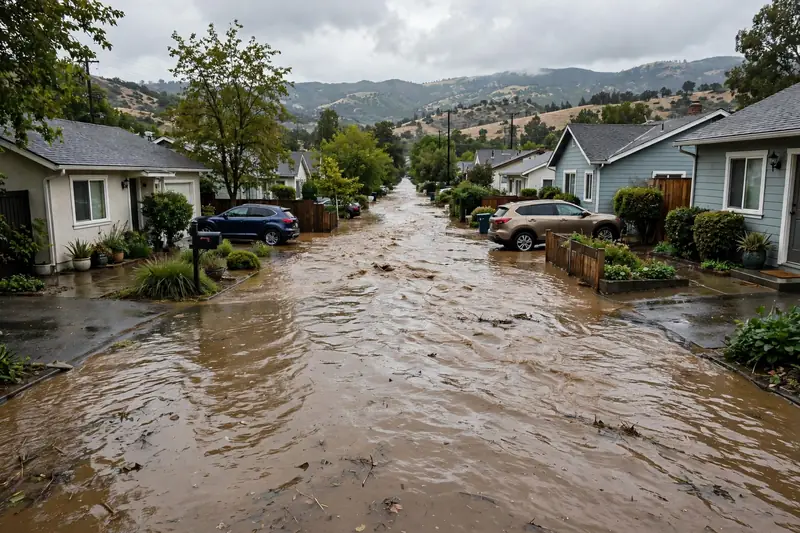
The storm risk in Black Forest changed in June 2013. The Black Forest fire burned more than 14,000 acres and destroyed nearly 500 homes, and until the Marshall Fire in 2021 it was the most destructive wildfire in Colorado history. The trees came back slowly. The ground did not absorb water the way it had under a full forest, and in the summers that followed, heavy rain over the burn scar sent fast, muddy water across driveways, roads and lots. The National Weather Service has issued flood advisories for the burn scar in several summers since.
That history sits on top of the usual Front Range storm threats: hail from May to August, monsoon cloudbursts in July and August, wind, and heavy wet snow in spring.
How storm water gets into Black Forest homes
Runoff from burned or bare ground
Burned soil can repel water at first, and slopes with less vegetation shed rain quickly. Water picks up ash, sand and debris and follows the lowest path, which can be a driveway that leads straight to a garage or a walkout door. If your lot is downhill from burned ground, look at where that path ends. Our post on flash flooding and burn scars explains why the risk stays high for years.
Hail and wind on the roof
Hail cracks shingles and splits vent boots, and the leak may not show until the next storm. Wind lifts shingles along ridges and edges. Under pine cover, needles packed in valleys and gutters hold water against the roof and push it under the shingle edge.
Trees and limbs
Ponderosa pines are the reason people live here, and also a roof risk. Heavy spring snow loads branches until they break, and wind can drop dead trees that the fire left standing. A limb through the roof lets snow and rain in fast.
Lower-level entry
Storm water that fills window wells or reaches a walkout door ends up in the basement. Our Black Forest basement flooding page covers the details, including septic systems that back up after a wet spell.
Water still spreading? Talk to a local restoration pro now.Have your ZIP code ready. A local restoration pro answers.
Call (719) 555-0142Right after the storm
- Check the attic, upstairs ceilings and any skylights for drips or bulges.
- Look at the lower level, especially along walls that face uphill.
- Photograph hail, fallen limbs, roof damage and any water marks inside.
- If muddy water came into the house, stay out of it until the power to that area is off.
- If runoff came near your wellhead, plan to test the water before drinking it. El Paso County Public Health can tell you what to test for.
Not sure how bad it is? A short call usually tells you.Have your ZIP code ready. A local restoration pro answers.
Call (719) 555-0142Access during and after storms
Black Forest roads and long driveways can wash out, ice over or fill with downed limbs. When you call, tell the dispatcher about any washouts, trees across the lane, gates and where a truck can park. It helps the crew show up with what they need.
What the crew does
The first step is to stop more water: tarping a roof, boarding a broken window or diverting runoff with sandbags or a temporary berm. Next comes mapping moisture in attics, ceilings and walls. Muddy runoff is extracted, and silt is shoveled out before cleaning. Wet insulation and contaminated drywall, flooring and carpet are removed. Then drying equipment runs, with daily meter readings, until materials reach normal levels. If water reached the area around the septic tank or field, the crew will avoid putting more water into it.
What affects the cost
The source of the water, how much mud and debris came with it, square footage, roof tarping or tree removal, generator use if the power is out, access, after-hours response and whether you want drying only or the full rebuild. The company that inspects provides the real figure in writing before work begins.
Need someone to look at it today?Tell them your ZIP and what happened. A local pro picks up.
Call (719) 555-0142Insurance notes for storm claims
Hail and wind damage to the roof is usually a wind and hail claim, and many Colorado policies carry a separate, higher deductible for it. Water that enters through that damage is often handled under the same claim. Runoff across the ground is flood, and that needs a flood policy. A tree falling on the house is often covered, but the removal of a tree that fell in the yard without hitting anything may not be. Our post on what homeowners insurance covers in Colorado explains the differences.
Black Forest pages and services
General drying work is on Black Forest water damage restoration. The full storm and flood damage page covers the service across the area, and the Black Forest area page covers the community.
Sources and official resources
More in Black Forest
Other services in Black Forest
Service area
Black Forest on the service map
Black Forest is about 14 miles from downtown Colorado Springs. Crews reach it from the Colorado Springs side, usually by I-25, Powers Boulevard or US-24.
Colorado Springs neighborhoods
FAQ
Common questions
Straight answers to what Colorado Springs homeowners ask most. Still unsure? Call and ask a local pro.
Call (719) 555-0142Is my home still at risk if it was not inside the 2013 burn area?
Less so, but not zero. Runoff from burned slopes can travel downhill onto unburned properties, and any home can take hail or wind damage. Check how water moves across your lot in a hard rain and where it goes once it leaves the burned ground.
A pine limb went through my roof in a snowstorm. What first?
Get everyone out of the room below, and stay clear if the limb is touching power lines. Then call your insurer and arrange for a tree service and an emergency tarp. Snow on the opening will melt into the attic and ceiling, so drying should start soon after.
Do I need flood insurance in Black Forest?
Standard homeowners policies typically exclude water that flows across the ground and into the house, which is how burn-scar runoff usually arrives. Coverage for that needs a separate flood policy through the NFIP or a private insurer. Most flood policies have a waiting period before they take effect, so buy ahead of storm season.
The water was muddy. Does that change the cleanup?
Yes. Runoff carries soil, ash and whatever was on the ground, so the crew treats it as contaminated water. Porous materials it soaked are usually removed, and the area is cleaned before drying.
Storm Flooding in Black Forest? Call a local pro.
Call now and a licensed restoration pro near you can walk you through the next hour and set up a visit.