Homeowner guide
Frozen Pipes in Colorado Springs: Warm Days, Hard Freezes
A 50 degree afternoon can turn into a single digit night here. That swing catches plumbing people forgot about.
Have your ZIP code ready. A local restoration pro answers.
Updated October 3, 2026 · 5 min read
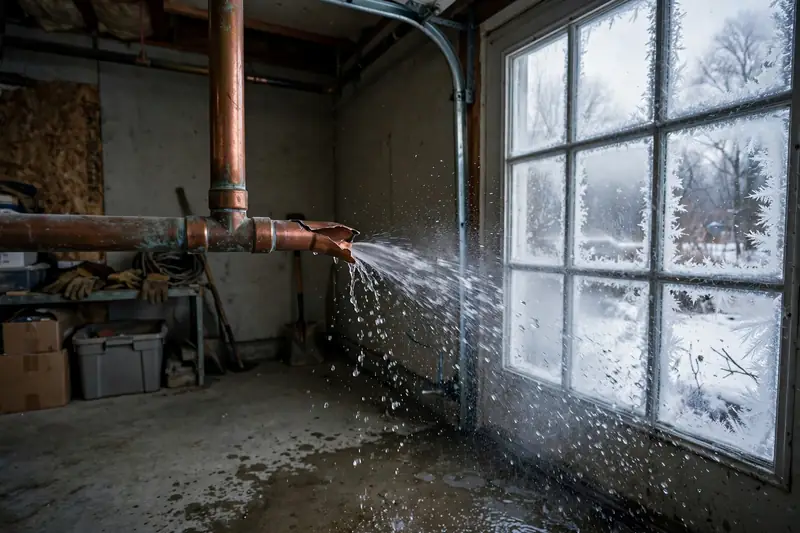
Pipes here usually freeze on the nights after a mild stretch, when people have not thought about the cold yet and a sudden arctic front drops temperatures fast. The lines most at risk run through exterior walls, garages, crawlspaces, attics and outside hose bibs. If a pipe freezes, open the faucet, warm the pipe gently with a hair dryer or space heater, and never use an open flame. If it has already split, shut off the main and call for cleanup.
Why our swings catch people off guard
Colorado Springs sits around 6,000 feet, with Monument, Black Forest and Palmer Lake higher still and Woodland Park well above that. Thin, dry air loses heat fast after sunset. A sunny afternoon in the 40s or 50s can turn into a single digit night once a cold front comes down the Front Range, and arctic outbreaks can push lows below zero for several days.
That pattern causes two problems. First, people get used to mild weather and leave the garage door open, the crawlspace vent uncovered, or the thermostat turned way down while they travel. Second, the freeze and thaw cycle repeats many times each winter, which works on weak fittings and old pipes over and over.
Research by the University of Illinois Building Research Council found that unprotected pipes in an unheated attic started to freeze once outdoor temperatures dropped to around 20 degrees. Wind and duration change that. A long, windy night just above 20 can do more harm than a brief dip below it.
Which pipes freeze first
Exterior wall runs
Kitchen and bathroom sinks on outside walls are the classic spot. Cold air leaks in around the pipe penetration, and the cabinet doors keep room heat away from the line.
Garages
Water heaters, laundry hookups and supply lines in attached garages are common in local homes. An unheated garage on a sub zero night is effectively outdoors, especially if the door was left open.
Crawlspaces
Some older ranches and mountain homes in Woodland Park and Palmer Lake have plumbing in crawlspaces with vents to the outside. An open vent on a cold night lets wind blow straight across the pipes.
Attics and bonus rooms
Lines that run over a garage or through an attic to an upstairs bathroom sit in cold air. Evaporative cooler supply lines in the attic are a frequent problem if they were not drained in the fall. See our post on swamp cooler leaks.
Hose bibs and sprinkler backflow preventers
A hose left connected traps water in the spigot, and the pipe can split just inside the wall. Lawn sprinkler backflow preventers mounted outside split easily if they were not winterized before the first hard freeze. Our post on sprinkler backflow preventer freezes covers how to protect one.
Water still spreading? Talk to a local restoration pro now.Have your ZIP code ready. A local restoration pro answers.
Call (719) 555-0142Signs a pipe is frozen
- A faucet gives a trickle or nothing at all on a cold morning, while other taps work.
- Frost on an exposed pipe.
- A bulge or split visible on the line.
- Odd sounds when you open a tap.
- A toilet that will not refill.
How to thaw a frozen pipe safely
- Open the faucet the line feeds. As ice melts, running water helps melt the rest, and an open tap relieves pressure.
- Find the frozen section. Start closest to the faucet and work back toward where the line enters the cold area.
- Apply gentle heat. A hair dryer, a heat lamp, a space heater kept a safe distance from anything that can burn, or towels soaked in hot water all work.
- Keep going until full pressure returns. Then check other faucets in the house.
- Watch for leaks as it thaws. If water starts spraying from a crack, shut off the main right away.
What not to do: never use a propane torch, a kerosene or propane heater, or any open flame on a pipe. A flame can ignite framing, insulation or dust inside the wall cavity before you see smoke. Do not leave a space heater running unattended, and do not use one near water on the floor.
If you cannot find the frozen spot, cannot reach it, or the pipe sits inside a finished wall, call a licensed plumber.
If a pipe bursts
- Shut off the main water valve. Know where it is now, before winter.
- Open the lowest faucet in the house to drain the lines.
- Turn off electricity to wet rooms if you can reach the breaker safely.
- Move rugs, furniture and boxes out of the water.
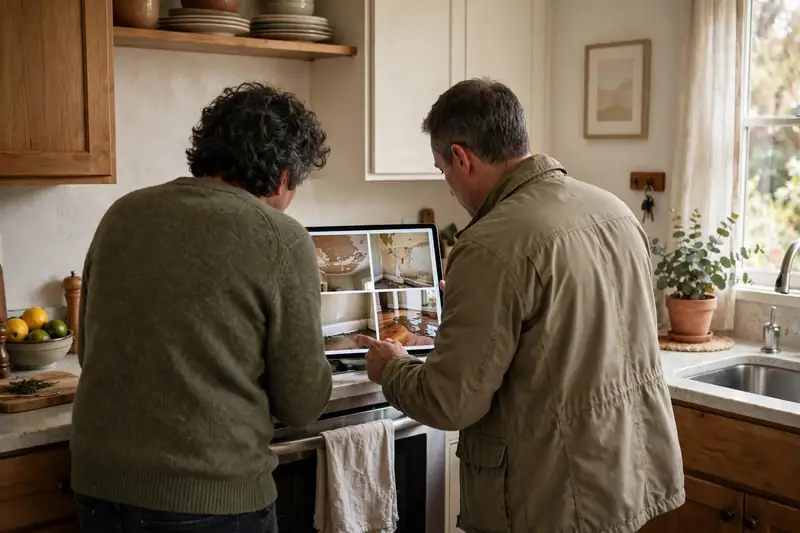
- Take photos, then call for burst pipe cleanup.
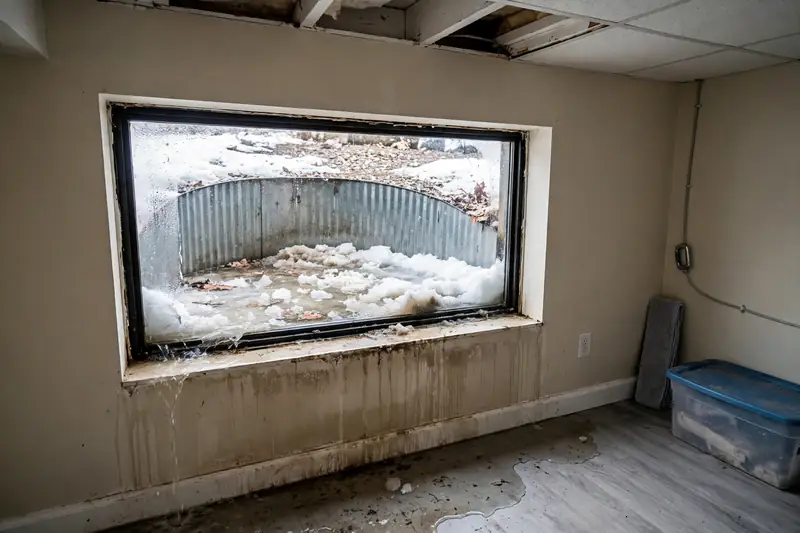
A burst pipe that runs for a few hours can soak carpet pad, drywall and the ceiling below. Starting extraction and drying quickly is the biggest factor in how much material has to come out. Our post on burst pipe repair cost factors explains what the crew looks at.
Need someone to look at it today?Tell them your ZIP and what happened. A local pro picks up.
Call (719) 555-0142Before the first hard freeze
- Disconnect garden hoses and close the interior shutoff for outdoor spigots if you have one.
- Have the sprinkler system blown out.
- Close crawlspace vents or cover them for the winter.
- Wrap or insulate pipes in garages, crawlspaces and attics.
- Keep the garage door closed on cold nights.
- Set the thermostat no lower than the mid 50s when you are away, and ask someone to check the house.
Leaving the house empty
Military families leaving for a PCS move or long TDY, snowbirds and landlords between tenants see the worst frozen pipe damage, because nobody is there to notice. A pipe that bursts on the first night of a two week trip can run the whole time. Consider shutting off the main and draining the lines if the house will be empty during a cold stretch, and check whether your policy has conditions about keeping heat on. Our post on vacant homes during a PCS move has a checklist, and homeowners in Monument and other higher areas should plan for colder nights than the city sees.
Insurance on freeze damage
Many homeowners policies cover sudden water damage from a pipe that freezes and bursts. Some limit that coverage if the home was vacant or the heat was not maintained. The pipe repair itself may be treated differently from the water damage. Read your policy, and call your agent if you are unsure. A restoration crew can document moisture readings and damage for your adjuster.
Water still spreading? Talk to a local restoration pro now.Have your ZIP code ready. A local restoration pro answers.
Call (719) 555-0142Sources and official resources
Related
Services and areas for this guide
Homeowner guides
Keep reading
FAQ
Common questions
Straight answers to what Colorado Springs homeowners ask most. Still unsure? Call and ask a local pro.
Call (719) 555-0142How cold does it have to get before pipes freeze?
Research from the University of Illinois Building Research Council found that unprotected pipes in an unheated attic began freezing when outdoor temperatures fell to about 20 degrees. Pipes in drafty spots, or on a windy night, can freeze above that. Duration matters too, since a long cold night does more than a short dip.
Should I drip my faucets?
On the coldest nights, letting a faucet on an exterior wall run at a slow trickle can help, because moving water is harder to freeze and an open tap relieves pressure if ice forms. Open the cabinet doors under that sink as well so warm room air reaches the pipes.
My pipe thawed and nothing leaked. Am I in the clear?
Not always. A pipe can crack while frozen and only leak once it thaws and pressure returns. Check under sinks, the basement ceiling and around the frozen spot for a few hours afterward, and keep the main shutoff within reach.
Does PEX pipe freeze?
It can freeze, but it stretches more than copper and often survives without splitting. The fittings and connections are the weak points. A frozen PEX line still needs to be thawed gently and watched for leaks.
What should I do with the sprinkler system before winter?
Have it blown out and shut off the supply, and protect or drain the backflow preventer that usually sits outside near the house. That brass assembly splits easily in a hard freeze. Our backflow post explains the steps.
Water where it shouldn't be?
Call now and a licensed restoration pro near you can walk you through the next hour and set up a visit.