Homeowner guide
Sprinkler Backflow Preventer Freeze in Colorado Springs
That brass fitting by the foundation holds water all winter unless it is drained. Here is how to time your blowout and what to do if it already cracked.
Have your ZIP code ready. A local restoration pro answers.
Updated November 7, 2026 · 5 min read
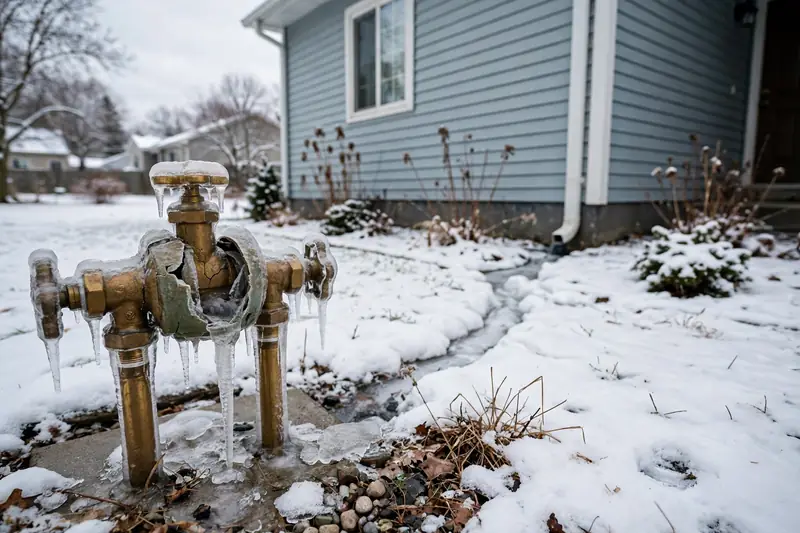
Most irrigation backflow preventers in Colorado Springs sit above ground near the foundation and hold water in their brass body and valves, so a hard freeze can crack them unless the system is blown out and the device is drained. Schedule your sprinkler winterization for early to mid October: the National Weather Service puts the average first fall freeze in the city around October 2, and a hard freeze of 28 degrees has about a 90 percent chance of arriving by October 27. If you missed the window and the backflow preventer is leaking, close the irrigation shutoff inside the house and call a plumber or irrigation tech before more water reaches the foundation.
What a backflow preventer does
A sprinkler system connects to your drinking water. A backflow preventer is a one-way assembly that keeps water from the lawn lines (with fertilizer, soil and whatever else) from being pulled back into the household supply. Many Colorado Springs homes have a pressure vacuum breaker, a brass device on two pipes sticking up out of the ground, usually near the foundation by the water meter or the house shutoff. Others have a reduced pressure assembly or a double check valve.
They have to be installed high enough and out in the open so they can be tested. That also means they are exposed to cold air all winter.
Why they freeze and split
Water expands when it freezes. Inside a backflow preventer, water sits in the body, in the check valve area and in the test cocks. Even a small amount trapped in a closed chamber can crack the brass or pop the bonnet. A sprinkler line buried under the frost line may survive, but the part above ground will not.
Colorado Springs' weather makes this worse. A warm fall can tempt people to keep watering late, and then a cold front drops temperatures 30 or 40 degrees in a day. Above about 7,000 feet, in Monument, Black Forest and up in Woodland Park, freezes come sooner and hit harder.
Not sure how bad it is? A short call usually tells you.Have your ZIP code ready. A local restoration pro answers.
Call (719) 555-0142When to winterize
Colorado Springs Utilities has noted that the weather makes it hard to pin down a single date, and that higher elevations should winterize earlier. The National Weather Service's climate data for Colorado Springs gives some useful anchors:
| Freeze milestone in Colorado Springs | Date |
|---|---|
| Average first fall freeze (32 degrees) | Around October 2 |
| 50 percent chance of a 28-degree freeze | By October 10 |
| 90 percent chance of a 28-degree freeze | By October 27 |
In practice, booking a blowout in early to mid October keeps you ahead of the hard freezes in most years. Irrigation companies get busy that month, so call in September. If a single cold night shows up before your appointment, close the irrigation shutoff and drain the backflow preventer, or at least cover it.
How a blowout works
A blowout pushes the water out of the lines with compressed air. A technician closes the irrigation supply, hooks a compressor to the system (often at a blowout port or a test cock on the backflow preventer), and runs each zone until only mist comes out of the heads. Then the backflow preventer is drained by opening its test cocks and valves partway, so no water stays trapped inside.
A few points to know:
- Too much air pressure can damage pipes and heads, which is why many homeowners hire this out.
- The ball valves on a pressure vacuum breaker are often left at a 45-degree angle for winter so water cannot sit trapped in the valve body.
- The irrigation shutoff inside the house needs to be fully closed. If it leaks, water keeps refilling the line all winter.
- Manual drain valves on some systems let you skip the compressor, but only if the system was built with them.
Water still spreading? Talk to a local restoration pro now.Have your ZIP code ready. A local restoration pro answers.
Call (719) 555-0142If the backflow preventer already cracked
Many people find the damage in spring, when they turn the water on and get a spray from the device. Others find it in winter when the irrigation shutoff inside was not fully closed or the crack is on the house side.
- Close the irrigation shutoff inside the house. It is often in the basement or crawlspace, on a branch off the main line near where it enters.
- If water is still running, close the main shutoff for the house.
- Check where the water went. Look at the foundation, window wells and the basement wall closest to the device.
- Call a plumber or irrigation tech to replace the backflow preventer. Ask whether it needs testing after installation.
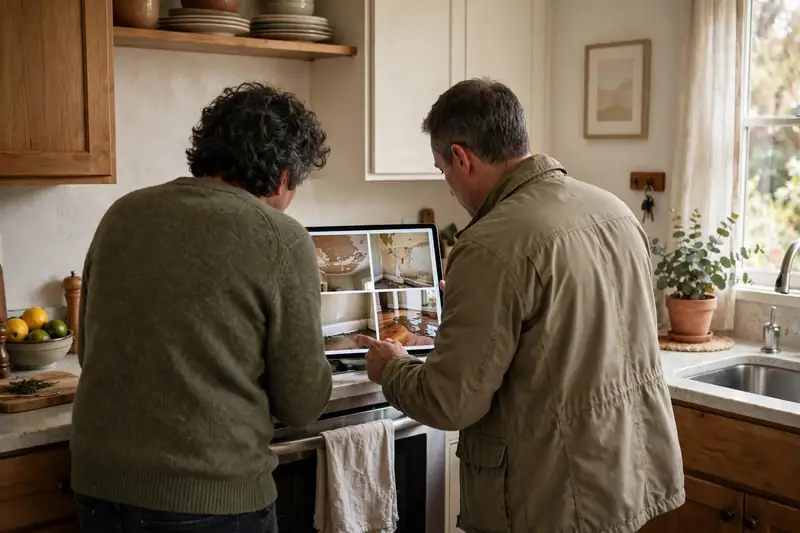
- Photograph everything before repairs if water got inside.
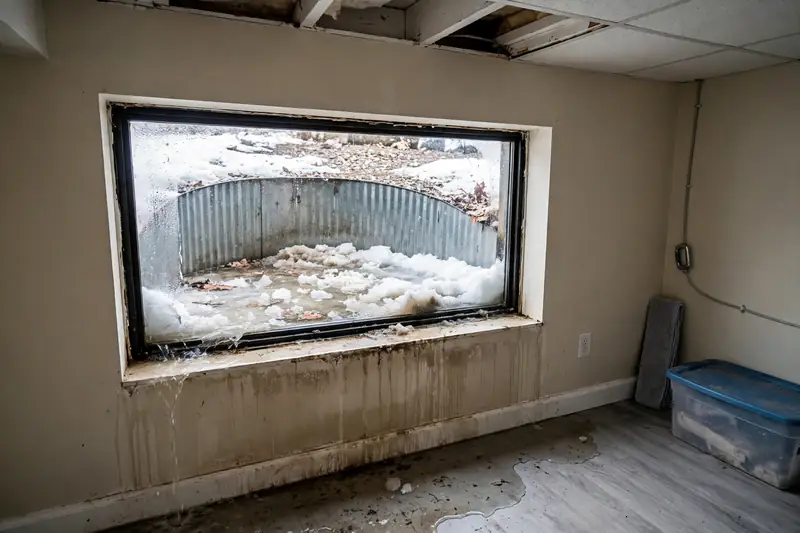
Water running along the foundation in winter can soak into expansive clay soil, fill a window well, or find a crack in the wall. That is how an outdoor sprinkler failure turns into a basement flooding call. Our posts on window well flooding and expansive soil and basement water explain those paths.
Need someone to look at it today?Tell them your ZIP and what happened. A local pro picks up.
Call (719) 555-0142When the leak gets inside
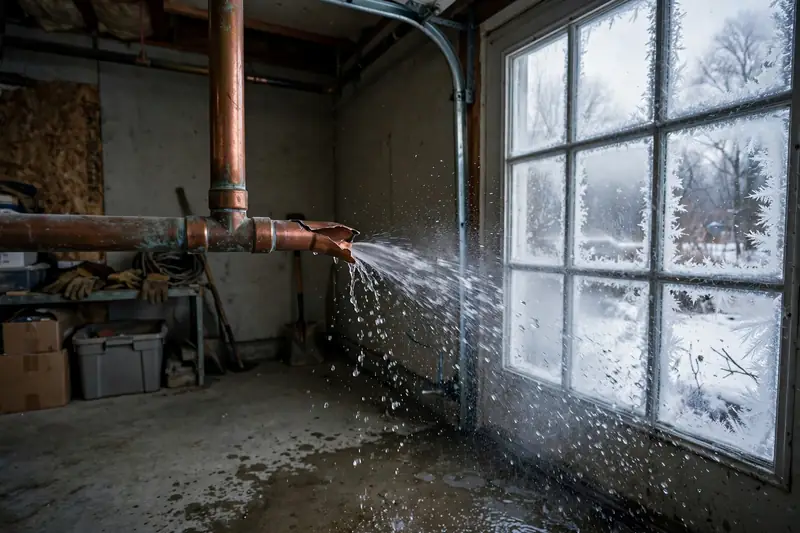
If the crack is on a pipe that runs through the house, or the shutoff failed and water got into a finished basement, treat it like any other burst pipe cleanup. Shut the water off, get the wet carpet and drywall checked, and start drying. A local restoration crew will measure moisture in the walls and floor and set dehumidifiers and air movers.
What drives the cost is how much space got wet, whether the basement was finished, how long the water ran, what has to be removed, and whether the response happened at night or on a weekend. The company that inspects gives you the figure in writing before any work starts.
Insurance and the irrigation system
Many homeowners policies cover sudden water damage inside the house from a burst pipe, but outdoor equipment like a backflow preventer and the sprinkler system itself may have limited coverage or none. A freeze that happened because the system was never winterized can also be treated as a maintenance issue. Our post on whether homeowners insurance covers water damage in Colorado goes into that.
Spring startup
When you turn the system back on, usually after the last hard freeze, open the irrigation shutoff inside slowly. Then open the backflow preventer valves slowly, one at a time. Watch the assembly for leaks before running zones. If you are leaving the house empty for the winter, add the blowout to the checklist in our PCS move and vacant home post.
Water still spreading? Talk to a local restoration pro now.Have your ZIP code ready. A local restoration pro answers.
Call (719) 555-0142Sources and official resources
- Contractor license lookup (Pikes Peak Regional Building Department)
- Homeowners insurance help (Colorado Division of Insurance)
- IICRC: restoration industry standards body
- Colorado Springs weather warnings (National Weather Service, Pueblo)
- Flood insurance basics (FEMA FloodSmart)
- A Brief Guide to Mold, Moisture and Your Home (EPA)
Related
Services and areas for this guide
Homeowner guides
Keep reading
FAQ
Common questions
Straight answers to what Colorado Springs homeowners ask most. Still unsure? Call and ask a local pro.
Call (719) 555-0142When should I winterize my sprinklers in Colorado Springs?
Plan for early to mid October. The average first fall freeze in Colorado Springs lands around October 2, and the chance of a hard freeze of 28 degrees climbs through the month. Higher areas like Monument, Black Forest and Woodland Park should go earlier.
Can I just shut off the sprinkler valve and skip the blowout?
Closing the valve protects the house line, but water still sits in the backflow preventer, the pipes and the sprinkler heads. A blowout with compressed air, or a full manual drain on systems built for it, is what clears that water.
How do I know my backflow preventer froze?
Look for a cracked bonnet, a split body, or water spraying or dripping from the assembly when the system is turned on in spring. Sometimes the crack does not show until the water is turned back on.
Should I wrap the backflow preventer?
An insulated cover helps against an early cold night if you have not blown out yet, and it keeps snow off. It does not replace draining the device for winter.
Will a cracked backflow preventer flood my basement?
It can if the irrigation shutoff inside the house is not fully closed, or if the crack is on the house side of the valve. Most of the time the leak happens outdoors, but water can run along the foundation and into a window well or basement.
Water where it shouldn't be?
Call now and a licensed restoration pro near you can walk you through the next hour and set up a visit.