Homeowner guide
Hardwood Floor Water Damage: Can It Be Saved or Does It Need Replacing?
Plenty of wet hardwood floors can be dried in place. The answer depends on the water, the wood, how fast drying started and what is under the boards.
Have your ZIP code ready. A local restoration pro answers.
Updated November 2, 2026 · 4 min read
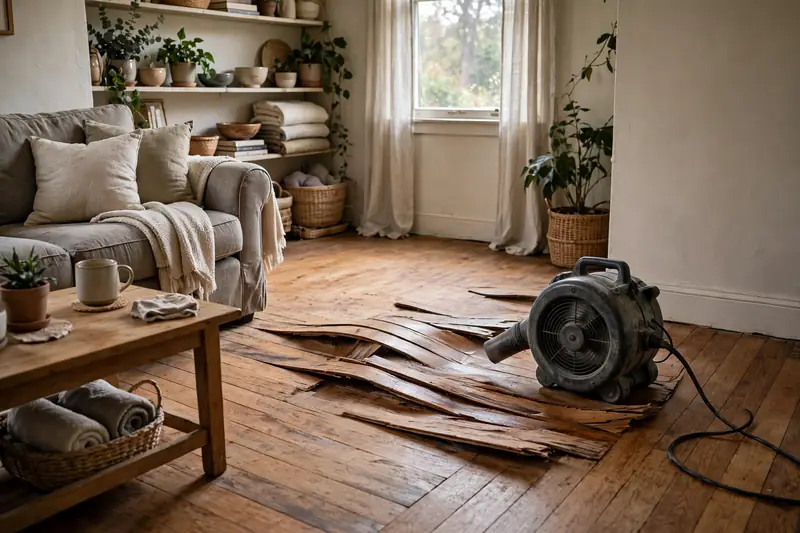
Many water-damaged hardwood floors in Colorado Springs can be saved if the water was clean, the leak was caught quickly and professional drying started within a day or so. Floors usually need replacing when they sat in dirty water, stayed wet long enough to grow mold or rot the subfloor, or have boards that split, buckled off the nails or delaminated. Mild cupping is often temporary, and the biggest mistake is sanding a cupped floor before it has fully dried.
What happens to wood when it gets wet
Hardwood is cut from a tree that was full of water, then dried in a kiln and installed at a moisture level that matches the house. When water reaches it again, the wood swells. Because the bottom of the board usually gets wetter than the finished top, the edges rise and the middle sinks. That is cupping.
Here is how the damage usually progresses:
| Stage | What it looks like | Typical outlook |
|---|---|---|
| Surface water only | Wet finish, no swelling | Wipe dry, usually fine |
| Light cupping | Edges slightly raised, you can feel ridges | Often flattens with controlled drying |
| Heavy cupping | Visible ridges across the room | May flatten partly; often needs sanding later |
| Crowning | Center of boards higher than edges | Usually from sanding too soon or water from above |
| Buckling | Boards lift off the subfloor | Usually replace affected area |
| Gaps, splits, delamination | Cracks or layers separating | Usually replace boards |
| Black staining or mold | Dark spots, musty smell | Often replace, check subfloor |
Why our dry climate cuts both ways
Low indoor humidity here helps floors dry, but it can also push them too far. Wood that dries too fast at the surface can check and crack. And once it has dried out, a floor in a dry house can shrink and open gaps between boards, especially in winter with the furnace running.
That is why a good crew dries hardwood on purpose, not with every fan blasting at once. Controlled drying, sometimes with specialized drying mats that pull moisture up through the boards, gives the wood time to move back into shape.
Not sure how bad it is? A short call usually tells you.Have your ZIP code ready. A local restoration pro answers.
Call (719) 555-0142Signs the floor can probably be saved
- The water was clean, such as a supply line or burst pipe, not a sewer backup or flood.
- Drying started within the first day or two.
- The boards are cupped but still tight to the subfloor.
- The subfloor underneath is plywood or OSB in good shape.
- There is no musty smell and no black staining between boards.
- The floor is solid hardwood thick enough to sand again.
Signs replacement is more likely
- The water was gray or black water, which contaminates porous wood.
- Water sat for several days before anyone noticed.
- Boards have buckled up off the floor or split.
- Engineered boards are peeling apart at the layers.
- The subfloor is soft, delaminated or showing rot.
- There is mold under the boards or on the subfloor.
- The floor has been sanded so many times there is little wood left above the tongue.
Older homes are a special case. In neighborhoods like Patty Jewett, Old Colorado City and parts of the Broadmoor area, original oak or fir floors may be nailed over plank subfloors, sometimes with layers of old finish or past repairs. Those floors are often worth extra effort to save, both for character and because matching old wood is hard.
What to do right after water hits a wood floor
- Stop the water and shut off power to anything in the wet area.
- Get standing water off the surface. Use towels or a wet vac. Do not use a steam mop or household carpet cleaner.
- Remove rugs, furniture and anything metal sitting on the floor. Wet rugs keep the wood underneath soaked, and metal can stain.
- Do not cover the floor with plastic or put heavy weights on cupped boards.
- Call for drying help. Fast emergency water extraction with tools designed for wood floors pulls water out of the seams that a mop cannot reach.
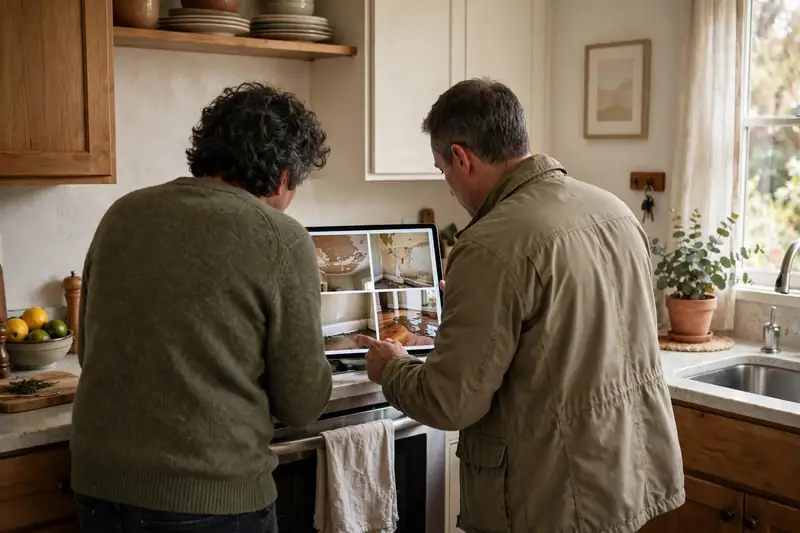
- Photograph everything for your insurer, including close-ups of cupping.
Water still spreading? Talk to a local restoration pro now.Have your ZIP code ready. A local restoration pro answers.
Call (719) 555-0142How professional hardwood drying works
The crew that comes out will usually:
- Take readings across the floor, at the subfloor if they can reach it from below, and in an unaffected room for comparison.
- Remove baseboards and quarter round to let the edges breathe.
- Set drying mats or panels over the wettest areas to pull moisture up through the wood.
- Run dehumidifiers and air movers in a controlled way.
- Dry from below if there is an unfinished basement or crawlspace, which often speeds things up a lot.
- Check readings daily and track whether cupping is easing.
Hardwood often takes longer than drywall. Read how long it takes to dry a house for why dense materials lag behind.
Why waiting to sand matters
When cupped boards are sanded flat while the bottom is still wetter than the top, the edges get cut down. Then the bottom finishes drying, the board shrinks back, and the center ends up higher than the edges. That is crowning, and it is permanent. A flooring pro should confirm the top and bottom of the boards read about the same and match the dry reference spot before any sanding.
What drives the cost: dry, repair or replace
The company that inspects gives the real figure in writing before work starts. The main factors:
- Water category and how long the floor stayed wet
- Square footage and how many rooms the floor runs through
- Solid vs engineered wood, species and plank width
- Whether the floor can be dried in place or needs to come up
- Subfloor condition
- Matching existing flooring in connected rooms
- Refinishing the whole room vs patching
- Access from below
- Insurance terms on matching, plus your deductible
Related reading
If water came from an appliance, see washing machine and dishwasher leaks. For how insurers handle the claim, see what a water damage adjuster looks for. The full water damage restoration process covers drying and rebuild from start to finish.
Water still spreading? Talk to a local restoration pro now.Have your ZIP code ready. A local restoration pro answers.
Call (719) 555-0142Sources and official resources
Related
Services and areas for this guide
Homeowner guides
Keep reading
FAQ
Common questions
Straight answers to what Colorado Springs homeowners ask most. Still unsure? Call and ask a local pro.
Call (719) 555-0142How long should I wait before refinishing a cupped hardwood floor?
Wait until moisture readings at the top and bottom of the boards match a dry reference area in the house, and stay there for a while. Sanding while the bottom of the board is still wet leaves a floor that crowns once it finishes drying. A flooring pro with a meter should make the call, not the calendar.
Can engineered hardwood be dried like solid hardwood?
Sometimes. Engineered boards have a thin wood top layer over plywood or fiberboard, and the core can swell or delaminate when it stays wet. Many engineered floors can be dried if caught quickly, but once the layers separate the boards usually need to come out.
My floor dried but there are dark stains. What are they?
Dark gray or black stains often come from water reacting with tannins in oak, or from metal like a planter or fastener sitting on wet wood. Light surface stains may sand out. Deep stains that go through the board usually mean replacing those boards.
Will insurance replace my whole floor if only part is damaged?
It depends on your policy and on whether the repair can reasonably match the rest of the floor. Some policies address matching and some do not. Discuss it with your adjuster and have your flooring contractor explain in writing why a partial repair would or would not blend.
Water where it shouldn't be?
Call now and a licensed restoration pro near you can walk you through the next hour and set up a visit.