Homeowner guide
Water Heater Leak: What to Do Right Now
Shut off the cold supply, kill the gas or power, and find out where the water is coming from. Most of the damage is preventable if you move in the first hour.
Have your ZIP code ready. A local restoration pro answers.
Updated October 21, 2026 · 5 min read
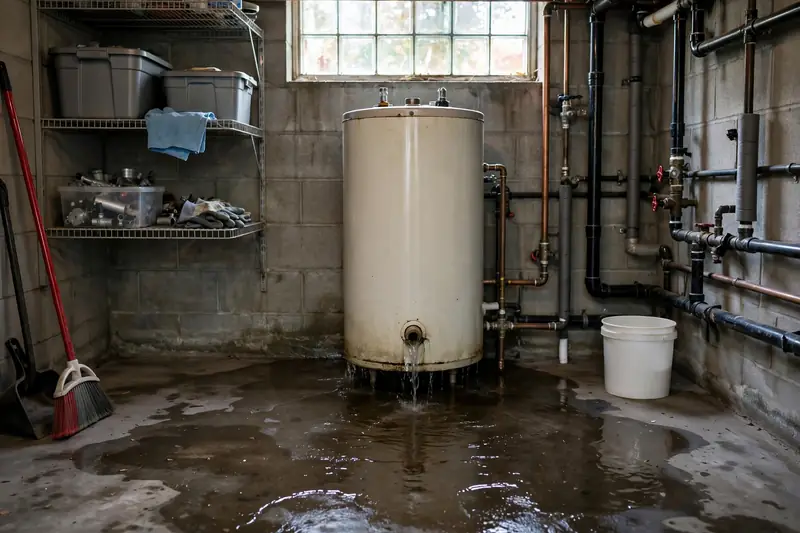
If your water heater is leaking, close the cold water valve on the pipe that feeds the top of the tank, then turn off the heater: set a gas unit to "off" or "pilot," or switch off the breaker for an electric one. Wipe the tank dry and watch where new water appears so you know whether it is a fitting, a valve or the tank itself. If the tank body is leaking, it cannot be repaired, and it is time to drain it and call a plumber, plus a restoration crew if water has spread past the floor drain.
Step one: shut off the water
Follow the cold water line coming into the top of the heater. There is usually a valve on it: a lever handle or a round gate valve. Turn it clockwise or a quarter turn until it stops. That stops new water from filling the tank. If that valve will not budge, or it is leaking itself, shut off the main water valve for the house. In many Colorado Springs homes the main is in the basement or crawlspace where the service line comes through the foundation wall, or in a utility closet near the heater.
Step two: shut off the energy
- Gas heater: turn the control knob to "off" or "pilot." Many units also have a gas shutoff valve on the supply pipe; turn the handle so it sits crosswise to the pipe.
- Electric heater: switch off the breaker labeled for the water heater at your panel. Do not touch the unit if you are standing in water.
If you smell gas at any point, leave the house and call the gas utility's emergency line or 911 from outside.
Not sure how bad it is? A short call usually tells you.Have your ZIP code ready. A local restoration pro answers.
Call (719) 555-0142Step three: find the source
Dry the tank and the floor, then watch for a few minutes. Where the water shows up tells you a lot.
| Where the water is | Likely cause | Usually fixable? |
|---|---|---|
| Top of the tank, at the pipe connections | Loose fitting or worn flex connector | Yes, often a simple repair |
| Discharge pipe on the side | Temperature and pressure relief valve opened or failing | Yes, but find out why it opened |
| Drain valve near the bottom | Valve not fully closed or worn washer | Yes |
| Bottom seam or pooling under the tank | Rusted-through tank | No, the heater needs replacing |
| Floor nearby, but the tank is dry | Another pipe, a softener or the furnace condensate line | Depends on the source |
A tank that rusts through from the inside does not get better. Sediment settles on the bottom over the years, and the steel underneath corrodes until it opens up. That kind of failure can start as a slow drip and then let go all at once.
Water still spreading? Talk to a local restoration pro now.Have your ZIP code ready. A local restoration pro answers.
Call (719) 555-0142Step four: drain it if the tank is failing
To relieve the load on a failing tank, a plumber will usually drain it, and you can start that yourself if it is safe. Hook a garden hose to the drain valve near the bottom and run it to a floor drain or outside. Open a hot water faucet upstairs so air can get in and the tank drains faster. Be careful: the water inside can still be scalding for hours after you shut the heater off.
Step five: deal with the water on the floor
This is where most of the damage happens. Water heaters sit in basements, utility closets, garages and attics, and each spot fails differently.
- Unfinished basement: water usually runs to the floor drain. Dry the area, check the bottom plates of nearby walls and any boxes stored on the slab.
- Finished basement: water wicks into carpet pad, under laminate and up the bottom of the drywall. In bi-levels and tri-levels common across central and east Colorado Springs, the utility room often sits next to a finished family room, and water crosses under the wall plate into carpet you cannot see from the heater.
- Main floor or closet: water can soak the subfloor and drip into the space below.
- Garage: usually the least damage, unless the water runs under a door into the house.
If water reached carpet or drywall, emergency water extraction and proper drying matter more than speed of cleanup with towels. A local restoration pro will meter the walls and floor, pull up wet pad if needed and set dehumidifiers. For finished lower levels, our basement flooding page explains how that drying works. Colorado Springs' dry air helps, but water trapped under vinyl plank or in a wall cavity still needs equipment to come out.
Need someone to look at it today?Tell them your ZIP and what happened. A local pro picks up.
Call (719) 555-0142What drives the cost
No dollar figures here, because the job varies too much. The cost to repair the damage depends on how long the tank leaked before anyone noticed, whether the area was finished, what flooring was down, how far the water traveled, and whether drywall or cabinets need to be cut out. After-hours response and access also play in. The company that inspects writes up the real number before work begins.
Will insurance cover it?
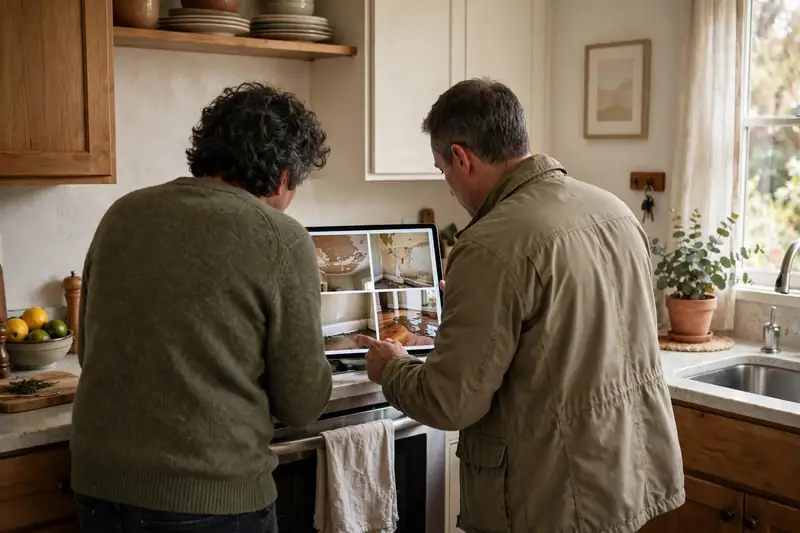
Many homeowners policies treat a sudden tank failure as a covered loss for the water damage, while the heater itself is often seen as wear and tear. A slow leak that went on for weeks may be excluded. Our post on whether homeowners insurance covers water damage in Colorado breaks that down. Take photos of the tank, the label with the model and serial number, and the wet area before anything gets removed.
Before the new heater goes in
- Ask the plumber whether a permit is needed for the replacement. The Pikes Peak Regional Building Department handles plumbing permits in Colorado Springs and most of El Paso County.
- Ask about a drain pan with a line to a drain, especially if the heater sits above a finished room.
- Ask whether your home needs a thermal expansion tank. On a closed system, pressure builds every time the heater runs.
- Consider a leak sensor on the floor beside the new unit. Some can close a valve automatically.
- Flush sediment from the tank on the schedule the manufacturer recommends.
Water still spreading? Talk to a local restoration pro now.Have your ZIP code ready. A local restoration pro answers.
Call (719) 555-0142The other leaks that look like a water heater
Sometimes the heater is just sitting next to the real problem. A water softener, a furnace or air conditioner condensate line, a humidifier on the furnace, or a washing machine hose in the same room can all leave water near the heater. Our post on washing machine and dishwasher leaks covers those appliance failures. If you are not sure how long the water has been there, read how long it takes to dry a house in Colorado Springs before you put the furniture back.
Sources and official resources
Related
Services and areas for this guide
Homeowner guides
Keep reading
FAQ
Common questions
Straight answers to what Colorado Springs homeowners ask most. Still unsure? Call and ask a local pro.
Call (719) 555-0142Is a little water under the water heater an emergency?
Not always. Condensation and a weeping drain valve can leave a small puddle. If the water keeps coming back after you dry it, or it is coming from the bottom seam of the tank, the tank is failing and you should shut it down.
Can I keep using hot water until the plumber comes?
If the leak is from the tank body, no. Shut the cold inlet and turn the heater off. If it is a loose fitting on top and you have tightened it and it stopped, you may be fine, but have a plumber look soon.
Why is water dripping from the pipe on the side of the tank?
That pipe drains the temperature and pressure relief valve. Water from it means the valve opened because of high pressure or temperature, or the valve itself is worn. Do not cap it. Call a plumber to check the thermostat, pressure and expansion tank.
Does insurance pay for a new water heater after a leak?
Many policies pay for the damage the water caused, not the heater itself, since tanks wear out with age. Check your policy, and take photos of the failed tank before it is hauled away.
How long does it take to dry the floor after a water heater leak?
A clean-water leak caught early usually dries in three to five days with dehumidifiers and air movers. A tank that leaked into a finished basement for days can take longer and may need flooring or drywall removed.
Water where it shouldn't be?
Call now and a licensed restoration pro near you can walk you through the next hour and set up a visit.