Homeowner guide
Washing Machine and Dishwasher Leaks: What to Do About the Water Damage
Appliance leaks are usually clean water, but they run fast, spread under floors and often hit a finished room below. Here is how to handle one.
Have your ZIP code ready. A local restoration pro answers.
Updated October 12, 2026 · 5 min read
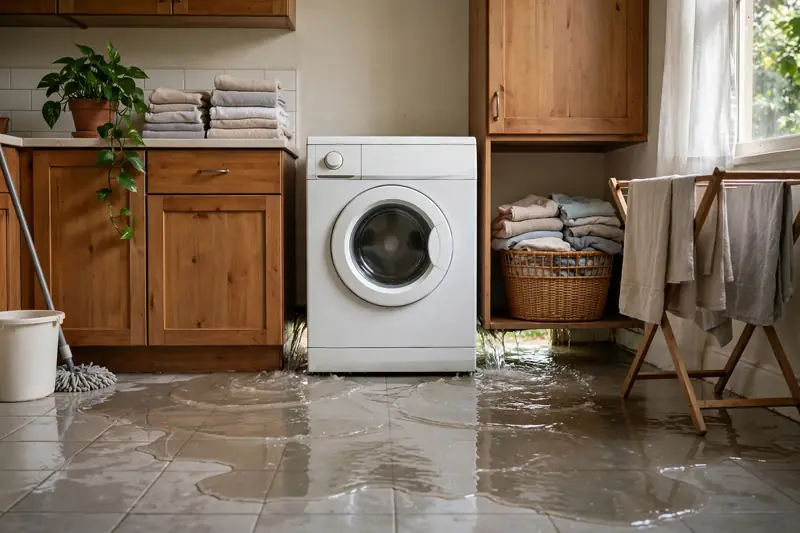
When a washing machine or dishwasher leaks, shut off the water to the appliance, cut power to it, and get standing water off the floor as fast as you can. Appliance supply lines run at full house water pressure, so a burst hose can put a lot of water on the floor in minutes. That water does not stay in the laundry room or kitchen. It runs under cabinets, into the subfloor and through to the ceiling or finished basement below, which is why a leak that looks small often needs professional drying.
Why appliance leaks do more damage than they look
Washers and dishwashers sit in the worst possible spots for a leak. Laundry rooms in many Colorado Springs homes are on the second floor or the main floor right above a finished basement. Dishwashers are tucked between base cabinets with flooring that runs underneath them.
Here is where the water usually goes:
- Under the cabinets. Toe kicks hide water that pools under the cabinet box.
- Under the flooring. Vinyl plank, laminate and tile all let water seep through seams and get trapped on the subfloor.
- Into the room below. Water follows joists and drips through ceiling drywall, light fixtures and HVAC registers.
- Into the walls. Drywall wicks water up from the bottom plate.
Two-story homes in areas like Stetson Hills and Gleneagle often have upstairs laundry rooms, so a washer leak can soak a bedroom ceiling, a living room and a finished basement in one event.
The most common causes
| Appliance | Common failure | What you notice |
|---|---|---|
| Washing machine | Rubber supply hose splits or bursts | Sudden flood behind the washer |
| Washing machine | Drain hose pops out of the standpipe | Water during the spin or drain cycle |
| Washing machine | Clogged standpipe or laundry drain | Overflow at the standpipe or nearby floor drain |
| Washing machine | Door seal or tub seal failure (front loaders) | Puddle in front of the machine |
| Dishwasher | Supply line under the sink loosens or cracks | Slow drip, soft floor in front |
| Dishwasher | Door gasket worn or torn | Water on the floor after each cycle |
| Dishwasher | Drain hose clog or kink | Water backs up into sink or tub |
| Dishwasher | Wrong detergent causing suds | Foam leaking out the door |
| Both | Shutoff valve corroded and seeping | Mineral crust and damp wall behind |
A note on freezing
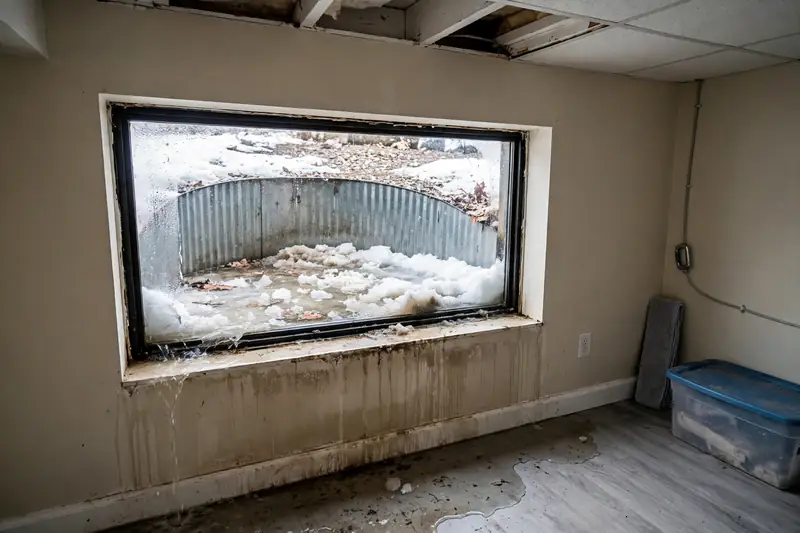
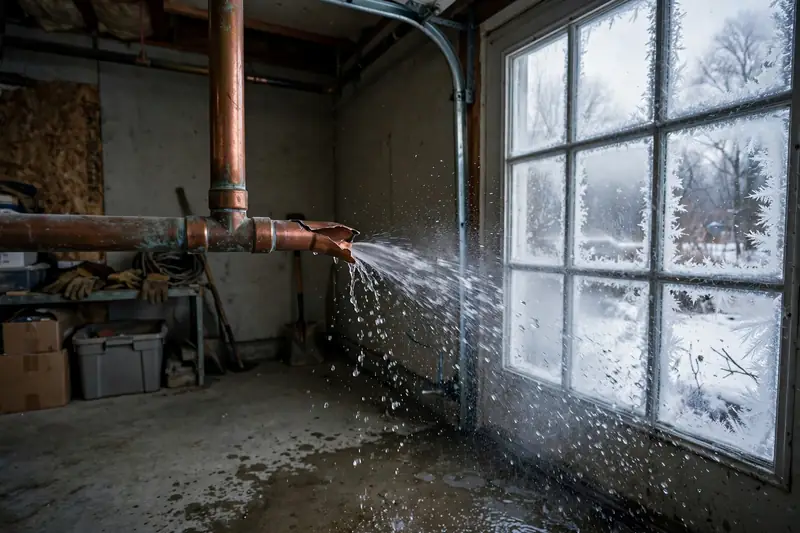
If your laundry room sits on an exterior wall or over an unheated garage, supply lines and valves in that wall are at risk during a deep cold snap. A frozen line may not leak until it thaws. Our post on frozen pipes and Colorado Springs temperature swings covers the walls to watch.
Not sure how bad it is? A short call usually tells you.Have your ZIP code ready. A local restoration pro answers.
Call (719) 555-0142What to do right now
- Turn off the water. Close the hot and cold valves behind the washer, or the valve under the kitchen sink for the dishwasher. If those valves will not budge, close the main.
- Cut the power. Unplug the appliance or switch off its breaker before you touch it or stand in water near it.
- Get the water up. Towels, a mop and a wet vac work for small amounts. For a real flood, call for emergency water extraction.
- Check below. Go downstairs and look at the ceiling under the laundry room or kitchen. Turn off light fixtures if water is dripping through them.
- Move belongings. Lift rugs, boxes and furniture out of wet areas, and put foil or blocks under furniture legs that have to stay.
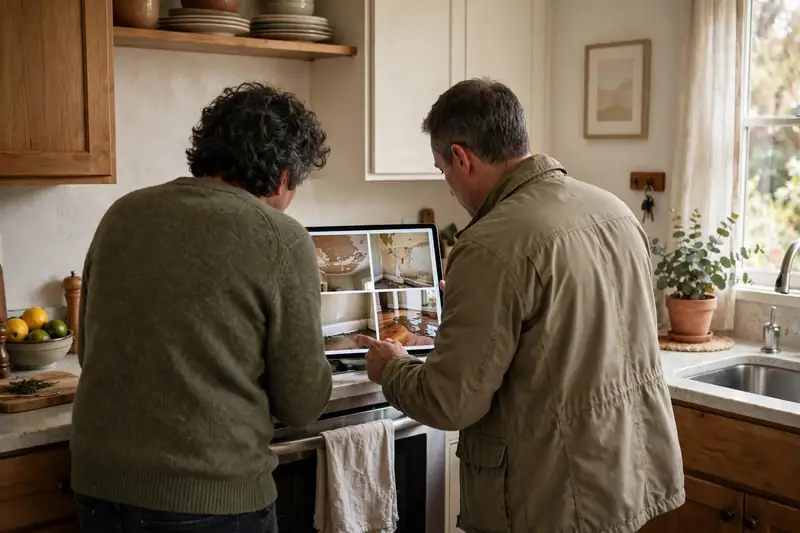
- Document it. Take photos of the appliance, the failed part and all the wet areas before cleanup.
- Save the broken part. A split hose or cracked fitting can matter for the insurance claim, and for any warranty or manufacturer claim.
Water still spreading? Talk to a local restoration pro now.Have your ZIP code ready. A local restoration pro answers.
Call (719) 555-0142How the cleanup usually goes
A local restoration pro will start by mapping the wet area with moisture meters, including the room below. Expect them to:
- Pull out the appliance to inspect the floor and wall behind it.
- Remove toe kicks or drill small holes behind them to dry under cabinets.
- Lift or remove flooring that has water trapped under it.
- Open ceiling drywall below if it is sagging or saturated.
- Set air movers and dehumidifiers and check readings daily.
Most clean-water appliance jobs dry in 3 to 5 days, often on the faster side in our dry air, but floors and cabinets can take longer. Read how long it takes to dry a house for what affects the timeline. If water sat under a floor for days before anyone noticed, the crew will also check for mold.
What drives the cost
The restoration company gives a written figure after inspecting. Factors that change it include:
- Clean supply water vs gray drain water
- How many rooms and floors got wet
- Flooring type: tile, vinyl plank, laminate, hardwood or carpet
- Whether cabinets or countertops need to come out
- Ceiling damage in the room below
- How long the leak ran before it was found
- After-hours response
- Your policy terms and deductible
The page on water damage restoration explains how drying and rebuild fit together on a typical job.
Need someone to look at it today?Tell them your ZIP and what happened. A local pro picks up.
Call (719) 555-0142How to prevent the next leak
- Replace rubber washer hoses with braided stainless steel hoses, and replace any hose that shows bulges, cracks or rust at the fittings. Many hose makers suggest replacing them on a regular schedule, so check the packaging or your washer manual.
- Leave space behind the washer so hoses are not kinked against the wall.
- Install a washer pan with a drain, especially for upstairs laundry rooms.
- Add a leak sensor or automatic shutoff valve. Some cut water to the washer or the whole house when they detect water on the floor.
- Turn off washer valves when you leave for a trip. This matters for military families on a PCS move or long TDY. See our post on vacant home water damage during a PCS move.
- Check the dishwasher supply line under the sink a couple of times a year.
- Use only dishwasher detergent in the dishwasher.
- Run the washer and dishwasher while you are home and awake, not overnight or while you are out.
If you are not sure your policy covers appliance leaks, our guide to whether homeowners insurance covers water damage in Colorado breaks down the usual sudden vs gradual distinction.
Water still spreading? Talk to a local restoration pro now.Have your ZIP code ready. A local restoration pro answers.
Call (719) 555-0142Sources and official resources
Related
Services and areas for this guide
Homeowner guides
Keep reading
FAQ
Common questions
Straight answers to what Colorado Springs homeowners ask most. Still unsure? Call and ask a local pro.
Call (719) 555-0142Is water from a dishwasher clean or dirty water?
Water from a burst supply line is usually treated as clean water. Water from the drain side, or water that sat mixed with food and detergent, is often treated as gray water, which needs more careful cleanup and sometimes removal of porous materials. The crew decides based on where it came from and how long it sat.
Can I keep using my washer after it leaked?
Not until you know why it leaked. A split hose, a cracked pump or a clogged drain will leak again on the next load. Leave the valves off and have the cause repaired first.
Will my insurance cover a washing machine overflow?
Many homeowners policies cover sudden water damage from an appliance, such as a hose that bursts. Damage from a slow leak that went on for weeks, or from a part that wore out, is often excluded. The appliance itself may not be covered at all, so check your policy and talk with your agent.
Should I pull up my laminate floor after a dishwasher leak?
Water that gets under laminate or vinyl plank is sealed in and will not dry from above. A restoration crew can check the subfloor with a meter and tell you whether the boards can be lifted and saved or need to come out. Leaving wet flooring down can lead to swelling and mold underneath.
How can I tell if my dishwasher has a slow leak?
Look for a soft spot in the floor in front of the dishwasher, swollen or peeling cabinet edges next to it, or a stain on the ceiling below if the kitchen is upstairs. Check the supply line connection under the sink with a flashlight while the dishwasher fills.
Water where it shouldn't be?
Call now and a licensed restoration pro near you can walk you through the next hour and set up a visit.