Homeowner guide
Water Mitigation vs Restoration: What Is the Difference?
Mitigation is the emergency half of the job. Restoration is the rebuild. Knowing which is which helps you read estimates and talk to your adjuster.
Have your ZIP code ready. A local restoration pro answers.
Updated October 24, 2026 · 4 min read
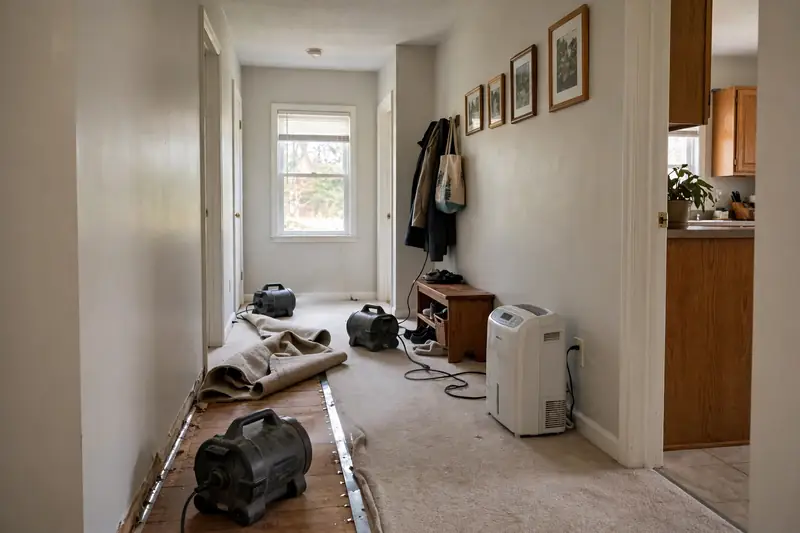
Water mitigation is the work that stops the damage from getting worse: extracting water, removing materials that cannot be saved, and drying the structure with dehumidifiers and air movers. Restoration is everything after that: replacing drywall, flooring, trim, cabinets and paint so the room is put back the way it was. Mitigation happens in the first days and is time sensitive. Restoration can wait until the structure is dry and the scope is approved.
Mitigation: the first days
Mitigation starts the moment a crew arrives. The goal is to limit how far the water travels and how long materials stay wet. A typical mitigation visit includes:
- Finding the source and confirming it is stopped. If the pipe is still leaking, nothing else matters yet.
- Inspection and moisture mapping. Moisture meters and thermal cameras show the true wet area, which is usually bigger than the visible stain.
- Extraction. Truck-mounted or portable units pull standing water out of carpet, pad and floors. Our emergency water extraction page goes into the equipment.
- Removal of unsalvageable materials. Wet carpet pad, swollen particleboard, soaked insulation and the bottom of drywall usually come out.
- Drying setup. Dehumidifiers and air movers get placed based on the size of the room and how wet it is.
- Daily monitoring. The crew records readings until materials reach dry targets, then pulls equipment.
The first visit also includes photos and notes that your adjuster will want. That record is easier to build before the drywall is in a dumpster.
Why mitigation is urgent
Wet drywall loses strength, hardwood cups, and particleboard cabinets swell and do not recover. Mold can start growing on damp organic material in a couple of days in the right conditions. Colorado Springs' low humidity helps drying, but it does not help water that is trapped inside a wall cavity, under vinyl plank or beneath a floating floor in the basement. Our post on mold after water damage in a dry climate explains why Colorado homes still get mold.
Water still spreading? Talk to a local restoration pro now.Have your ZIP code ready. A local restoration pro answers.
Call (719) 555-0142Restoration: putting the house back
Once the structure is dry, the restoration phase rebuilds what was taken out. That can be a small patch or a full basement:
- Hanging, taping and texturing new drywall
- Insulation replacement in exterior walls
- Priming and painting
- New carpet, pad, laminate, vinyl or hardwood
- Baseboard, casing and door replacement
- Cabinet and countertop replacement
- Electrical or plumbing work that was exposed during demolition
Restoration usually needs a permit when it involves electrical, plumbing or structural work. In Colorado Springs and most of El Paso County, the Pikes Peak Regional Building Department issues those permits and licenses contractors. You can look up a contractor's license on the PPRBD website before you sign anything.
Side by side
| Mitigation | Restoration | |
|---|---|---|
| Goal | Stop the damage and dry the structure | Rebuild and finish the space |
| Timing | Starts right away, often the same day | After drying is confirmed |
| Typical length | A few days of drying on a clean-water job | Days to weeks, depending on scope |
| Main tools | Extractors, dehumidifiers, air movers, meters | Drywall, flooring, carpentry, paint |
| Paperwork | Moisture logs, photos, drying records | Rebuild estimate, permits, material choices |
| Can it wait? | No | Yes, until the scope is approved |
How insurance looks at the two phases
Adjusters usually see two separate estimates: one for mitigation and one for the rebuild. Mitigation is billed on what was done: extraction, removal, equipment days and monitoring. Restoration is estimated like a remodel, by materials and labor for each room.
Most policies require you to take reasonable steps to protect the home after a loss, so delaying mitigation to wait for an adjuster can hurt the claim. Approval of the rebuild scope often comes later, after the adjuster reviews the drying records. For more on the claim side, read what a water damage adjuster looks for and our post on homeowners insurance coverage in Colorado.
Need someone to look at it today?Tell them your ZIP and what happened. A local pro picks up.
Call (719) 555-0142What drives the cost of each phase
We never post prices here. For mitigation, cost is driven by the water category, the wet square footage, how many days equipment runs, how much material comes out, and after-hours response. For restoration, it comes down to what was removed, the finishes you are replacing, matching existing materials and whether permits are needed. The company that inspects gives you both figures in writing before the work starts.
A Colorado Springs example
Picture a finished basement in Briargate where a washing machine hose let go overnight. Mitigation that morning means pulling water out of the carpet, cutting the drywall two feet up along the wet walls, pulling the pad and setting drying equipment. Three or four days later the readings are dry and the equipment leaves. Restoration then means new drywall, texture and paint, new pad and carpet, and new baseboard, scheduled once the adjuster signs off on the rebuild scope.
In a Monument home with a burst line in an exterior wall after a cold night, the mitigation might be smaller but more surgical: open the wall, dry the framing and insulation cavity, and replace a section of drywall. The pipe repair belongs to a plumber, and the rebuild might be a single afternoon.
Signs mitigation was done right
Before the rebuild starts, ask the crew for the final moisture readings and compare them with the dry readings taken from unaffected areas of the house. Those numbers should match closely. Ask to see photos of the open wall cavities before insulation goes back in. Check that baseboards and the bottom of cabinets were pulled where water ran underneath. If the drying log shows equipment came out before the readings reached their targets, ask why before anyone hangs drywall.
Choosing who does what
Some homeowners want one company to dry and rebuild. Others want the drying done right away by a water damage restoration crew and the rebuild handled by a contractor they already trust. Both work. What matters is that the mitigation crew documents dry readings before the walls get closed, because sealing in a wet stud is how a clean job turns into a mold remediation job later.
Water still spreading? Talk to a local restoration pro now.Have your ZIP code ready. A local restoration pro answers.
Call (719) 555-0142Sources and official resources
Related
Services and areas for this guide
Homeowner guides
Keep reading

FAQ
Common questions
Straight answers to what Colorado Springs homeowners ask most. Still unsure? Call and ask a local pro.
Call (719) 555-0142Do I have to use the same company for mitigation and restoration?
No. Some companies do both, and some only dry and hand off the rebuild to a general contractor. Using one company keeps the paperwork in one place, but you can choose a different contractor for the rebuild if you prefer.
Can mitigation start before the adjuster comes out?
In most cases, yes, and your policy likely expects it. Protecting the home from further damage is a standard duty after a loss. Let your carrier know the crew is starting and make sure the crew photographs everything first.
Why did the crew cut my drywall if it looked fine?
Water wicks up drywall and soaks insulation inside the wall cavity, where you cannot see it. Moisture meters and thermal cameras show where it went. A flood cut a foot or two above the wet line lets air reach the framing so it can dry.
How long is the gap between mitigation and restoration?
It depends on drying time, adjuster approval and material lead times. Drying alone usually runs three to five days on a clean-water job, and the rebuild can start once readings are back to normal and the scope is approved.
Water where it shouldn't be?
Call now and a licensed restoration pro near you can walk you through the next hour and set up a visit.